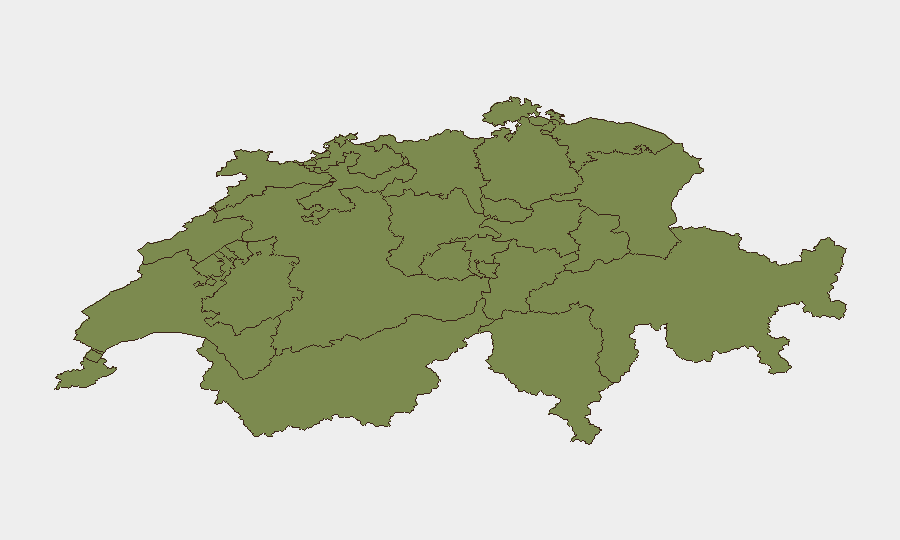
Situation Summary
Switzerland remains a low-threat environment globally (rank #151, composite score 5), but faces a localized security spike driven by G7-adjacent protests and cross-border security operations. Geneva has emerged as the principal risk concentration point, with anti-G7 demonstrations, vandalism, and police responses dominating the last 48 hours. Overall threat trajectory is elevated but contained and event-driven rather than structural.
Key Developments
- Geneva, 14 June 2026 – Anti-G7 protests drew large activist coalitions with reported vandalism, bonfires in streets, and confrontations with security forces. Swiss authorities deployed thousands of police and security personnel in response; clashes were brief and police regained control.
- Lake Geneva / Swiss–French border, 14 June 2026 – Security reinforcements for the Evian G7 summit extended into Swiss territory, with increased patrol-boat activity and air-space controls affecting cross-lake and cross-border navigation and movement.
- Swiss–French border crossings (western region), 14 June 2026 – Multiple minor crossing closures and restrictions implemented as part of the G7 security perimeter; remaining open crossings subject to heightened checks despite Switzerland not hosting the summit itself.
- Geneva, 14 June 2026 – Federal and cantonal authorities maintained large-scale security deployments to manage demonstrations and protect transit routes for delegations moving to Evian.
- National, 13–14 June 2026 – Official data release indicates ATM attacks fell to 24 incidents in 2025 (lowest since 2019 and approximately 50% of 2024), reflecting a sustained reduction in violent cash-machine crime.
Highest-Risk Areas
Geneva dominates the risk profile (score 31.6), driven by ongoing G7-related protest activity, heavy police presence, and cross-border security operations affecting movement and commerce in the region. Lucerne ranks second (20.4) but remains significantly lower and reflects no acute current events; Bern and Zurich (both 5.6) are secondary and currently stable. All remaining cantons score at or below 1.6. Risk in Geneva is event-driven and expected to decline as G7 security operations conclude; no structural instability is evident in other regions.
How GeoBit Would Assist
Security teams should employ AOI Monitoring & Early Warning on Geneva and western border zones to detect escalation signals in real time and receive advance notice of protest schedules or border-control changes. OSINT fusion and multi-language social-media monitoring (X/Twitter, Telegram) will track activist coordination and police responses faster than traditional reporting. GIS & Spatial Analysis and Routing & Network Analysis can identify alternative cross-border transit routes and safe corridors to avoid protest zones and heightened border checks during the G7 period.
7-Day Outlook
Protest activity and border-control restrictions are expected to persist through the G7 summit (ending ~16 June) and gradually normalize by 17–18 June as delegations depart and security perimeters stand down. No secondary threats (cyber, extremist, or transnational crime escalation) are currently signaled. Normal low-threat baseline should resume within one week unless unforeseen incidents occur.
Highest-Risk Areas — Ranked
| # | State / Region | Risk |
|---|---|---|
| 1 | Geneva | 31.6 |
| 2 | Lucerne | 20.4 |
| 3 | Bern | 5.6 |
| 4 | Zurich | 5.6 |
| 5 | Basel-City | 1.6 |
| 6 | Jura | 1.6 |
| 7 | Basel-Landschaft | 1.6 |
| 8 | Solothurn | 1.6 |
| 9 | Aargau | 1.6 |
| 10 | Vaud | 1.6 |
| 11 | Neuchâtel | 1.6 |
| 12 | Fribourg | 1.6 |
Sources
Previous Daily Briefs
A new Switzerland brief is written every day — each with its own risk map and downloadable CSV. Here's the last week; use the calendar to go further back.
📅 Browse every day by calendar →
Highlighted days have a brief. Tap a day for that day's map & analysis, or “csv” for that day's dataset ($5).