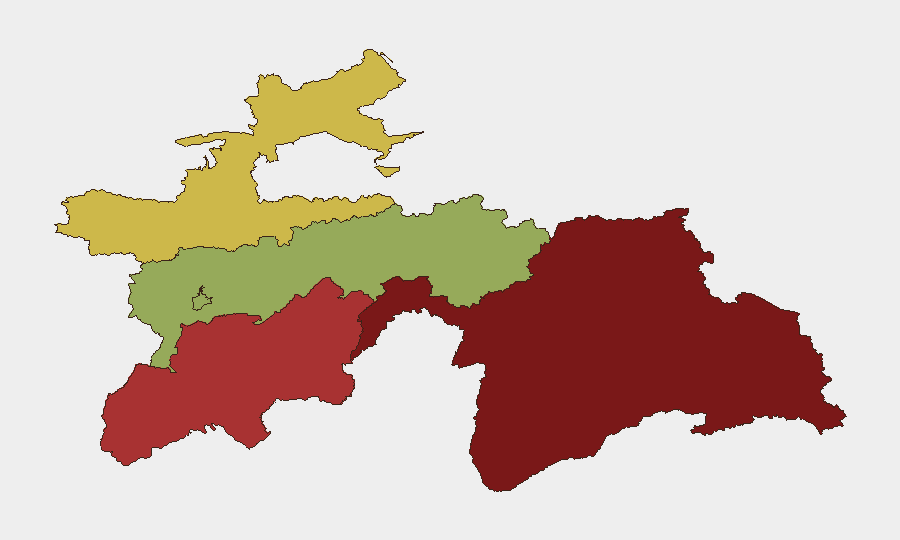
Situation Summary
Tajikistan remains a stable country with moderate overall security risk (composite threat score 10; no tracked events in the current assessment window). However, sub-national volatility is concentrated in the mountainous south and east, where border tensions, narcotics trafficking, and limited state presence sustain elevated threat profiles. The security environment is shaped primarily by ongoing Afghan border dynamics and intermittent regional friction rather than active domestic unrest. Risk is persistent but not escalating based on available current indicators.
Key Developments
No discrete security incidents, civil unrest, or crime events were confirmed in Tajikistan during the last 24–48 hours. Regional diplomatic and economic activity (including foreign minister engagement and EBRD infrastructure investment announcements) proceeded without reported disruptions. Monitoring of border areas, transport networks, and security-related messaging continues; no alerts have been triggered at the national or sub-national level in the current window.
*Note: This assessment reflects an absence of reportable events, not an absence of risk. Sub-national threat concentration (detailed below) remains a primary concern for duty-of-care teams.*
Highest-Risk Areas
Gorno-Badakhshan Autonomous Region (GBAO; risk score 92) dominates the threat landscape. Located in the remote Pamir plateau, GBAO borders Afghanistan and China; it is the primary transit corridor for regional narcotics trafficking, hosts sporadic militant activity, and experiences the weakest state administrative and security presence. Khatlon Region (risk 78), in the south, faces similar Afghan border pressures and trafficking vulnerability.
Sughd Region (risk 65), in the north, carries moderate elevated risk, likely reflecting economic stress and cross-border labor dynamics. Dushanbe (risk 42), the capital, maintains the lowest risk profile, with functional security apparatus and international presence, though petty crime and visa/detention issues affect expatriates. Organizations with personnel or assets in GBAO or Khatlon should apply heightened monitoring protocols; Dushanbe-based operations face routine but manageable security friction.
How GeoBit Would Assist
Security teams should deploy Area-of-Interest (AOI) Monitoring & Early Warning over GBAO border crossings and Khatlon transit nodes to detect trafficking surges, militant movement, or transport disruption. Multi-language OSINT (Telegram, local news, radio SIGINT) captures early signals of Afghan cross-border incidents or regional unrest before they reach international wires. Routing & Network Analysis allows corporate security to identify alternative road and air corridors in advance of disruptions, and conflict mapping provides real-time clarity on where specific threats cluster geographically—essential for duty-of-care risk assessments and evacuation planning.
7-Day Outlook
No significant escalation is expected in the near term. Border and trafficking risks remain chronic; watch for any spike in Afghan militant activity (refugee flows, cross-border raids) that could temporarily elevate GBAO threat levels. Continued diplomatic engagement and infrastructure projects suggest a stable operating environment for international business, provided teams remain alert to sub-national variance and avoid high-risk zones.
Highest-Risk Areas — Ranked
| # | State / Region | Risk |
|---|---|---|
| 1 | Gorno-Badakhshan Autonomous Region | 92 |
| 2 | Khatlon Region | 78 |
| 3 | Sughd Region | 65 |
| 4 | Districts of Republican Subordination | 58 |
| 5 | Dushanbe | 42 |
Sources
Previous Daily Briefs
A new Tajikistan brief is written every day — each with its own risk map and downloadable CSV. Here's the last week; use the calendar to go further back.
📅 Browse every day by calendar →
Highlighted days have a brief. Tap a day for that day's map & analysis, or “csv” for that day's dataset ($5).