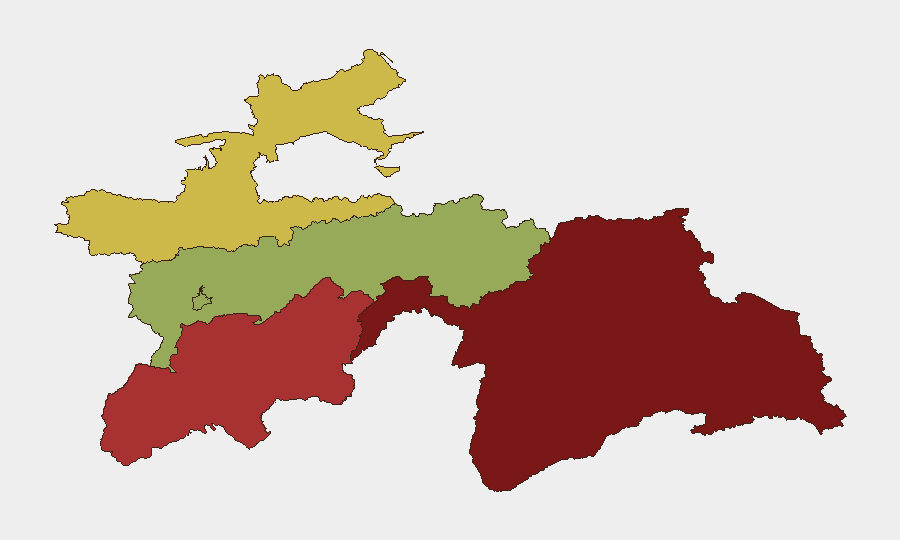
Situation Summary
Tajikistan remains a low-frequency threat environment globally (#131) with concentrated risk in frontier and contested regions. The past week saw no major security incidents; instead, high-level diplomatic and military activity dominated the intelligence picture, centered on terrorism, narcotics control, and border security. Regional disparities are acute—Gorno-Badakhshan (risk 92) and Khatlon (risk 78) face substantially higher threats than the capital—reflecting terrain, cross-border exposure, and historical conflict zones. The trajectory is stable but sensitive to Afghanistan border dynamics and transnational organized crime.
Key Developments
- Dushanbe, October 20: President Rahmon convened Shanghai Cooperation Organisation delegations to coordinate multilateral counterterrorism and anti-narcotics operations, signaling institutional focus on cross-border criminal and militant networks.
- Dushanbe, October 20: SCO Council of Heads of Government held security discussions encompassing terrorism, extremism, cyber threats, drug trafficking, and organized crime—broadening Tajikistan's threat agenda beyond kinetic conflict.
- Tajikistan–Afghanistan border, October 21–25: CSTO announced weapons, military equipment, and border-protection technology deliveries from Russia, Kazakhstan, Kyrgyzstan, and Belarus by end-2026, aimed at hardening frontier infrastructure and detection capability.
- Dushanbe, October 19–21 (reported): Chinese Premier Li Qiang raised demands for expanded intelligence-sharing and enhanced protection of Chinese nationals and commercial assets during bilateral talks with President Rahmon, reflecting elevated Chinese security interests in-country.
- Background (context only): A newborn abduction from Maternity Hospital No. 1 on October 11–12 remains under investigation; no resolution or follow-up reporting emerged in the past seven days.
Highest-Risk Areas
Gorno-Badakhshan dominates the risk landscape (92/100), driven by remote terrain, weak state presence, and porous Afghanistan border—historically a transit corridor for narcotics, weapons, and militant actors. Khatlon (78) faces similar cross-border vulnerabilities and drug-trafficking pressure. Sughd (65), in the north, carries lower but material risk tied to organized crime and historical flashpoints with Kyrgyzstan. The capital, Dushanbe (42), benefits from concentrated security apparatus and infrastructure but remains exposed to international terrorism and organized crime targeting. Duty-of-care protocols should prioritize Gorno-Badakhshan and Khatlon for enhanced travel authorization, communication protocols, and emergency response planning.
How GeoBit Would Assist
Security teams operating in Tajikistan should deploy AOI Monitoring & Early Warning to track Gorno-Badakhshan and Khatlon border zones for illicit movement, militant activity, or trafficking patterns; Network & Actor Analysis to map organized crime, narcotics, and extremist-group relationships; and Intel Sweep + OSINT Fusion (Telegram, local news, cross-language sources) to detect early signals of kidnapping rings, recruitment, or destabilizing events before mainstream reporting. Real-time Routing & Network Analysis supports secure staff movement planning across fragmented provincial security profiles.
7-Day Outlook
No acute security crisis is imminent. Diplomatic momentum on counterterrorism and border hardening will likely continue; weapons deliveries announced this week may take weeks to months to materialize, limiting immediate operational impact. The risk outlook remains dominated by endemic organized crime and narcotics flows rather than state-level conflict. Monitor Chinese commercial activity and intelligence-sharing protocols for signals of expanded investment or vulnerability.
Highest-Risk Areas — Ranked
| # | State / Region | Risk |
|---|---|---|
| 1 | Gorno-Badakhshan Autonomous Region | 92 |
| 2 | Khatlon Region | 78 |
| 3 | Sughd Region | 65 |
| 4 | Districts of Republican Subordination | 58 |
| 5 | Dushanbe | 42 |
Sources
Previous Weekly Briefs
A new Tajikistan brief is written every Monday, covering the week — each with its own risk map and downloadable CSV. Use the calendar to go further back.
- October 19, 2026
- October 12, 2026
- October 5, 2026
- September 28, 2026
- September 21, 2026
- September 14, 2026
- September 7, 2026
📅 Browse past briefs by calendar →
Highlighted days have a brief. Tap a day for that day's map & analysis, or “csv” for that day's dataset ($5).
Atlas — our AI intelligence desk — emails them this snapshot personally. Nothing else, no list.