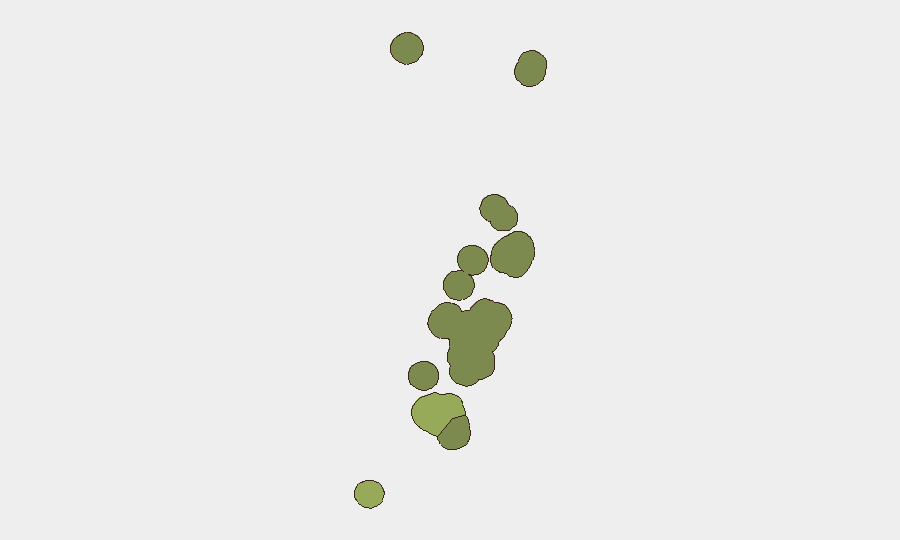
Situation Summary
Tonga remains a low-threat environment (global rank #null, composite score 3) with seismic activity as the primary hazard rather than civil unrest, crime, or political instability. Two tracked seismic events have been recorded in the past 48 hours, both moderate magnitude (M4.8–M5.4) and located in offshore or remote zones. No security incidents, civil disorder, or infrastructure failures have been reported in the last 24–48 hours. The overall risk trajectory is stable, with natural hazards—not human-generated threats—dominating the operational environment.
Key Developments
- 10 Jun 2026, 23:50 (+13:00) — Houma, Tongatapu – M5.0 seaquake recorded approximately 175 km SSW of Houma. Source: QuakeAlerts public alert via social media; secondary corroboration not yet available in open sources.
- Recent (exact timestamp unconfirmed) — offshore Neiafu, Vavaʻu – M5.4 earthquake recorded 176 km ESE of Neiafu. Location suggests deep offshore epicenter with minimal direct population exposure.
- Recent (exact timestamp unconfirmed) — offshore Houma area – M4.8 earthquake recorded 266 km WNW of Houma, consistent with regional tectonic activity along the Tonga Trench.
No casualties, damage reports, tsunami warnings, or secondary incidents (landslides, flooding, infrastructure disruption) have been confirmed in available open sources as of 11 Jun 2026 06:00 UTC.
Highest-Risk Areas
Tongatapu (risk score 45) carries the highest sub-national risk, driven by population concentration (capital Nuku'alofa and ~70% of national population) and proximity to active seismic and volcanic zones. Vavaʻu (score 28) ranks second, reflecting its exposure to offshore seismic activity and limited emergency response capacity on smaller islands. Haʻapai (score 22) and ʻEua (score 18) face lower but material risk from the same natural hazards. Ongo Niua (score 12) remains the lowest-risk group. Risk scores reflect seismic and volcanic exposure rather than conflict, crime, or governance instability.
How GeoBit Would Assist
Area-of-Interest Monitoring & Early Warning with persistent alerts on seismic and volcanic activity across Tonga's geography would provide duty-of-care teams real-time notice of earthquakes, tsunamis, or ashfall before media confirmation. Satellite & Imagery Analysis can assess post-event infrastructure damage, road/port access, and population displacement in real time, enabling rapid business continuity and evacuation decisions. Environmental & Health data integration (water, power, disease vectors post-disaster) and alternative route/journey planning via Routing & Network Analysis would support logistics, supply-chain continuity, and personnel movement in degraded conditions.
7-Day Outlook
Seismic activity is expected to remain within normal parameters for the region; no significant change in civil stability or security threats is anticipated. Organizations should maintain standard earthquake preparedness (emergency supplies, evacuation protocols, communication redundancy) and monitor official Tongan Meteorology & Geohazards Division alerts. The next 72 hours will be critical to confirm whether the M5.0 seaquake generated any secondary effects (minor tsunami, landslides, power disruption) not yet reported.
Highest-Risk Areas — Ranked
| # | State / Region | Risk |
|---|---|---|
| 1 | Tongatapu | 45 |
| 2 | Vavaʻu | 28 |
| 3 | Haʻapai | 22 |
| 4 | ʻEua | 18 |
| 5 | Ongo Niua | 12 |
Sources
Previous Daily Briefs
A new Tonga brief is written every day — each with its own risk map and downloadable CSV. Here's the last week; use the calendar to go further back.
📅 Browse every day by calendar →
Highlighted days have a brief. Tap a day for that day's map & analysis, or “csv” for that day's dataset ($5).