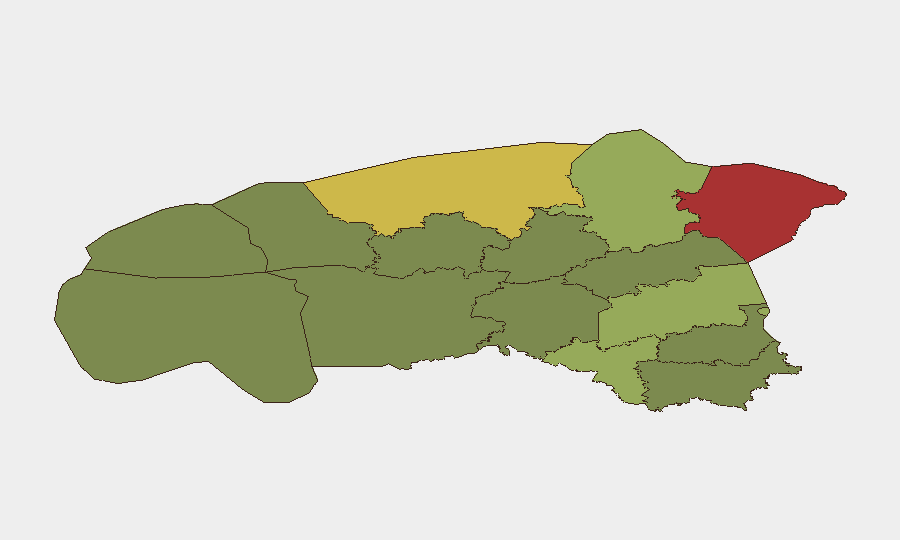
Sub-national composite risk — darker = higher. Source: GeoBit.
⬇ Estonia dataset (CSV) — events, per-region risk, cyber & sources
Situation Summary
Estonia is ranked #134 on the GeoBit threat index (score 13). Live brief generation is temporarily degraded; event data follows.
Recent Events
- 2026-10-08 · Cyberattack · Estonian Artists' Association fundraiser auction was suspended due to a possible cyberattack; responsible actor not identified and data comp
- 2026-10-07 · Other · An Estonian man climbed over border gates and escaped after Russian authorities denied him entry during inspection; officials found €50 and
- 2026-10-03 · Arrests · Police detained a 62-year-old German driver and five other foreign nationals suspected of organizing illegal migration; a Latvian-registered
Highest-Risk Areas — Ranked
| # | State / Region | Risk |
|---|---|---|
| 1 | Ida-Viru County | 78 |
| 2 | Harju County | 68 |
| 3 | Tartu County | 58 |
| 4 | Valga County | 55 |
| 5 | Lääne-Viru County | 52 |
| 6 | Pärnu County | 35 |
| 7 | Rapla County | 32 |
| 8 | Jõgeva County | 30 |
| 9 | Järva County | 28 |
| 10 | Viljandi County | 25 |
| 11 | Põlva County | 22 |
| 12 | Võru County | 18 |
Previous Weekly Briefs
A new Estonia brief is written every Monday, covering the week — each with its own risk map and downloadable CSV. Use the calendar to go further back.
- October 12, 2026
- October 5, 2026
- September 28, 2026
- September 21, 2026
- September 14, 2026
- September 7, 2026
- September 1, 2026
📅 Browse past briefs by calendar →
Highlighted days have a brief. Tap a day for that day's map & analysis, or “csv” for that day's dataset ($5).
See Estonia live.
GeoBit maps Estonia — every region, event, and risk layer — on demand.
Request a live demo →Share this intelligence
Atlas — our AI intelligence desk — emails them this snapshot personally. Nothing else, no list.
Automated by GeoBit AI from publicly reported events and open-source research. Context only; not a risk advisory. Recognized by Deloitte · NVIDIA Inception · Geospatial World Forum.