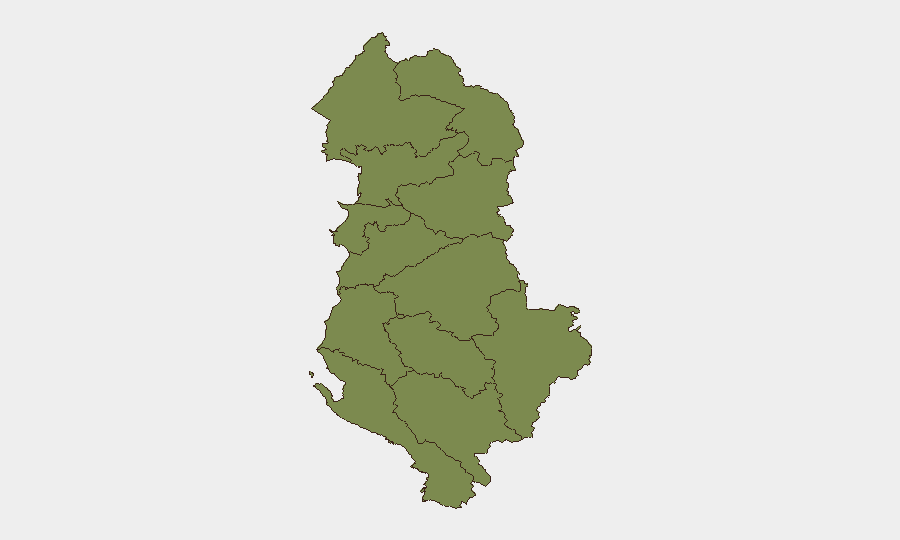
Situation Summary
Albania remains a moderate-risk operating environment (global rank #110, composite score 13) with localized volatility concentrated in Elbasan and Vlorë counties. Current drivers include domestic political polarization tied to infrastructure and investment concessions, ongoing EU rule-of-law scrutiny ahead of accession negotiations, and residual transnational extremist network activity flagged in recent counter-terrorism operations. The security picture is stable at the national level but subject to spikes in protest activity and political tension, particularly in Tirana.
Key Developments
- Tirana (18 June 2026): Several thousand protesters demonstrated against a planned luxury coastal resort project associated with international investors, chanting anti-corruption slogans and causing significant traffic disruption around Skanderbeg Square and central government buildings. Demonstrations remained largely peaceful but signaled escalating public dissatisfaction with large-scale concessions and perceived governance risks.
- Tirana (18 June 2026): Opposition politicians leveraged ongoing anti-resort protests to renew demands that the government halt strategic investment concessions, accusing Prime Minister Edi Rama's administration of "selling off" public assets. This rhetoric has heightened short-term political polarization and raised the probability of additional protests.
- Berlin/Albania (18 June 2026): Prime Minister Rama, while visiting Berlin, publicly framed EU enlargement acceleration and heightened defense spending as linked to regional security threats. His remarks, widely reported domestically, are fueling debate over foreign policy alignment, defense commitments, and internal governance reforms—factors that can sustain political tension.
- Albania (nationwide, 17–18 June 2026): The European Parliament adopted its 2026 enlargement report, praising some reforms but explicitly warning of political polarization, weak institutional culture, and insufficient rule-of-law and anti-corruption implementation. The report signals external pressure that may amplify domestic political friction.
- Albania (nationwide, 18 June 2026, operations 1–5 June 2026): Europol announced the conclusion of a coordinated counter-terrorism operation targeting Islamic State Khorasan Province (ISKP) support networks across eight European countries and the United States. While no specific Albanian attack plot was disclosed, the operation underscores ongoing concern within Albanian law enforcement and civil society about transnational extremist networks.
Highest-Risk Areas
Elbasan County (risk score 31.5) significantly outranks all other regions and warrants focused monitoring; the driver of this elevated score is not yet fully transparent from open-source signals but suggests concentrated criminal activity, trafficking, or localized instability. Vlorë County (17.1) and Tirana County (16.7) follow, with Tirana's risk driven primarily by political activity, large gatherings, and institutional concentration, while Vlorë likely reflects maritime crime, smuggling, or migrant-transit vulnerabilities. Remaining counties score below 2.0, indicating lower relative risk to personnel and assets.
How GeoBit Would Assist
Security teams should employ AOI Monitoring & Early Warning to track protest activity and political rallies in Tirana, Elbasan, and Vlorë in real time, with alerting configured for gathering size, rhetoric intensity, and proximity to corporate assets or transit routes. Network & Actor Analysis paired with OSINT fusion (X/Twitter, Telegram, local media) would clarify the drivers of Elbasan's elevated threat score and map criminal or extremist actor presence. Routing & Network Analysis would support contingency planning for staff movement during periods of heightened protest or traffic disruption.
7-Day Outlook
Protest momentum around the coastal resort project is likely to sustain for 7–10 days, with possible secondary demonstrations timed to opposition political messaging. EU enlargement pressure and domestic rule-of-law debates will continue to inflame political rhetoric but are unlikely to trigger acute security incidents. Continued vigilance for small-scale extremist activity remains warranted, particularly in border regions and urban centers.
Highest-Risk Areas — Ranked
| # | State / Region | Risk |
|---|---|---|
| 1 | Elbasan County | 31.5 |
| 2 | Vlorë County | 17.1 |
| 3 | Tirana County | 16.7 |
| 4 | Shkodër County | 8 |
| 5 | Durrës County | 1.5 |
| 6 | Kukës County | 1.5 |
| 7 | Lezhë County | 1.5 |
| 8 | Dibër County | 1.5 |
| 9 | Fier County | 1.5 |
| 10 | Berat County | 1.5 |
| 11 | Korçë County | 1.5 |
| 12 | Gjirokastër County | 1.5 |
Sources
Previous Daily Briefs
A new Albania brief is written every day — each with its own risk map and downloadable CSV. Here's the last week; use the calendar to go further back.
📅 Browse every day by calendar →
Highlighted days have a brief. Tap a day for that day's map & analysis, or “csv” for that day's dataset ($5).