Situation Summary
Australia remains a moderate-risk environment (global rank #59, composite score 2.5) with 878 tracked security events. Recent signals indicate elevated tension between civil society and government institutions, coupled with a confirmed 11% increase in state-linked cyber attacks targeting critical infrastructure and private networks. New South Wales dominates the national risk profile at 3.3x the second-highest jurisdiction (Northern Territory), with unconventional violence and institutional friction concentrated in that state. The security environment is stable but trending toward heightened cyber exposure and civil-institutional friction over the near term.
Key Developments
- NSW (2026-06-02): Unconventional violence incident directed at police; no casualty count or location specificity available from current signals.
- Australia-wide (cyber, 2026-06-03): State-linked cyber actors confirmed using IoT device entry points (networked doorbells, smart home systems) to pivot into corporate and government work systems; represents persistent supply-chain attack vector.
- Australia-wide (data/cyber, 2026-06-03): Australian Centre for the Moving Image (ACMI) reported compromised; PII exposure confirmed but incident date and breach scope not yet clarified in available reporting.
- NSW (2026-06-03): Public statement issued to ABC Radio and High Court; Government disapproval of civil actor(s) signals institutional friction; specifics of disagreement not yet detailed.
- Australia-wide (institutional, 2026-06-01): Multiple disapproval statements between government and unnamed Australian actor(s); civil rejection of Prime Minister's position noted.
- Australia-wide (business/cyber, 2026-06-03): Commonwealth Bank of Australia warned rising AI-related operational costs may constrain enterprise spending on cybersecurity and resilience measures.
Highest-Risk Areas
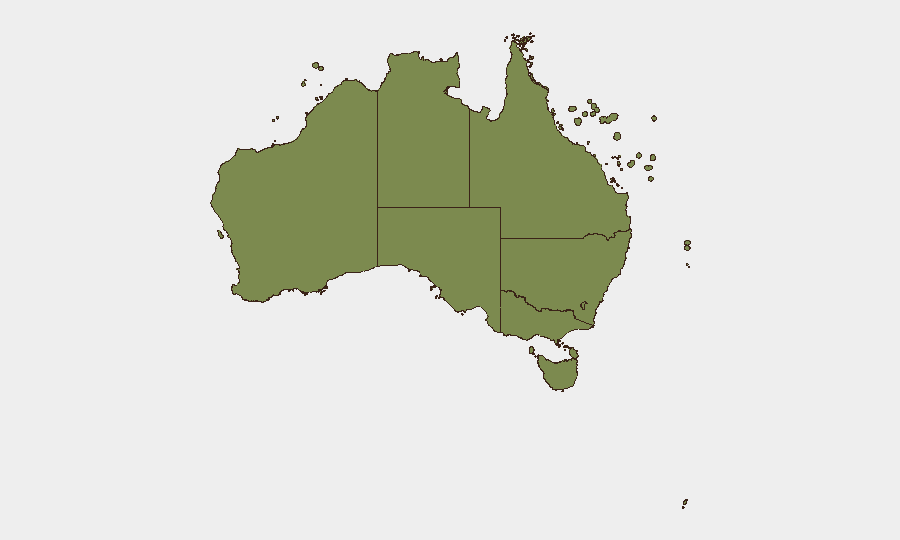
New South Wales accounts for 31.8 composite risk (36% of national total) and is the dominant driver, reflecting both unconventional violence and institutional friction. Northern Territory (21.1) and Victoria (15.9) together contribute a further 33% of tracked risk, though with lower intensity. The concentration in NSW and two northern/eastern jurisdictions suggests localized civil unrest and civil-police tensions rather than nationwide instability. Queensland, South Australia, Tasmania, and Western Australia remain low-risk, indicating risk is geographically concentrated and does not reflect systemic national breakdown.
How GeoBit Would Assist
Security teams should deploy Intel Sweep and X/Twitter OSINT to track civil-institutional friction and unconventional-violence precursors in NSW in real time. AOI Monitoring & Early Warning on Sydney, Newcastle, and Canberra would provide persistent alerting on protest activity, police operations, and gathering crowds before escalation. Cyber threat intelligence (entity extraction, Shodan, network analysis) would map IoT vulnerability clusters in target organizations' networks and identify state-linked intrusion indicators, enabling preventive asset hardening ahead of attacks.
7-Day Outlook
Civil-institutional tension is likely to persist, with NSW remaining the focal point for public statements and police engagement through mid-week. Cyber attack intensity is expected to remain elevated; organizations using internet-connected devices in non-segmented networks should assume active reconnaissance. No major escalation or nationwide unrest is anticipated, but duty-of-care teams with NSW operations should maintain heightened monitoring of employee safety and facility security through June 10.
Highest-Risk Areas — Ranked
| # | State / Region | Risk |
|---|---|---|
| 1 | New South Wales | 31.8 |
| 2 | Northern Territory | 21.1 |
| 3 | Victoria | 15.9 |
| 4 | Australian Capital Territory | 9 |
| 5 | Western Australia | 5.1 |
| 6 | Queensland | 3.3 |
| 7 | South Australia | 2.3 |
| 8 | Ashmore and Cartier Islands | 1.8 |
| 9 | Tasmania | 1.8 |
| 10 | Jervis Bay Territory | 1.8 |
| 11 | Coral Sea Islands | 1.8 |
Previous Daily Briefs
A new Australia brief is written every day — each with its own risk map and downloadable CSV. Here's the last week; use the calendar to go further back.
📅 Browse every day by calendar →
Highlighted days have a brief. Tap a day for that day's map & analysis, or “csv” for that day's dataset ($5).