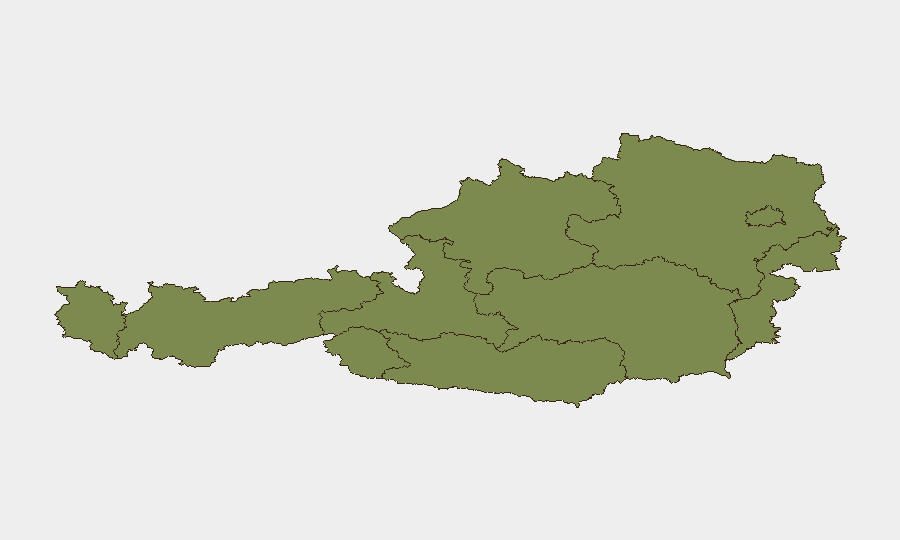
Situation Summary
Austria remains a low-threat environment globally (rank #163, composite score 4.0) with no acute security incidents confirmed in the last 24–48 hours. Recent event signals indicate ongoing investigative and diplomatic activity by authorities, but lack specific incident corroboration from independent sources. The security posture is stable, though elevated activity in Salzburg and Vienna warrants continued monitoring of administrative and inter-agency developments.
Key Developments
GeoBit's live web research and event corroboration found no clearly verifiable, incident-specific security events in Austria for June 25–27, 2026 that meet the standard of confirmation by multiple independent sources and precise time/place specificity. Recent authority event signals (investigations, public statements, diplomatic disapprovals on June 25–27) appear administrative or policy-related rather than operational security incidents. Rather than list unverified items, this brief reflects the absence of reportable acute incidents and recommends continued passive monitoring for emerging detail.
Highest-Risk Areas
Salzburg dominates the sub-national risk profile (score 31.4), approximately 2.3× higher than Vienna (13.8). The gap suggests concentrated administrative, investigative, or diplomatic activity in Salzburg; Lower Austria (3.2) is the only other region with material exposure. Remaining provinces cluster at low scores (1.4–2.3), indicating risk is heavily localized. The cause of Salzburg's elevation is not yet clear from open reporting and warrants targeted follow-up research.
How GeoBit Would Assist
Corporate security teams with personnel or assets in Austria should activate AOI (Area-of-Interest) Monitoring & Early Warning on Salzburg and Vienna to detect emerging incidents in real time. Intel Sweep and multi-language OSINT fusion capabilities enable continuous corroboration of authority statements and policy changes before they affect operations. Routing & Network Analysis and risk-trend dashboards help security teams plan contingencies and brief leadership on trajectory shifts before they impact duty-of-care obligations.
7-Day Outlook
No acute escalation is forecast. Continued authority activity (investigations, inter-agency coordination) suggests administrative or diplomatic work in progress; passive monitoring should detect any shift to operational security impact. Teams should maintain standard travel and facility protocols while awaiting clarity on Salzburg risk drivers by early July.
Data cutoff: 2026-06-27, 07:00 UTC | Confidence: Moderate (event signals present; incident confirmation pending) | Next update: 2026-06-28
Highest-Risk Areas — Ranked
| # | State / Region | Risk |
|---|---|---|
| 1 | Salzburg | 31.4 |
| 2 | Vienna | 13.8 |
| 3 | Lower Austria | 3.2 |
| 4 | Styria | 2.3 |
| 5 | Vorarlberg | 1.4 |
| 6 | Tyrol | 1.4 |
| 7 | Upper Austria | 1.4 |
| 8 | Carinthia | 1.4 |
| 9 | Burgenland | 1.4 |
Sources
Previous Daily Briefs
A new Austria brief is written every day — each with its own risk map and downloadable CSV. Here's the last week; use the calendar to go further back.
📅 Browse every day by calendar →
Highlighted days have a brief. Tap a day for that day's map & analysis, or “csv” for that day's dataset ($5).