Situation Summary
Belarus remains a low-to-moderate global security risk (rank #142, composite score 6), with concentrated threat activity in Minsk city rather than broad instability. The country continues to function as a staging area for Russia–Belarus joint military exercises and maintains its posture as a transit corridor for irregular migration to EU borders. No major security incidents or civil unrest have been documented in the last 24–48 hours; the security environment remains stable but contingent on continued alignment with Moscow and EU border management.
Key Developments
No clearly time-stamped, independently corroborated security incidents within Belarus have been reported in the last 24–48 hours. Open-source monitoring (X/Twitter, news wires, regional outlets) has not surfaced discrete events—arrests, protests, infrastructure disruptions, or unrest—that can be confidently dated to 20–21 June 2026. Earlier incidents (e.g., reports of a drone strike on a bus carrying Belarusian children in Bryansk, Russia; ongoing Russia–Belarus military exercises) predate or fall outside this window. Operational security teams should note this gap and monitor for any delayed reporting or social-media amplification of developments that may emerge over the next 12–24 hours.
Highest-Risk Areas
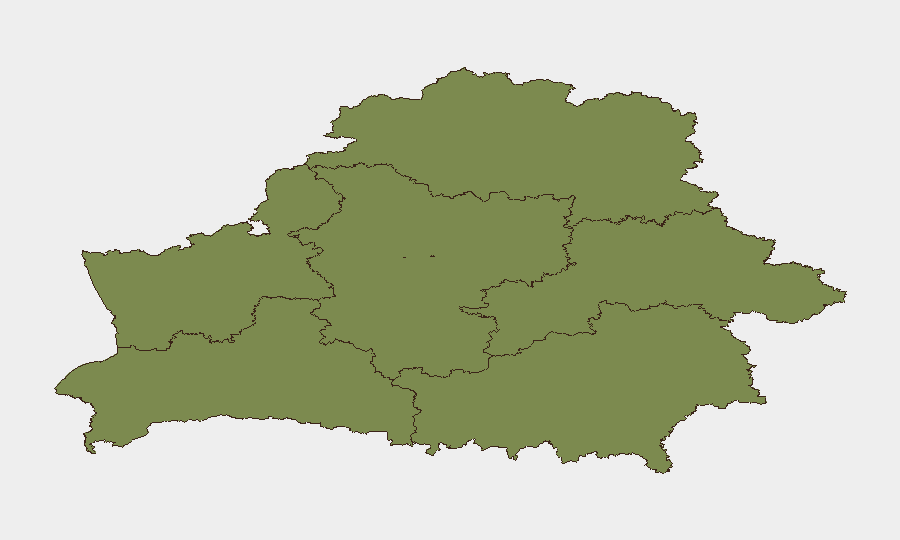
Minsk city dominates the risk profile (composite score 31.4), reflecting its role as the capital, diplomatic hub, and locus of state security and intelligence activities. All other regions (Minsk Region, Vitsebsk, Hrodna, Brest, Mahilyow, Homyel) score substantially lower (1.4–5.5), indicating that threats and incidents are heavily concentrated in the capital rather than dispersed. Risk drivers in Minsk include regime-security operations, transit-migration activity, and occasional demonstrator activity (as flagged in the 21 June signal), whereas regional areas remain largely stable and present lower operational concern for corporate assets and personnel.
How GeoBit Would Assist
Security teams operating in Belarus would benefit from persistent AOI (Area-of-Interest) Monitoring & Early Warning on Minsk and Minsk Region to detect civil unrest, checkpoint operations, or sudden restrictions before they affect movement or operations. Multi-language OSINT and X/Twitter monitoring coupled with temporal and sentiment analysis would provide early detection of protest mobilization, border or migration incidents, or announcements affecting travel corridors. Routing & Network Analysis would enable rapid identification of alternative transit routes if primary roads or checkpoints are affected by military exercises or security operations.
7-Day Outlook
No major escalation in Belarus's internal security environment is anticipated over the next seven days; the country is expected to remain stable and operationally accessible. Watch for any amplification of the Bryansk bus incident narrative or related Belarus–Ukraine diplomatic escalation, which could trigger temporary security-posture changes in Minsk. Continued joint Russia–Belarus military exercises and irregular migration flows along EU borders are likely to persist as routine background risk; no threshold events are forecast.
Data Confidence Note: This brief reflects available open-source and OSINT as of 2026-06-22 12:00 UTC. The absence of reported incidents in the last 24–48 hours does not indicate absence of activity, only absence of open-source corroboration. Duty-of-care teams should maintain independent monitoring and direct liaison with in-country assets.
Highest-Risk Areas — Ranked
| # | State / Region | Risk |
|---|---|---|
| 1 | Minsk | 31.4 |
| 2 | Minsk Region | 5.5 |
| 3 | Vitsebsk Region | 1.4 |
| 4 | Hrodna Region | 1.4 |
| 5 | Brest Region | 1.4 |
| 6 | Mahilyow Region | 1.4 |
| 7 | Homyel Region | 1.4 |
Sources
Previous Daily Briefs
A new Belarus brief is written every day — each with its own risk map and downloadable CSV. Here's the last week; use the calendar to go further back.
📅 Browse every day by calendar →
Highlighted days have a brief. Tap a day for that day's map & analysis, or “csv” for that day's dataset ($5).