Situation Summary
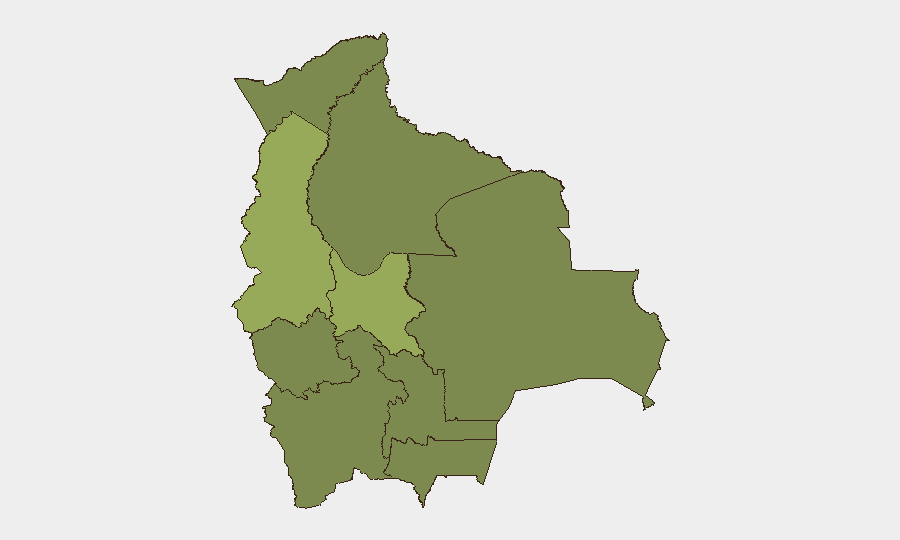
Bolivia remains under elevated political and social strain following congressional authorization (24 May) to expand presidential emergency powers, with ongoing roadblocks and demonstrations reported in La Paz and surrounding regions disrupting transport and commerce. Cochabamba and La Paz continue to drive national risk, with composite threat scores of 54.7 and 47 respectively, reflecting sustained protest activity and labor unrest. While specific incident-level detail from the past 48 hours remains limited in English-language open sources, the underlying structural risk of escalation—driven by confrontation between government, unions, and protest movements—remains substantive.
Key Developments
- La Paz region, ongoing: Roadblocks and demonstrations continue to affect transport corridors in La Paz and surrounding areas, disrupting fuel and essential goods delivery. Protest activity has been sustained over recent weeks with potential for violent encounters, particularly near government and opposition gathering points.
- Political/institutional signal, 5 June: Presidential public statement and concurrent "Reject" signals from both narco-trafficking and media actors suggest heightened political polarization and contestation of executive authority, though specific incident context remains unclear from available reporting.
- Labor/demand signals, 3–5 June: Concurrent "Demand" and "Blockade" signals attributed to protesters against the state indicate ongoing coordination of transport and commercial disruption, consistent with union and social-movement pressure over emergency-rule authorization.
- Security concern (Chapare), sustained: The U.S. Department of State continues to list Chapare Province as "Do Not Travel" due to narco-trafficking violence and organized-crime activity, indicating persistent criminal-organization control and kidnapping/extortion risk independent of political unrest.
- Detainment signal, 4 June: Arrest/detention of a Belarusian national reported; context (migration, political asylum, criminal investigation, or trafficking) not yet clarified in available sources, but may signal border or migration-related pressure.
Caveat: Cross-verified incident detail specifically time-stamped to 3–4 June 2026 is not reliably available in English-language open reporting. Local Spanish-language outlets and embassy alerts should be consulted for real-time operational decisions.
Highest-Risk Areas
Cochabamba (54.7) and La Paz (47) are the primary risk drivers, reflecting protest density, roadblock prevalence, and labor-union organizational capacity in those regions. Cochabamba's mining and agricultural sectors have historically mobilized for confrontation; La Paz's proximity to government institutions and its role as the political capital concentrate demonstration activity and state-response risk. Remaining departments—Oruro, Potosí, Tarija, Pando, Beni, Chuquisaca, and Santa Cruz—register at 24–30.2, suggesting localized but lower-intensity unrest; however, all regions remain exposed to nationwide labor strikes or security-force operations.
How GeoBit Would Assist
Intel Sweep and OSINT fusion across Spanish-language Bolivian media, X/Telegram, and embassy feeds would provide sub-24-hour incident corroboration and location-specific detail on roadblocks, clashes, and arrest/detention activity. AOI Monitoring & Early Warning with persistent watch over La Paz, Cochabamba, and Chapare would deliver alerts on roadblock expansion, rally assembly, and security-force movement before incidents affect supply chains or personnel. Routing & Network Analysis would enable real-time alternative-route planning around confirmed blockades, reducing exposure to protest zones.
7-Day Outlook
Congress's late-May emergency-rule authorization and announced potential general strike create structural conditions for escalation; violent clashes and broader roadblock networks are plausible if unions mobilize or government attempts enforcement operations. Monitoring of union statements, opposition messaging, and security-force positioning over the next 48–72 hours will clarify whether confrontation intensifies or stabilizes at current sustained-unrest baseline. Corporate teams with La Paz and Cochabamba operations should maintain contingency transport and supply protocols and monitor embassy alerts daily.
Highest-Risk Areas — Ranked
| # | State / Region | Risk |
|---|---|---|
| 1 | Cochabamba | 54.7 |
| 2 | La Paz | 47 |
| 3 | Oruro | 30.2 |
| 4 | Potosí | 26.1 |
| 5 | Tarija | 24.7 |
| 6 | Pando | 24.7 |
| 7 | Beni | 24.7 |
| 8 | Chuquisaca | 24.7 |
| 9 | Santa Cruz | 24.7 |
Previous Daily Briefs
A new Bolivia brief is written every day — each with its own risk map and downloadable CSV. Here's the last week; use the calendar to go further back.
📅 Browse every day by calendar →
Highlighted days have a brief. Tap a day for that day's map & analysis, or “csv” for that day's dataset ($5).