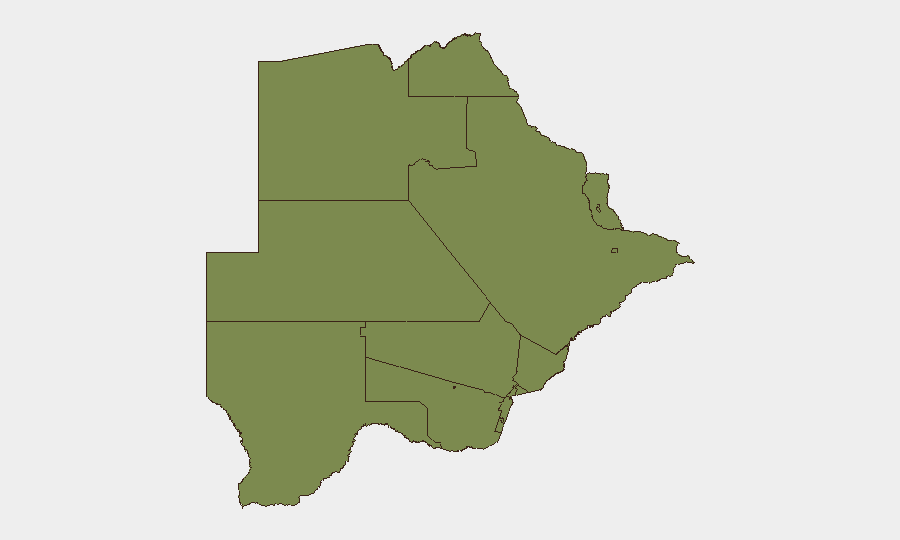
Situation Summary
Botswana remains a low-threat environment (global rank #178, composite score 3) with no confirmed major crime, armed conflict, or civil unrest in the last 48 hours. However, a cluster of diplomatic, labor, and border-management developments on 2–4 July signal emerging operational friction points: civil service union disputes, intensified border security posture in anticipation of regional migration pressure, and elevated foreign military presence linked to the U.S.–Botswana African Chiefs of Defense Conference. The overall security trajectory remains stable, but operational disruption and access constraints in specific sectors and border zones merit near-term monitoring.
Key Developments
- Gaborone, civil service sector (2 July 2026): Escalating dispute between Botswana's civil service unions and government has intensified in recent days, with risk flagged for labor-related protests and service disruptions across government offices, reflecting broader regional labor friction.
- Botswana–South Africa border zones, multiple crossing points (4 July 2026): Botswana security forces are undergoing intensified training and phased border-sealing preparations in anticipation of migrant inflows from xenophobic violence in South Africa and economic pressures in Zimbabwe; no closures confirmed as of 4 July, but tighter controls and slower crossing times are likely near-term.
- Gaborone, defense sector (4 July 2026): Active high-level military and diplomatic engagement ongoing, with Botswana and the U.S. co-hosting the African Chiefs of Defense Conference; elevated foreign defense delegations and security presence around conference venues expected in coming days.
- Gaborone vicinity, infrastructure development (early July 2026): Groundbreaking ceremony held for the U.S.$1.9 billion "New Botswana City" project; major construction activity, equipment concentration, and worker inflows will create ongoing infrastructure-security and transport-disruption considerations.
- Gaborone, legal/social sector (4 July 2026, forward-looking): High Court hearings scheduled for 14–15 July on same-sex marriage recognition; government opposition noted; potential for future protests and court-adjacent gatherings later in July, though no crowd activity or unrest reported in last 48 hours.
- Regional diplomatic climate (2 July 2026): Multiple African and South African regional actors issued disapprovals, investigations, and demands directed at or involving Botswana, signaling diplomatic friction; underlying drivers not fully clarified in open sources but warrant monitoring.
Highest-Risk Areas
Ghanzi District is ranked significantly above all other sub-national areas (score 31.4 vs. 1.4 for all others), though the open-source basis for this distinction is not evident in recent reporting. All remaining districts cluster at identical low risk (1.4). The concentration of current operational friction—labor disputes, border preparations, and diplomatic engagement—is centered in or near Gaborone and the southern/western border corridor (North West, Southern, and Kgalagadi districts). Security teams should weight Ghanzi as a persistent background risk while maintaining heightened situational awareness in Gaborone and border-crossing zones over the next 7 days.
How GeoBit Would Assist
Security teams should deploy AOI Monitoring & Early Warning on Gaborone government precincts and Botswana–South Africa border crossing points to track labor activity, protest formation, and border-control changes in real time. OSINT Fusion & Corroboration (X/Twitter, Telegram, Facebook) combined with Sentiment & Temporal Analysis will clarify the scope and timeline of civil service disputes and migrant-pressure narratives. GIS & Spatial Analysis linked to the New Botswana City project site and conference venues will support route planning and asset-protection workflows for staff and operations in high-activity zones.
7-Day Outlook
Botswana is expected to remain non-violent through mid-July, but operational friction will likely peak around the African Chiefs of Defense Conference conclusion and the 14–15 July High Court hearings. Border crossing delays and potential service disruptions tied to labor disputes should be anticipated; organizations with staff or supply chains dependent on Gaborone government services or cross-border movement should prepare contingency routing and communication protocols.
Highest-Risk Areas — Ranked
| # | State / Region | Risk |
|---|---|---|
| 1 | Ghanzi District | 31.4 |
| 2 | Chobe District | 1.4 |
| 3 | North-West District | 1.4 |
| 4 | Sowa Town | 1.4 |
| 5 | Central District | 1.4 |
| 6 | North-East District | 1.4 |
| 7 | Francistown | 1.4 |
| 8 | Selebi Phikwe | 1.4 |
| 9 | Kgalagadi District | 1.4 |
| 10 | Kweneng District | 1.4 |
| 11 | Southern District | 1.4 |
| 12 | Jwaneng | 1.4 |
Sources
Previous Daily Briefs
A new Botswana brief is written every day — each with its own risk map and downloadable CSV. Here's the last week; use the calendar to go further back.
📅 Browse every day by calendar →
Highlighted days have a brief. Tap a day for that day's map & analysis, or “csv” for that day's dataset ($5).
Atlas — our AI intelligence desk — emails them this snapshot personally. Nothing else, no list.