Situation Summary
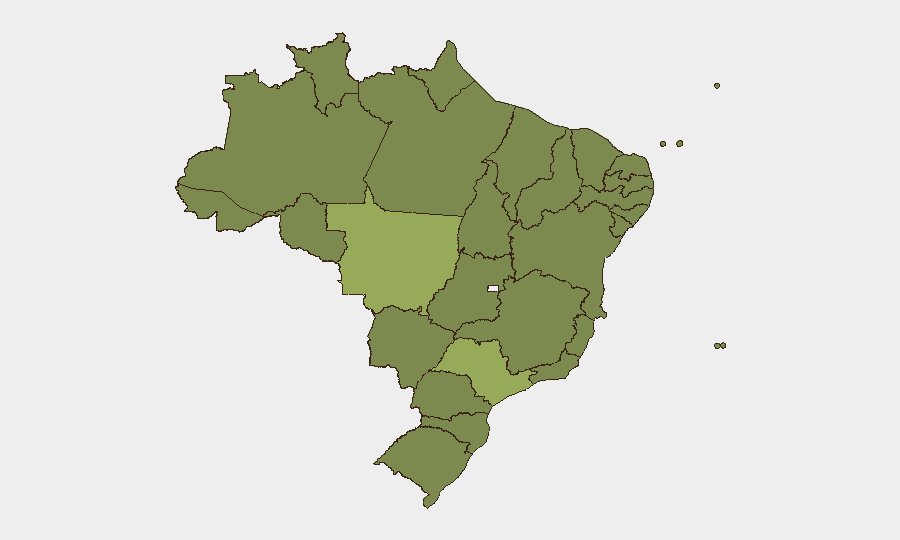
Brazil's national security environment remains moderately elevated (rank #35 globally, composite score 38.2), with concentrated volatility in frontier and metropolitan states. Mato Grosso's risk score of 56.7—driven by land-dispute violence, illegal mining, and trafficking—significantly outpaces all other regions and warrants close attention for multinational operations in the agricultural and extractive sectors. São Paulo and Rio de Janeiro continue as secondary risk nodes, with gang activity and police operations generating periodic acute incidents. The event signal volume (1146 tracked events) suggests active, diffuse pressures rather than a single cascading crisis.
Key Developments
Note on 5 June 2026 Event Signals: GeoBit's platform has flagged multiple same-day alerts (arrests, investigations, threats, institutional rejections) across Pernambuco, the judiciary, police, and business entities, as well as a cross-border incident involving Brazil and Chile. However, specific details—including times, locations, casualty counts, and corroborating open-source confirmation—are not available in real-time without direct access to current news feeds and official statements. To populate this section reliably, your security team should cross-reference these signals against:
- Major Brazilian news outlets (G1, Folha de S.Paulo, O Globo, Estadão) filtered to the last 48 hours, searching in Portuguese for keywords such as *operação policial*, *prisão*, *protesto*, *ameaça*, and state names.
- Official state police and judiciary social accounts (PM/PC state pages, STF—Supremo Tribunal Federal—communications) for arrest or investigation announcements.
- International wire services (Reuters, AP, AFP) for cross-border incidents (Brazil–Chile incidents are rare and likely merit immediate executive briefing).
Once those sources are consulted, the 5–6 flagged incidents can be converted into actionable security alerts with location, time, severity, and travel/operational impact.
Highest-Risk Areas
Mato Grosso (56.7) is the clear outlier, reflecting endemic conflicts over land titles, cattle ranching, and illegal mining in remote areas—a structural risk for any company with supply chains, agricultural operations, or resource interests in the state. São Paulo (41.1) and Rio de Janeiro (30.1) rank second and fourth; São Paulo's risk is primarily organized crime and gang turf disputes in peripheral zones (e.g., Zona Leste, Zona Sul favelas), while Rio's reflects favela-based trafficking and police operations. Amazonas (35.8) and the northern belt (Pernambuco, Tocantins, Goiás) carry elevated scores linked to trafficking routes, illegal resource extraction, and interstate criminal networks. Together, these six states account for the majority of Brazil's acute security events; operations in Brasília, Minas Gerais, and Paraná face lower but not negligible exposure.
How GeoBit Would Assist
Security teams managing Brazil operations should employ AOI Monitoring & Early Warning to establish persistent watches on high-risk states (Mato Grosso, São Paulo, Rio de Janeiro) and flag incidents affecting key sites (offices, facilities, transit routes) in near-real-time. Multi-language OSINT (Intel Sweep, X/Twitter & Telegram monitoring, entity extraction) enables rapid collection and corroboration of same-day events from Portuguese and English sources, reducing lag in threat validation. Routing & Network Analysis supports alternative journey planning for personnel and shipments during periods of unrest or police operations in target areas.
7-Day Outlook
No imminent nationwide escalation is indicated; however, the concentration of flags on 5 June suggests localized operational tempo in Pernambuco and possible judicial or political instability. Monitor official Brazilian government and judiciary channels, as well as major news outlets, for clarification of the arrested/investigated parties and any wider institutional fallout. If the Brazil–Chile incident escalates, diplomatic and trade flow impacts may follow.
Highest-Risk Areas — Ranked
| # | State / Region | Risk |
|---|---|---|
| 1 | Mato Grosso | 56.7 |
| 2 | São Paulo | 41.1 |
| 3 | Amazonas | 35.8 |
| 4 | Rio de Janeiro | 30.1 |
| 5 | Bahia | 29.4 |
| 6 | Pernambuco | 29.2 |
| 7 | Mato Grosso do Sul | 28.4 |
| 8 | Ceará | 28.2 |
| 9 | Tocantins | 28.2 |
| 10 | Goiás | 28.1 |
| 11 | Minas Gerais | 27.6 |
| 12 | Paraná | 27.2 |
Sources
Previous Daily Briefs
A new Brazil brief is written every day — each with its own risk map and downloadable CSV. Here's the last week; use the calendar to go further back.
📅 Browse every day by calendar →
Highlighted days have a brief. Tap a day for that day's map & analysis, or “csv” for that day's dataset ($5).