Situation Summary
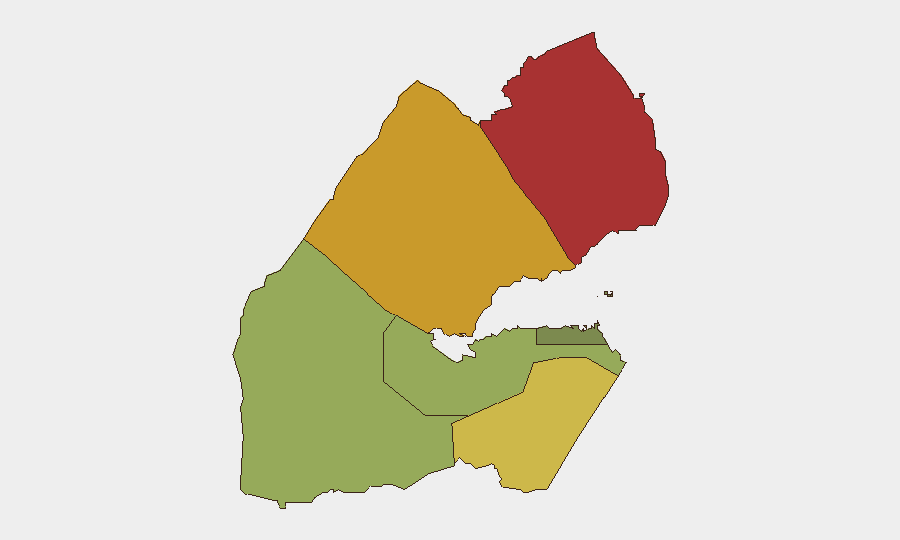
Djibouti remains at baseline security risk (global rank #null; composite threat score 5/100) with no confirmed acute incidents reported in the last 24–48 hours. Sub-national risk concentration is highest in the northern border regions (Obock and Tadjourah), driven by historical Al-Shabaab activity and cross-border volatility from Somalia and Eritrea. The capital and surrounding areas (Djibouti region) present substantially lower risk. Overall trajectory is stable; no imminent destabilization signals are present in recent open-source reporting.
Key Developments
No independently confirmed security, civil-unrest, crime, or infrastructure incidents have been reported in Djibouti within the last 24–48 hours. Recent event signals in the GeoBit platform (dated 2026-06-21 through 2026-06-24) relate to diplomatic statements and regional policy matters rather than acute in-country security events. Open-source news monitoring (news outlets, X/Twitter, institutional feeds) confirms no protests, attacks, serious crimes, or travel-disrupting events within this window. Baseline monitoring of ports, airfields, and transport corridors shows no disruptions. Economic activity (including World Bank–backed corridor development announced 2026-06-18) proceeds without reported security impediment.
Highest-Risk Areas
Obock region (risk score 78) and Tadjourah region (risk score 72) together account for the majority of tracked national risk, reflecting their proximity to the Eritrea–Somalia border zone and documented historical presence of Al-Shabaab and uncontrolled militia activity. Both regions are sparsely populated and distant from the capital; most corporate and expatriate presence concentrates in Djibouti city and Arta (risk scores 35–48), where security posture is markedly stronger and state authority more stable. Northern regions should be considered high-risk for unplanned travel, kidnap, or IED incidents; central and southern zones present standard emerging-market risk profiles.
How GeoBit Would Assist
Security teams should deploy Area-of-Interest (AOI) Monitoring on Obock and Tadjourah borders to generate early alerts on cross-border movement, militia activity, or checkpoint incidents. OSINT Fusion (multi-language social media, local news, regional security feeds, and Telegram channels) provides 24/7 signal on rumors, militia announcements, or transport disruptions before mainstream reporting. Routing & Network Analysis enables real-time alternative-route planning should main roads (e.g., RN1) become compromised, and Maritime & Aviation Tracking confirms safe passage through Djibouti's port and airport hubs.
7-Day Outlook
No escalation is forecasted over the next seven days. Continued diplomatic and economic activity (trade-corridor development, multilateral engagement) suggests a stable operating environment. Threat level is expected to remain consistent with baseline; however, teams should maintain standard heightened vigilance in northern border zones and monitor regional developments from Somalia and Eritrea for any sudden spillover.
Highest-Risk Areas — Ranked
| # | State / Region | Risk |
|---|---|---|
| 1 | Obock | 78 |
| 2 | Tadjourah | 72 |
| 3 | Ali Sabieh | 65 |
| 4 | Arta | 48 |
| 5 | Dikhil | 42 |
| 6 | Djibouti | 35 |
Sources
Previous Daily Briefs
A new Djibouti brief is written every day — each with its own risk map and downloadable CSV. Here's the last week; use the calendar to go further back.
📅 Browse every day by calendar →
Highlighted days have a brief. Tap a day for that day's map & analysis, or “csv” for that day's dataset ($5).