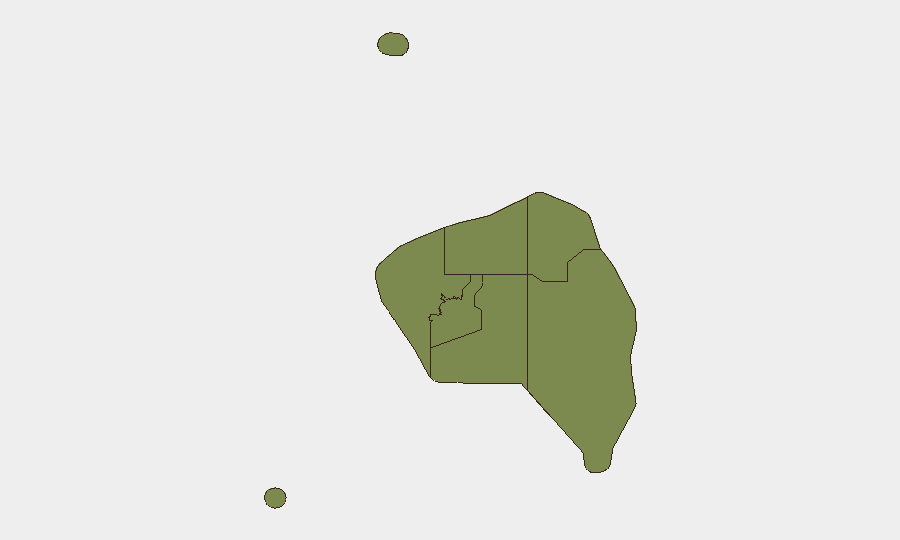
Situation Summary
Fiji's security environment remains stable with no confirmed civil unrest, infrastructure disruptions, or acute travel-risk incidents reported in the last 24–48 hours. However, recent institutional and governance tensions—centered on parliamentary disapproval, executive threats, and police-executive friction—are confined to formal channels and have not yet manifested in public disorder. The Central region (composite risk 31.3) drives national risk significantly above the Northern, Western, and Eastern zones, warranting differentiated monitoring. Overall trajectory is one of contained institutional strain without acute degradation.
Key Developments
- Nationwide (2026-06-13): Government issued formal threat statement; concurrent public disapproval from Fijian citizens regarding governance reflects widening sentiment friction, though no mass gatherings or public disorder have been reported.
- Parliament (2026-06-12): Parliament issued formal disapproval motion against the Fiji government; Electoral Commission and media issued public statements on the same date, signaling institutional divergence on governance matters.
- Police–Executive (2026-06-11): Police deployed conventional military-grade force in relation to the King; concurrent rejection and public statement from the King indicate unresolved friction within security and executive apparatus, but no armed confrontation or casualties reported.
- Ministry of Lands (2026-06-12): Ministry signaled reduction in relations—specific parties and policy context not yet clarified in open sources; typical of land-tenure disputes endemic to Fiji but monitored for escalation.
- Suva (2026-06-11): Police investigation initiated; location suggests Capital Region involvement, consistent with Central zone's elevated risk profile.
- No acute incidents in last 24–48 hours: Open-source news, social monitoring, and institutional feeds confirm no new civil unrest, crime spikes, protests, or service disruptions in this period.
Highest-Risk Areas
Central region (risk 31.3) dominates Fiji's threat profile and includes Suva, the capital, where recent police investigations, executive friction, and institutional divergence are concentrated. Northern region (18.6) and Western region (16.8) represent secondary concerns, likely reflecting prior incidents or structural vulnerabilities (land disputes, inter-communal tensions, or crime clusters). Eastern and Rotuma zones carry minimal tracked risk (2.2 and 1.3 respectively) and are stable. Corporate and humanitarian operations in or transiting Central Fiji, particularly around Suva and major transport corridors, face higher exposure to institutional friction and potential localized disruptions if formal tensions escalate.
How GeoBit Would Assist
Security teams with personnel or assets in Fiji should deploy Area-of-Interest Monitoring & Early Warning focused on Central region (Suva, major transport hubs) to detect escalation from institutional to public-order risk in real time. Intel Sweep, multi-language media monitoring, and X/Twitter OSINT would track sentiment shifts, informal actor communications, and street-level indicators before formal announcements. Routing & Network Analysis can pre-plan alternative travel and supply routes should Central-region disruptions occur; regime-stability and election monitoring capabilities help distinguish transient political theater from systemic instability requiring duty-of-care response.
7-Day Outlook
Fiji's institutional frictions are likely to remain confined to formal channels (parliamentary, judicial, police, executive statements) over the next 7 days absent a triggering event such as police action, judicial ruling, or mass mobilization. Risk of escalation from governance friction to public disorder remains low but non-zero in Central region; continued daily monitoring of police activity, parliamentary outcomes, and sentiment is warranted. No major national holidays, elections, or scheduled events in the forecast window are expected to amplify risk.
Highest-Risk Areas — Ranked
| # | State / Region | Risk |
|---|---|---|
| 1 | Central | 31.3 |
| 2 | Northern | 18.6 |
| 3 | Western | 16.8 |
| 4 | Eastern | 2.2 |
| 5 | Rotuma | 1.3 |
Sources
Previous Daily Briefs
A new Fiji brief is written every day — each with its own risk map and downloadable CSV. Here's the last week; use the calendar to go further back.
📅 Browse every day by calendar →
Highlighted days have a brief. Tap a day for that day's map & analysis, or “csv” for that day's dataset ($5).