Situation Summary
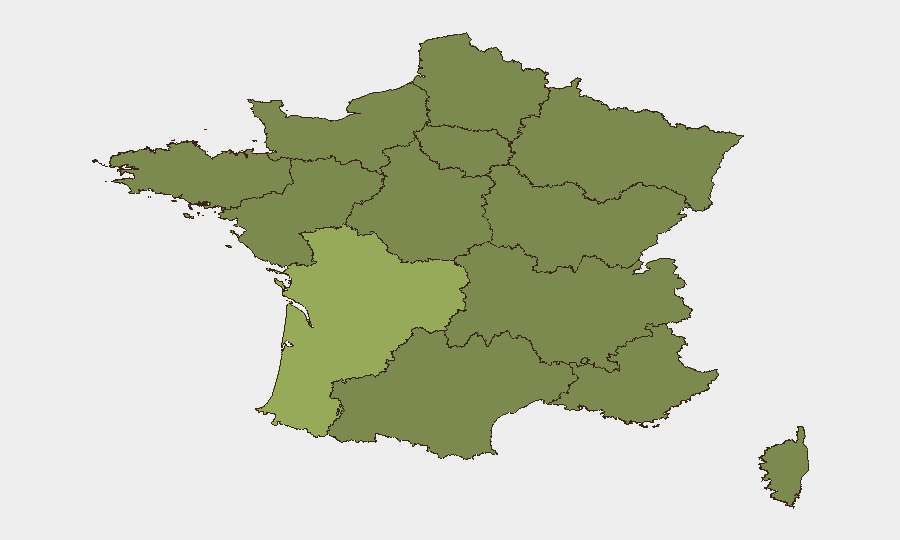
France remains a moderate-risk environment (composite rank #36 globally, score 37/100) with 203 tracked security events. The most recent signal cluster (11 June) shows elevated police mobilization tied to religious tension, concurrent financial-sector activity, and investigative action by French authorities involving European partners. Nouvelle-Aquitaine dominates regional risk (55.9), followed by Île-de-France (39.9), reflecting persistent demand-side pressures, administrative friction with EU and neighbouring states, and localized civil/criminal volatility. The trajectory is stable but operationally fragmented across regions; no imminent nationwide crisis is indicated, but sector-specific and geographic pockets warrant close duty-of-care attention.
Key Developments
- 11 June · Police Mobilization · Religious Tension (Islam vs Christianity, bidirectional). Heightened police deployment across unspecified locations in response to communal friction. No casualty reports in available signals; risk to public gatherings and transport corridors in urban centres (notably Île-de-France, Lyon, Marseille metro areas).
- 11 June · Investigative Action · French vs European Partners. French authorities launched cross-border investigation, likely tied to earlier Italian administrative sanction (9 June). Operational scope and duration unclear; potential for travel delays, document checks, or asset freezes affecting corporate entities with EU-wide supply chains.
- 11 June · Financial Sector Statement. Bank statement released; context (sector stress, regulatory action, or operational disruption) not specified in signals. Monitor for liquidity, payment, or operational-continuity impacts if financial infrastructure is affected.
- 11 June · Judicial Statement. Judge issued public statement; potential precursor to court action, arrest warrant activity, or policy clarification. Relevance to corporate operations depends on sector (financial crime, contract disputes, or regulatory compliance).
- 9–11 June · Demand Signal vs Turkey & Police. Outstanding demands by French state or business actors toward Turkish interests; parallel police engagement suggests potential enforcement or negotiation. Relevance to supply chains, trade operations, or staffing in Turkey-linked sectors.
- 9 June · Italian Administrative Sanction vs France. EU-level regulatory or trade action; likely to generate reciprocal French response and potential tariff or licensing friction in cross-border operations.
Highest-Risk Areas
Nouvelle-Aquitaine's exceptional risk score (55.9) reflects either sustained civil unrest, organized crime activity, or critical infrastructure volatility in the region (Bordeaux, Toulouse urban zones); this region warrants segregated monitoring for operations personnel and supply-chain routing. Île-de-France (39.9)—encompassing Paris and the national capital zone—combines religious tension signals, investigative activity, and high population density; corporate headquarters, financial centres, and transport hubs here face elevated exposure to disruption, protest access, or police operations. Normandy (30), Auvergne-Rhône-Alpes (27.6), and Grand Est (26) show secondary but consistent risk, primarily from demand-driven political friction and localized civil mobilization. Corsica and Brittany register identical scores (26, 25.9) but typically reflect distinct drivers (autonomy sentiment, historical grievance vs labour/environmental activism).
How GeoBit Would Assist
Real-time Intel Sweep and X/Twitter OSINT would isolate incident-level detail (locations, timing, actor identity) from the broad signals above, enabling precise travel advisories and operational continuity checks. AOI Monitoring & Early Warning on Nouvelle-Aquitaine, Île-de-France, and Lyon metro zones would provide 24–48-hour alerting before escalation, flagging protest routes, police operations, or transport stoppages. Network & Actor Analysis would map the Italian sanction and Turkish demand signals to supply-chain partners and legal exposure, supporting risk prioritization and stakeholder communication.
7-Day Outlook
Religious and administrative tensions are expected to persist without major escalation; police deployments will likely remain localized and reactive. Nouvelle-Aquitaine and Île-de-France require sustained watch; monitor for any widening of investigative action or secondary business-impact signals. No travel bans or major sector shutdowns are forecast.
Highest-Risk Areas — Ranked
| # | State / Region | Risk |
|---|---|---|
| 1 | Nouvelle-Aquitaine | 55.9 |
| 2 | Ile-de-France | 39.9 |
| 3 | Normandy | 30 |
| 4 | Auvergne-Rhône-Alpes | 27.6 |
| 5 | Grand Est | 26 |
| 6 | Bourgogne – Franche-Comté | 26 |
| 7 | Corsica | 26 |
| 8 | Brittany | 25.9 |
| 9 | Hauts-de-France | 25.9 |
| 10 | Centre-Val de Loire | 25.9 |
| 11 | Pays de la Loire | 25.9 |
| 12 | Occitania | 25.9 |
Sources
Previous Daily Briefs
A new France brief is written every day — each with its own risk map and downloadable CSV. Here's the last week; use the calendar to go further back.
📅 Browse every day by calendar →
Highlighted days have a brief. Tap a day for that day's map & analysis, or “csv” for that day's dataset ($5).