Situation Summary
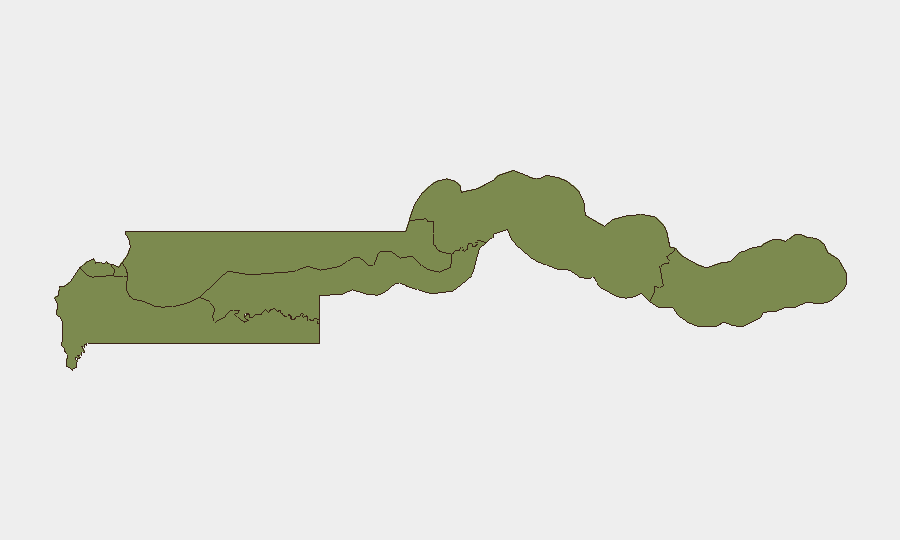
Gambia remains a low-threat environment in absolute terms (composite threat score 7), with no major security incidents reported in the last 24–48 hours that meet verification standards across international or regional wires. Underlying concerns—including armed robberies targeting financial institutions, burglaries, and a reported rise in missing-youth cases—persist as public policy issues and appear in civil-society and opposition commentary, but do not yet manifest as discrete, time-stamped incidents breaking through to corroborated reporting. Risk concentration is extreme: Banjul accounts for the vast majority of measured threat activity (31.2 composite score), while all other divisions register 1.2. The security environment remains stable but warrants attention to crime trends and youth-welfare concerns, particularly in the capital.
Key Developments
No specific, verifiable security or civil-unrest incidents were identified in Gambia during the 22–23 June 2026 window that meet cross-source corroboration and clear incident-dating standards. Open-web search, social-media monitoring, and regional news-wire review yielded no new attacks, arrests, protests, infrastructure failures, or travel alerts with documented dates in that 48-hour period. Ongoing concerns raised by opposition parties and civil actors regarding armed robbery, burglary, and missing youth remain undated or general in nature and do not constitute newly occurred events. Recommendation: Teams requiring incident-level granularity should escalate to proprietary intelligence feeds or local-source networks with real-time incident logging capability.
Highest-Risk Areas
Banjul dominates risk concentration, scoring 31.2—more than 25 times higher than any other division. This reflects a combination of capital-city factors: higher population density, financial-sector activity attracting criminal targeting, greater visibility of crime reporting, and historical policy-level security concerns. All other regions (Kanifing, West Coast, North Bank, Lower River, Central River, Upper River) register identical low scores (1.2 each), indicating either genuinely lower threat density or uniform under-reporting relative to the capital. For duty-of-care purposes, staff and asset deployments in Banjul warrant elevated monitoring; personnel in peripheral divisions face lower documented risk but should maintain standard vigilance against common regional crime (banditry, robbery) and informal-sector disturbances.
How GeoBit Would Assist
Security teams should employ AOI Monitoring & Early Warning (persistent watch on Banjul and key financial/government districts with incident alerting) and Intel Sweep (continuous multi-language monitoring of government statements, opposition press, NGO bulletins, and social-media commentary) to detect emerging crime clusters, youth-welfare crises, or political friction before they escalate. Network & Actor Analysis tracking opposition party statements, civil-society organizations, and security-sector communications will surface policy-level shifts and institutional tensions early. Routing & Network Analysis support can identify safer travel corridors within Banjul during periods of elevated armed-robbery reporting.
7-Day Outlook
No indicators suggest imminent escalation of violence or civil unrest in the next 7 days. Banjul crime concerns (armed robbery, burglary) are likely to remain elevated but sporadic. Monitor opposition and civil-society channels for any new public-safety incident announcements or government responses that might signal a discrete crime event or policy shift; such developments would typically surface within 24–48 hours of occurrence via local media or social platforms.
Highest-Risk Areas — Ranked
| # | State / Region | Risk |
|---|---|---|
| 1 | Banjul | 31.2 |
| 2 | Kanifing Municipal Council | 1.2 |
| 3 | West Coast Division | 1.2 |
| 4 | North Bank Division | 1.2 |
| 5 | Lower River Division | 1.2 |
| 6 | Central River Division | 1.2 |
| 7 | Upper River Division | 1.2 |
Sources
Previous Daily Briefs
A new Gambia brief is written every day — each with its own risk map and downloadable CSV. Here's the last week; use the calendar to go further back.
📅 Browse every day by calendar →
Highlighted days have a brief. Tap a day for that day's map & analysis, or “csv” for that day's dataset ($5).