Situation Summary
Iceland remains a low-threat jurisdiction globally (rank #181, composite score 3) with no confirmed security incidents, armed conflict, or civil unrest reported in the past 24–48 hours. The Capital Region concentrates the majority of assessed risk, driven primarily by opportunistic property crime rather than organized threat activity. Current infrastructure and transportation networks remain operational; no active weather or volcanic disruptions are affecting travel or business operations.
Key Developments
- Reykjavík (Capital Region), July 2026 (multi-day pattern): Icelandic National Police reported an ongoing spike in residential and commercial burglaries, with approximately 60 cases reported across the month. Police assessment indicates opportunistic crime targeting rather than coordinated organized activity. One suspect has been remanded in custody on links to multiple cases, though timing of the remand does not coincide with a discrete 24–48-hour incident window.
- Capital Region, 19 Jul 2026: Two "Disapprove" event signals flagged involving government and business-sector actors; web research did not corroborate specific operational incidents, political instability, or public disorder tied to these signals in the last 24–48 hours.
- Nationwide, 20 Jul 2026: Iceland Pulse confirmed no earthquakes above magnitude 3 in the past 24 hours and no active weather warnings affecting the Ring Road or major transport corridors.
- Reykjanes / Askja / Ljósufjöll volcanic zones, current status: Elevated volcano alert levels remain in effect but do not restrict normal travel or business activity; no new eruption or sudden geological event reported in the 24–48-hour window.
Highest-Risk Areas
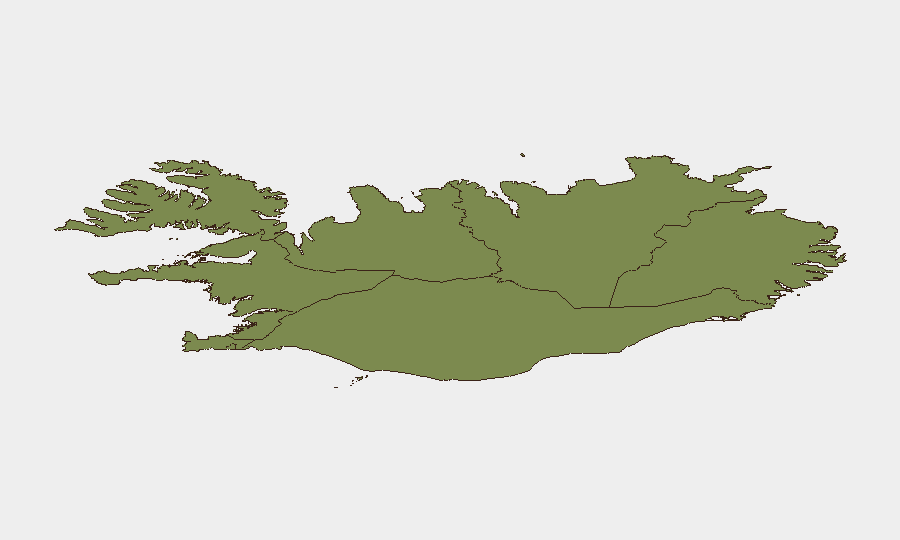
The Capital Region (risk score 24) accounts for the plurality of assessed risk in Iceland, reflecting Reykjavík's concentration of population, economic activity, and property-crime incidents. The Southern Peninsula and Southern Region (scores 12 and 11) rank second and third, though the underlying drivers—tourism corridors, distributed settlement, and seasonal activity—do not currently indicate acute threat events. Eastern, Western, and northern regions score lower (10, 9, and 6–8 respectively) and remain appropriate for routine business and travel with standard due-diligence precautions. No sub-national area shows signs of organized violence, political instability, or infrastructure failure at present.
How GeoBit Would Assist
Corporate security and duty-of-care teams with personnel or assets in Iceland would deploy AOI Monitoring & Early Warning on the Capital Region and secondary population centers to detect shifts in protest activity, labor unrest, or organized crime signaling in real time. Multi-language OSINT and X/Twitter/Telegram intelligence would provide early detection of emerging business-sector or political friction before it escalates to operational impact. Routing & Network Analysis capabilities would enable alternative journey planning in the event of localized disruption, and sentiment and temporal analysis across Icelandic media would flag any deterioration in the current low-threat environment.
7-Day Outlook
Iceland's security posture is expected to remain stable and low-threat over the next seven days. The reported burglary trend in Reykjavík should be monitored for any organizational escalation, but current police assessment and single-suspect custody suggest sporadic rather than systematic crime. Teams should maintain routine monitoring of weather and volcanic alert channels and conduct periodic refreshes of employee briefing on standard personal security practices in an urban environment.
Highest-Risk Areas — Ranked
| # | State / Region | Risk |
|---|---|---|
| 1 | Capital Region | 24 |
| 2 | Southern Peninsula | 12 |
| 3 | Southern Region | 11 |
| 4 | Eastern Region | 10 |
| 5 | Western Region | 9 |
| 6 | Westfjords Region | 8 |
| 7 | Northwestern Region | 7 |
| 8 | Northeastern Region | 6 |
Sources
Previous Daily Briefs
A new Iceland brief is written every day — each with its own risk map and downloadable CSV. Here's the last week; use the calendar to go further back.
📅 Browse every day by calendar →
Highlighted days have a brief. Tap a day for that day's map & analysis, or “csv” for that day's dataset ($5).
Atlas — our AI intelligence desk — emails them this snapshot personally. Nothing else, no list.