Situation Summary
Italy remains in a baseline Western European security posture with a composite threat score of 20 (globally unranked). No major security incidents, civil unrest, or infrastructure disruptions have been confirmed in the last 24–48 hours. Risk is concentrated in Lazio (Rome metropolitan area and central governance zone), which accounts for the plurality of tracked event signals and suggests elevated exposure to political friction, labor action, and diplomatic tension rather than acute violence. The security environment is stable but warrant monitoring for downstream effects of recent diplomatic friction.
Key Developments
No clearly documented, multi-source confirmed security, conflict, or civil-unrest incidents have been identified in Italy within the last 24–48 hours (21–23 June 2026) that meet operational reporting standards. Recent event signals flagged by GeoBit's platform (22 June) reflect political and diplomatic posturing rather than on-ground incidents:
- Presidential and media friction (22 June, national level): Public statements by the President indicate tension with domestic media narratives.
- US diplomatic relations strain (21–22 June, national level): Multiple signals of Italian government rejection of positions on US and NATO matters, and ministerial reduction of relations with Washington, suggest high-level diplomatic friction rather than operational security events.
- Union labor statements (22 June, national level): Public statements by labor unions indicate ongoing labor-relations tension; no strike action or disruption confirmed in the last 48 hours.
- Routine baseline conditions: No terror alerts, transport disruptions, major crime events, or regional instability incidents are evident in open sources for the period.
Security teams should monitor local newsfeeds and transport operators for any cascading effects of political friction (e.g., wildcat strikes, protest scheduling).
Highest-Risk Areas
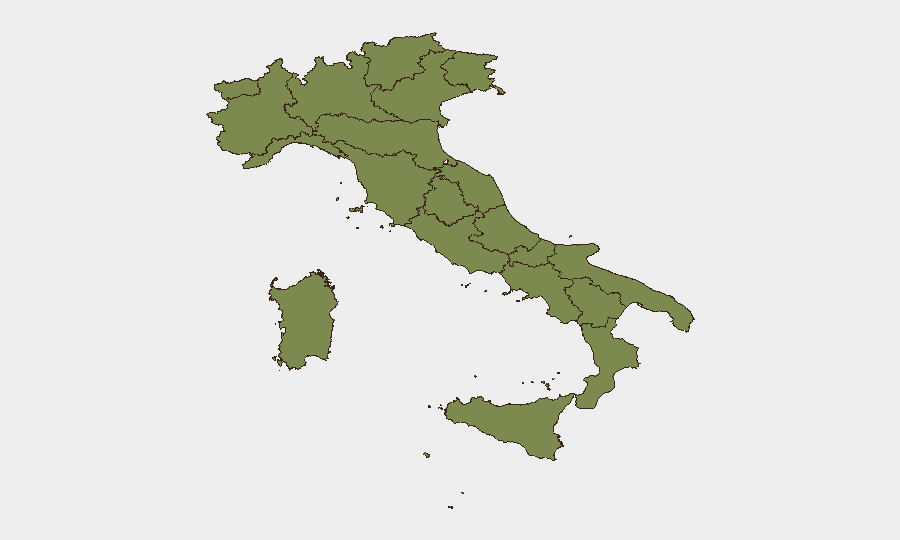
Lazio (risk score 31.3) dominates Italy's risk profile, reflecting Rome's role as the national capital, seat of government, diplomatic missions, and media hub. Political friction, ministerial activity, and diplomatic messaging—evident in the 21–22 June signals—naturally concentrate in the capital region. Umbria (21.1) shows elevated risk but no specific acute incidents have been confirmed; this may reflect underlying structural factors (socioeconomic, labor, or migration-related) rather than imminent events. All other tracked regions score substantially lower (≤8.1), indicating that security concerns are highly localized to central Italy and do not suggest nationwide instability.
How GeoBit Would Assist
Security teams with personnel or assets in Italy should deploy AOI (Area-of-Interest) Monitoring & Early Warning on Rome and other key sites (airports, corporate offices, transport hubs) to detect emerging labor action, protest scheduling, or transport disruption signals in real time. Multi-language OSINT (Intel Sweep, X/Telegram monitoring, local newsroom feeds) and entity extraction & sentiment analysis would flag escalation in diplomatic or labor rhetoric hours before operational impact. Routing & Network Analysis can pre-compute alternative journey plans if demonstrations or strikes materialize.
7-Day Outlook
No acute security shock is anticipated in the next 7 days. Diplomatic friction between Italian government and the US/NATO may generate additional political statements and labor-union posturing, but the risk of cascading into transport strikes, mass protest, or security incidents remains low absent a major foreign-policy or domestic trigger. Teams should maintain routine vigilance on Lazio and monitor Umbria for any unscheduled developments.
Highest-Risk Areas — Ranked
| # | State / Region | Risk |
|---|---|---|
| 1 | Lazio | 31.3 |
| 2 | Umbria | 21.1 |
| 3 | Lombardy | 8.1 |
| 4 | Sicily | 3.6 |
| 5 | Liguria | 2.4 |
| 6 | Tuscany | 1.8 |
| 7 | Apulia | 1.8 |
| 8 | Sardinia | 1.5 |
| 9 | Veneto | 1.5 |
| 10 | Marche | 1.5 |
| 11 | Emilia-Romagna | 1.4 |
| 12 | Abruzzo | 1.4 |
Sources
Previous Daily Briefs
A new Italy brief is written every day — each with its own risk map and downloadable CSV. Here's the last week; use the calendar to go further back.
📅 Browse every day by calendar →
Highlighted days have a brief. Tap a day for that day's map & analysis, or “csv” for that day's dataset ($5).