Situation Summary
Japan remains a stable, low-threat environment globally (rank #125, composite score 6) but faces a cluster of near-term operational risks spanning cyber intrusions, elevated seismic activity, and underlying political friction over defense policy. A major telecom data breach affecting 12 million users, three moderate earthquakes within 48 hours, and domestic cybercrime incidents have created near-term exposure for corporate operations and supply chains. Political contention over military spending and arms exports—reflected in ruling-party/opposition discord and pacifist activism—does not yet translate to civil unrest but warrants monitoring as potential amplifiers of broader instability.
Key Developments
- KDDI cyberattack (nationwide, July 9–10): Japan's largest telecom provider disclosed a breach exposing ~12 million customer emails, with unauthorized access occurring late June through early July. Affected users face heightened risk of credential compromise and downstream account takeovers across linked services; corporate customers should audit KDDI-dependent authentication and communications systems.
- Magnitude 5.1 earthquake (off Wakayama Prefecture, Philippine Sea, July 9): Offshore seismic event 114 km south of Tanabe. No major damage reported, but coastal infrastructure and maritime operations in Wakayama warrant brief heightened alert for aftershock and localized disruption risk.
- Magnitude 4.7 earthquake (East China Sea, NW Miyakojima/Okinawa, July 10): Moderate quake in strategically sensitive waters near Okinawa. No casualties reported, but reinforces elevated seismic monitoring for Okinawa-based operations and regional maritime logistics.
- Magnitude 4.4 earthquake (Japan Sea, Hokuriku District, July 10, 01:57 JST): Third moderate seismic event in 48 hours off Japan's northern coast. Cumulative seismic activity heightens infrastructure-risk assessment for coastal Hokuriku prefectures.
- Cybercrime: Minor (unspecified prefecture, July 9–10): A 15-year-old arrested for fraudulently canceling ~46,800 Bandai Channel subscriptions via system vulnerability. Incident underscores ongoing platform-security gaps in commercial digital services targeting Japanese youth and consumers.
- Political activism and defense contention (nationwide, July 9–10): Pacifist groups publicly criticized Takaichi administration's military buildup and arms-export easing, with messaging targeting domestic audiences. While peaceful, reflects sustained political friction over defense posture that could mobilize larger civil-society activity if escalated.
Highest-Risk Areas
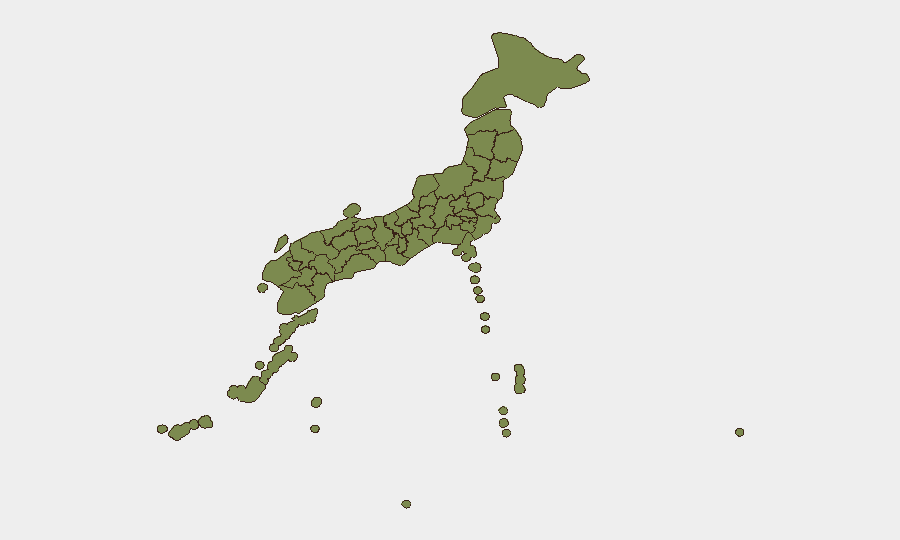
Nagano Prefecture dominates Japan's sub-national risk profile (score 33.3)—more than triple Tokyo's ranking—though GeoBit's underlying event drivers for this outlier require further contextual analysis. Tokyo (10.8) and Hokkaido (8.8) follow, reflecting capital-city operational density and seismic/infrastructure exposure respectively. Aichi, Shizuoka, and Kanagawa cluster in the 4–4.2 range, driven partly by coastal seismic risk and major port/manufacturing activity. Okinawa's 3.3 score reflects both seismic activity (confirmed in last 48 hours) and geopolitical sensitivity as a U.S. military hub; Nagasaki and Wakayama similarly face earthquake risk. Corporate teams with operations or supply-chain dependencies in these prefectures should prioritize cyber-resilience, seismic-preparedness, and continuity-of-operations planning.
How GeoBit Would Assist
Teams should deploy AOI Monitoring & Early Warning on KDDI and other critical telecom/fintech infrastructure, paired with Intelligence & OSINT (OSINT fusion, sentiment analysis) to track pacifist and defense-policy activism for escalation signals. Conflict & Military capabilities can monitor defense-policy rhetoric and ruling-party statements to assess protest mobilization risk. Environmental & Health and satellite/GIS tools enable seismic-risk tracking and infrastructure-vulnerability mapping for Nagano, Hokkaido, and coastal prefectures.
7-Day Outlook
Seismic activity will likely stabilize or continue at moderate levels without major disruption, though aftershock risk remains elevated through next week. KDDI breach remediation and customer notification will dominate corporate cyber-risk discussion; downstream account-compromise incidents should be anticipated. Political friction over defense policy is unlikely to trigger large-scale civil unrest in the immediate term but may sustain low-level protest activity and media commentary.
Highest-Risk Areas — Ranked
| # | State / Region | Risk |
|---|---|---|
| 1 | Nagano Prefecture | 33.3 |
| 2 | Tokyo | 10.8 |
| 3 | Hokkaido Prefecture | 8.8 |
| 4 | Aichi Prefecture | 4.2 |
| 5 | Shizuoka Prefecture | 4.1 |
| 6 | Nagasaki Prefecture | 3.7 |
| 7 | Gifu Prefecture | 3.7 |
| 8 | Kanagawa Prefecture | 3.7 |
| 9 | Miyagi Prefecture | 3.7 |
| 10 | Wakayama Prefecture | 3.5 |
| 11 | Saitama Prefecture | 3.5 |
| 12 | Okinawa Prefecture | 3.3 |
Sources
Previous Daily Briefs
A new Japan brief is written every day — each with its own risk map and downloadable CSV. Here's the last week; use the calendar to go further back.
📅 Browse every day by calendar →
Highlighted days have a brief. Tap a day for that day's map & analysis, or “csv” for that day's dataset ($5).
Atlas — our AI intelligence desk — emails them this snapshot personally. Nothing else, no list.