Situation Summary
Mauritius remains stable with no corroborated security incidents, civil unrest, significant crime, or infrastructure disruption reported in the last 24–48 hours across open media, official advisories, or social feeds. The country's composite threat score of 14 and low global ranking reflect an environment of routine political and criminal activity without acute destabilization. Port Louis and western districts carry elevated risk profiles, but current conditions do not suggest imminent escalation to widespread threat events.
Key Developments
No verified security, conflict, civil-unrest, major-crime, political-instability, critical-infrastructure, or travel-risk incidents meeting multi-source corroboration criteria were identified in Mauritius during 18–19 June 2026. Open-source monitoring across regional news, government advisories, social platforms, and travel feeds returned no timestamped reports of protests, riots, violence, airport/port disruptions, or infrastructure failures in this window. Existing country-level travel guidance from major foreign ministries remains unchanged and routine rather than incident-driven. GeoBit's event-signal dataset shows activity in the region (Oman, Mauritania, Lebanon) but no events directly affecting Mauritius territory or nationals during the reporting period.
Highest-Risk Areas
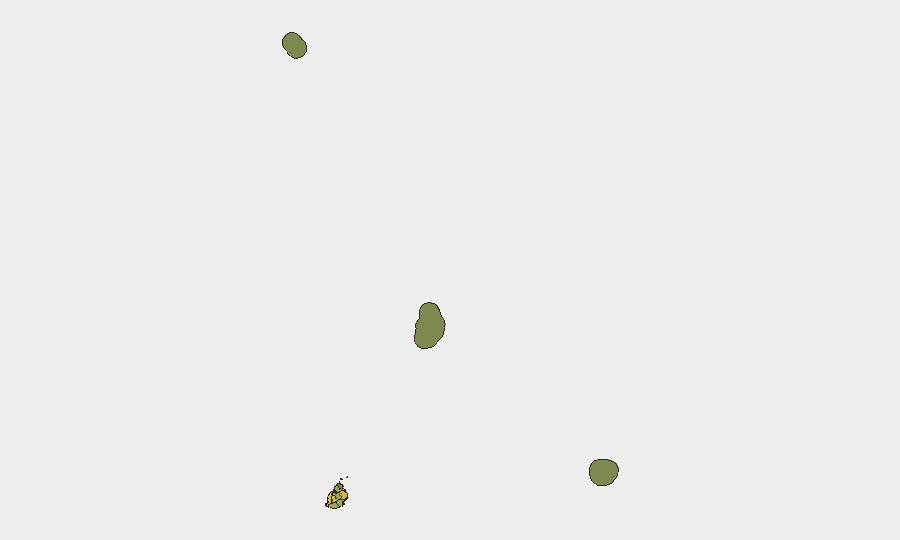
Port Louis (risk 92) drives the national risk profile as the capital, financial center, and largest port of entry—concentrating governance, commerce, and law-enforcement activity in a single urban zone. Plaines Wilhems (68), Black River (65), and Flacq (62) districts show elevated scores, likely reflecting a combination of population density, economic activity, and historical incident clustering rather than acute threats. The steep risk gradient from Port Louis to outer regions (Rodrigues 22, Agaléga 5) underscores concentration of both assets and baseline activity in the western corridor; remote and island territories present minimal current exposure. Security teams with personnel or operations in Port Louis should prioritize awareness of routine urban crime and infrastructure dependencies, while outer-district presence faces lower near-term risk.
How GeoBit Would Assist
Security and duty-of-care teams operating in Mauritius should employ AOI Monitoring & Early Warning on Port Louis, Plaines Wilhems, and port/airport facilities to detect emerging protests, labor actions, or security incidents in real time. Intel Sweep and multi-language OSINT fusion across news, social, and government channels will maintain corroborated situational awareness and flag deviations from the current stable baseline. Network & Actor Analysis combined with Election Monitoring capabilities will help track political and factional dynamics that could drive future instability, while Routing & Network Analysis enables contingency planning for personnel movement if conditions shift.
7-Day Outlook
No acute threat escalation is anticipated over the next 7 days based on current trajectories and open-source signals. Routine monitoring for labor disputes, minor crime clustering, and political developments should continue, with particular attention to Port Louis and the western districts where economic and administrative activity concentrates. Any material change in regional dynamics (e.g., escalation in neighboring Indian Ocean waters or heightened Mauritanian tensions) could amplify exposure; persistent AOI watch is warranted.
Highest-Risk Areas — Ranked
| # | State / Region | Risk |
|---|---|---|
| 1 | Port Louis | 92 |
| 2 | Plaines Wilhems | 68 |
| 3 | Black River | 65 |
| 4 | Flacq | 62 |
| 5 | Grand Port | 58 |
| 6 | Moka | 52 |
| 7 | Savanne | 48 |
| 8 | Pamplemousses | 45 |
| 9 | Rivière du Rempart District | 38 |
| 10 | Rodrigues | 22 |
| 11 | Saint Brandon | 8 |
| 12 | Agaléga | 5 |
Sources
Previous Daily Briefs
A new Mauritius brief is written every day — each with its own risk map and downloadable CSV. Here's the last week; use the calendar to go further back.
📅 Browse every day by calendar →
Highlighted days have a brief. Tap a day for that day's map & analysis, or “csv” for that day's dataset ($5).