Situation Summary
Mongolia remains a low-threat environment globally (composite score 7), but sub-national risk variation is pronounced, with eastern border regions significantly outpacing the capital. A single tracked incident involving abduction/hijacking on 2026-06-11 has been logged; no confirmed security incidents have been independently corroborated in the last 24–48 hours. The security posture reflects Mongolia's geopolitical position between major powers and persistent vulnerabilities in remote, sparsely monitored territories.
Key Developments
No confirmed security incidents have been independently corroborated in Mongolia for the last 24–48 hours. GeoBit's live web research (last 24 hours) returned no reliably dated, incident-level security developments meeting the current-event threshold. The most recent tracked signal—an abduction/hijacking event flagged on 2026-06-11—remains under monitoring; additional details and corroboration status are unavailable from open sources at this time.
Background context (not current): Mongolia hosted the Ulaanbaatar Dialogue on Security on 4–5 June 2026, and joint Sino-Mongolian "Steppe Partner 2026" drills concluded on 6 June 2026 in Inner Mongolia Autonomous Region (China). Neither constitutes a domestic incident or current development.
Highest-Risk Areas
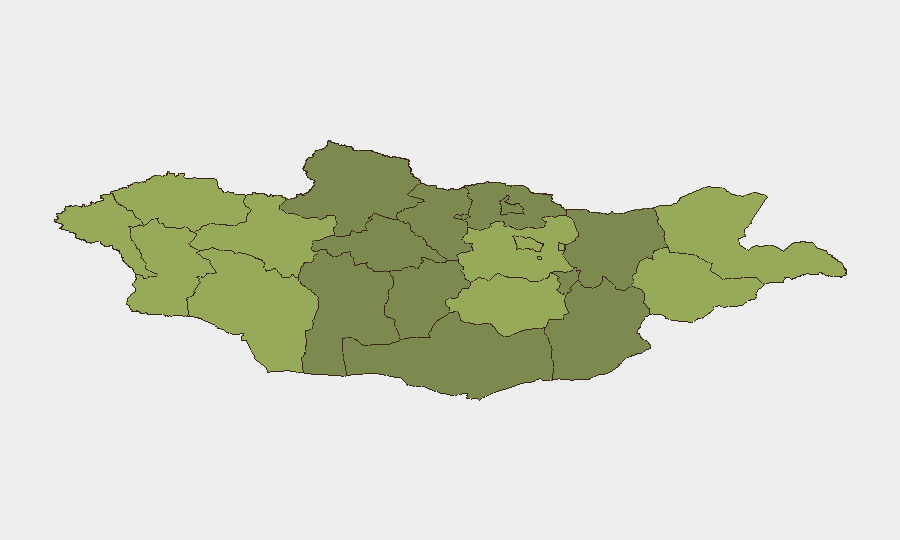
Eastern Mongolia dominates the sub-national risk landscape. Dornod (risk 58) and Sükhbaatar (risk 55)—both border regions with Russia—present the highest composite scores, likely reflecting sparse state presence, limited law enforcement capacity, and cross-border crime/trafficking vulnerabilities. Uvs, Khovd, and Bayan-Ölgii (scores 52, 50, 48) along Mongolia's western and northwestern frontiers face similar structural vulnerabilities. Ulaanbaatar (risk 45), despite being the capital and political center, ranks seventh—reflecting concentrations of state capacity and international presence that partially offset urbanization risks. Remote aimags (provinces) consistently outrank the capital, indicating that duty-of-care risk in Mongolia is driven by geography, population density, and proximity to borders rather than by active conflict or instability.
How GeoBit Would Assist
Organizations with personnel or assets in Mongolia should employ AOI (Area-of-Interest) Monitoring & Early Warning to establish persistent watch on Dornod, Sükhbaatar, and other high-risk border regions, with automated alerting for security incidents. Intel Sweep and multi-language OSINT (including X/Twitter, Telegram, and local news feeds) would provide real-time corroboration of incidents and early detection of emerging threats before they reach mainstream reporting. Routing & Network Analysis would enable duty-of-care teams to plan alternative travel corridors away from highest-risk aimags and to model security scenarios for staff movements.
7-Day Outlook
No imminent escalation is signaled by available data; Mongolia's low global threat ranking reflects an absence of sustained conflict or state instability. However, the 2026-06-11 abduction/hijacking warrant continued monitoring for copycat incidents or organized crime signals. Security teams should maintain standard vigilance on border regions and request fresh corroboration from GeoBit's OSINT and early-warning tools within 48 hours if the 2026-06-11 incident is operationally relevant to their presence.
Highest-Risk Areas — Ranked
| # | State / Region | Risk |
|---|---|---|
| 1 | Dornod | 58 |
| 2 | Sükhbaatar | 55 |
| 3 | Uvs | 52 |
| 4 | Khovd | 50 |
| 5 | Bayan-Ölgii | 48 |
| 6 | Govi-Altai | 46 |
| 7 | Ulaanbaatar | 45 |
| 8 | Zavkhan | 44 |
| 9 | Töv | 42 |
| 10 | Dundgovi | 40 |
| 11 | Darkhan-Uul | 38 |
| 12 | Ömnögovi | 37 |
Previous Daily Briefs
A new Mongolia brief is written every day — each with its own risk map and downloadable CSV. Here's the last week; use the calendar to go further back.
📅 Browse every day by calendar →
Highlighted days have a brief. Tap a day for that day's map & analysis, or “csv” for that day's dataset ($5).