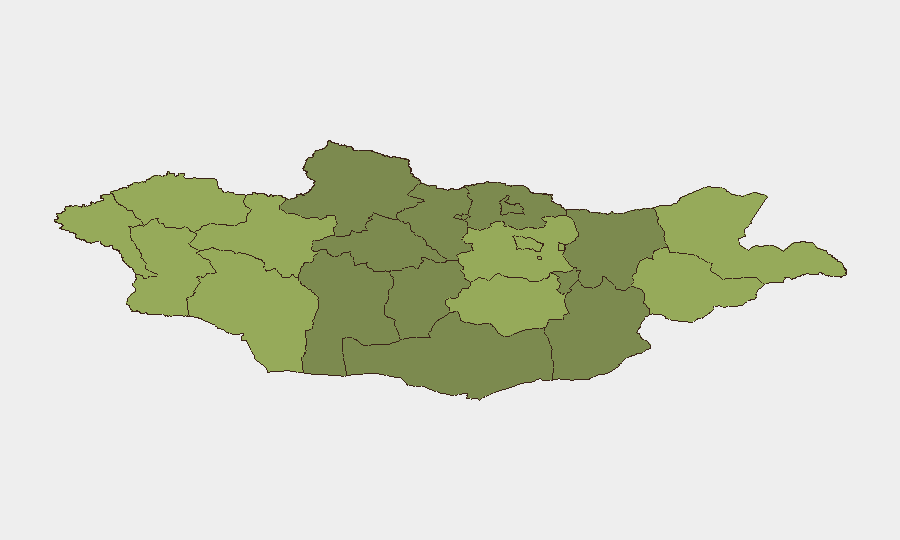
Situation Summary
Mongolia remains a low-threat environment globally (rank #147, composite score 10) with no tracked security events in the past seven days. The country's security posture is stable, with reported incidents limited to wildlife management and routine military-diplomatic engagement. Border regions—particularly Dornod, Sükhbaatar, and Uvs—carry elevated risk profiles, though these scores reflect structural vulnerabilities (remote geography, limited law enforcement presence) rather than active conflict or organized threat activity. The overall trajectory remains benign for corporate operations.
Key Developments
- Ulaanbaatar, 14 October: Police investigated an assault at an automobile-service facility involving three foreign workers alleged to have injured a Mongolian national. Circumstances and outcome remain unclear.
- Ulaanbaatar, 16 October: India and Mongolia convened their 14th Defence Joint Working Group meeting to review bilateral military cooperation and regional-security issues. No contentious outcomes reported.
- Numrug Strictly Protected Area, ongoing investigation: Authorities are investigating liability for a wildfire that began 8 October after a vehicle in a Japanese-linked convoy caught fire. Investigation status as of 18–19 October reporting remains open; 606 personnel and 100 equipment sets were mobilized during firefighting.
Note: Brown-bear incidents reported on 14 October (62 documented incursions on 10–11 October, including three bears secured in Khövsgöl) occurred outside the current review period and should not be characterized as this week's developments, though they underscore wildlife-management and rural safety concerns in northern provinces year-round.
Highest-Risk Areas
Dornod, Sükhbaatar, and Uvs provinces register the highest composite risk scores (58, 55, and 52 respectively), driven primarily by geographic remoteness, sparse law-enforcement infrastructure, and proximity to the Russian and Chinese borders. Khovd and Bayan-Ölgii, in the west, and Govi-Altai, in the south, similarly rank above the national mean, reflecting similar structural vulnerabilities. Ulaanbaatar (rank 7, score 45) and secondary urban centers carry lower risk but remain subject to petty crime and occasional labor disputes. For most corporate operations, these rankings reflect baseline risk rather than imminent threat; however, teams deployed to remote northern or western regions should maintain heightened situational awareness and reliable communication protocols.
How GeoBit Would Assist
Security teams operating in Mongolia would employ AOI Monitoring & Early Warning to maintain persistent watch on Ulaanbaatar and border provinces, with automated alerting for incidents affecting employee movements or facilities. Intel Sweep and multi-language OSINT (including Telegram and local media sources) would capture emerging labor disputes, vehicle accidents, or wildlife events affecting operations before they escalate. Routing & Network Analysis would support journey planning for staff traveling to remote areas, identifying safer corridors and alternate routes in real time, particularly during seasonal weather transitions or after infrastructure incidents such as the Numrug fire.
7-Day Outlook
No escalation in threat activity is anticipated in the coming week. Wildlife incidents and seasonal weather transitions remain the principal operational risks for field teams in rural areas. Border-province deployments should maintain standard vigilance protocols; no specific intelligence suggests heightened cross-border activity or regional instability.
Highest-Risk Areas — Ranked
| # | State / Region | Risk |
|---|---|---|
| 1 | Dornod | 58 |
| 2 | Sükhbaatar | 55 |
| 3 | Uvs | 52 |
| 4 | Khovd | 50 |
| 5 | Bayan-Ölgii | 48 |
| 6 | Govi-Altai | 46 |
| 7 | Ulaanbaatar | 45 |
| 8 | Zavkhan | 44 |
| 9 | Töv | 42 |
| 10 | Dundgovi | 40 |
| 11 | Darkhan-Uul | 38 |
| 12 | Ömnögovi | 37 |
Sources
Previous Weekly Briefs
A new Mongolia brief is written every Monday, covering the week — each with its own risk map and downloadable CSV. Use the calendar to go further back.
- October 13, 2026
- October 6, 2026
- September 29, 2026
- September 22, 2026
- September 15, 2026
- September 8, 2026
- September 1, 2026
📅 Browse past briefs by calendar →
Highlighted days have a brief. Tap a day for that day's map & analysis, or “csv” for that day's dataset ($5).
Atlas — our AI intelligence desk — emails them this snapshot personally. Nothing else, no list.