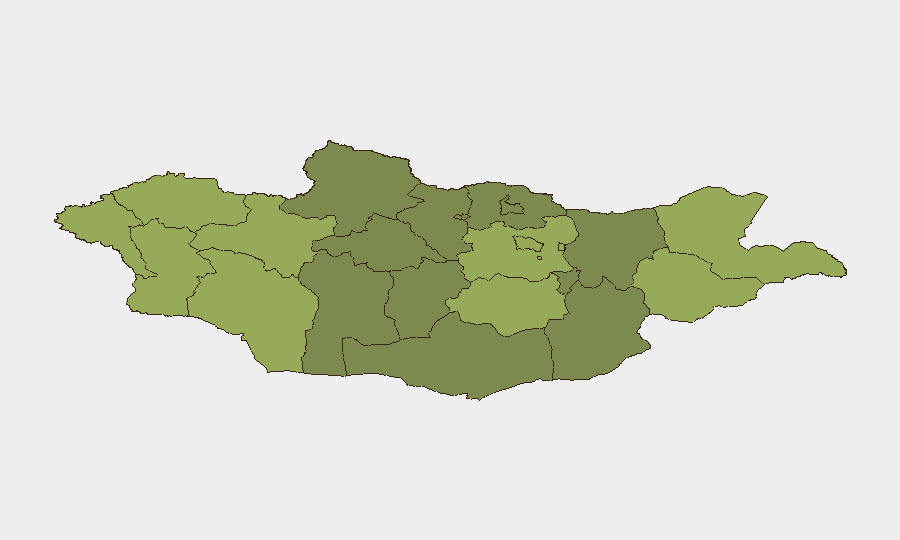
Sub-national composite risk — darker = higher. Source: GeoBit.
⬇ Mongolia dataset (CSV) — events, per-region risk, cyber & sources
Resumen de Situación
Mongolia obtiene una puntuación de 14 en el índice de amenaza GeoBit. La generación de breves en vivo está temporalmente degradada; los datos de eventos se presentan a continuación.
Eventos Recientes
- 2026-06-18 · Rechazo · MINISTERIO vs MONGOLIA
- 2026-06-18 · Desaprobación · MONGOLIA
- 2026-06-18 · Investigación · DELINCUENTE
- 2026-06-17 · Comunicado Público · POBLACIÓN vs MONGOLIA
- 2026-06-17 · Comunicado Público · REY vs MÓNACO
- 2026-06-18 · Comunicado Público · MEDIOS
- 2026-06-17 · Desaprobación · MÓNACO
- 2026-06-17 · Comunicado Público · MÓNACO vs MÓNACO
- 2026-06-18 · Comunicado Público · MONGOLIA vs CAZADOR
- 2026-06-18 · Comunicado Público · MONGOLIA vs CAZADOR
Zonas de Mayor Riesgo — Clasificadas
| # | Estado / Región | Riesgo |
|---|---|---|
| 1 | Dundgovi | 31.3 |
| 2 | Orkhon | 1.3 |
| 3 | Selenge | 1.3 |
| 4 | Övörkhangai | 1.3 |
| 5 | Töv | 1.3 |
| 6 | Ömnögovi | 1.3 |
| 7 | Ulaanbaatar | 1.3 |
| 8 | Bayan-Ölgii | 1.3 |
| 9 | Uvs | 1.3 |
| 10 | Hovsgel | 1.3 |
| 11 | Arkhangai | 1.3 |
| 12 | Bayankhongor | 1.3 |
Fuentes
Informes Diarios Anteriores
Cada día se publica un nuevo informe de Mongolia — cada uno con su propio mapa de riesgo y CSV descargable. Aquí está la última semana; usa el calendario para ir más atrás.
📅 Browse every day by calendar →
Highlighted days have a brief. Tap a day for that day's map & analysis, or “csv” for that day's dataset ($5).
See Mongolia live.
GeoBit maps Mongolia — every region, event, and risk layer — on demand.
Request a live demo →Automated by GeoBit AI from publicly reported events and open-source research. Context only; not a risk advisory. Recognized by Deloitte · NVIDIA Inception · Geospatial World Forum.