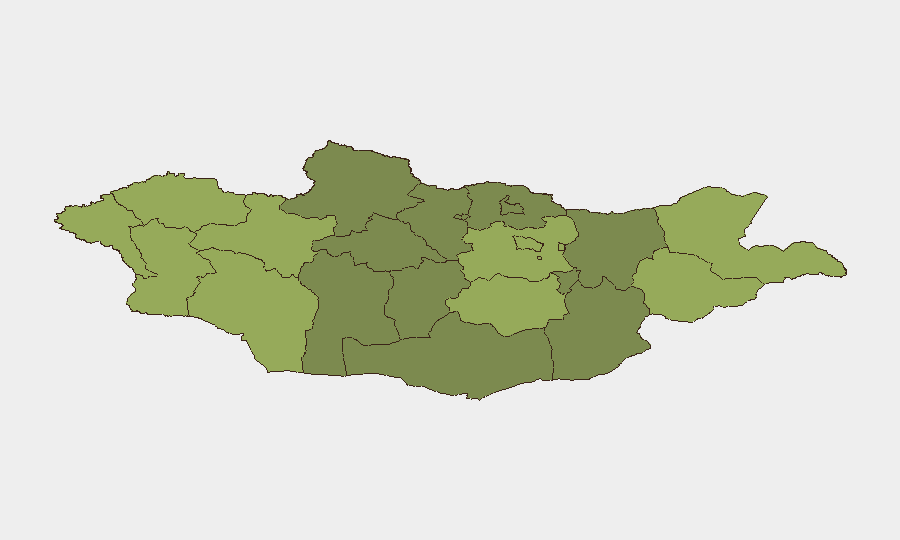
Situation Summary
Mongolia's overall security environment remains stable with no independently verified security incidents, civil unrest, major crime spikes, or infrastructure disruptions documented in open sources over the last 24–48 hours. The country presents a composite threat score of 7 globally, placing it in the lower-risk category. Sub-national risk concentration in the eastern and western border regions (Dornod, Sükhbaatar, Uvs, Khovd) reflects persistent vulnerabilities associated with cross-border smuggling, human trafficking, and transnational organized crime rather than acute destabilization.
Key Developments
No independently corroborated security incidents have been documented in Mongolia during the 24–48 hour window ending 2026-06-24. Open-source monitoring feeds, regional security briefs, and social-media OSINT platforms contain no verified reports of:
- Civil unrest, mass protests, or organized dissent
- Terrorism or armed conflict
- Major crime events or trafficking incidents
- Political instability or regime-pressure incidents
- Infrastructure disruption or service failures
Baseline context (background, not current development): Mongolia has sustained low-level exposure to transnational organized crime, particularly in border zones, for several years. The eastern and western aimags (regions) remain structural vulnerability points for smuggling networks linking China, Russia, and Central Asia.
Highest-Risk Areas
Eastern and western border aimags dominate sub-national risk. Dornod (risk 58) and Sükhbaatar (risk 55) in the east, and Uvs (risk 52) and Khovd (risk 50) in the west, reflect trafficking and smuggling exposure along porous land borders and limited law-enforcement capacity in remote areas. Ulaanbaatar (risk 45) carries elevated risk relative to its scale due to concentration of financial activity, migrant populations, and organized-crime networks. These rankings reflect chronic, not acute, threat drivers—structural vulnerabilities rather than imminent incidents.
How GeoBit Would Assist
Corporate security teams with operations or personnel in Mongolia should employ AOI Monitoring & Early Warning on high-risk aimags (Dornod, Sükhbaatar, Ulaanbaatar) to detect emerging unrest, trafficking activity, or political pressure before mainstream reporting. Multi-language OSINT (Mongolian/Cyrillic X, Telegram, local news outlets) and Telegram intelligence provide real-time signal capture in languages and platforms unavailable to English-only feeds. Network & Actor Analysis and conflict mapping help security teams track organized-crime and smuggling networks operating across borders, informing travel routing and supply-chain risk mitigation.
7-Day Outlook
No acute security triggers or political events are forecasted for the coming week. The security environment is expected to remain stable, with baseline vulnerabilities in border regions persisting unchanged. Duty-of-care teams should maintain routine monitoring of eastern and western aimags; no escalation in alert posture is warranted at present, but sustained awareness of trafficking and smuggling activity in cross-border zones remains prudent.
Report Date: 2026-06-24 | Data Cutoff: 2026-06-23 23:59 UTC
Confidence: Open-source monitoring only; real-time ground intelligence recommended for high-risk operations.
Highest-Risk Areas — Ranked
| # | State / Region | Risk |
|---|---|---|
| 1 | Dornod | 58 |
| 2 | Sükhbaatar | 55 |
| 3 | Uvs | 52 |
| 4 | Khovd | 50 |
| 5 | Bayan-Ölgii | 48 |
| 6 | Govi-Altai | 46 |
| 7 | Ulaanbaatar | 45 |
| 8 | Zavkhan | 44 |
| 9 | Töv | 42 |
| 10 | Dundgovi | 40 |
| 11 | Darkhan-Uul | 38 |
| 12 | Ömnögovi | 37 |
Sources
Previous Daily Briefs
A new Mongolia brief is written every day — each with its own risk map and downloadable CSV. Here's the last week; use the calendar to go further back.
📅 Browse every day by calendar →
Highlighted days have a brief. Tap a day for that day's map & analysis, or “csv” for that day's dataset ($5).