Situation Summary
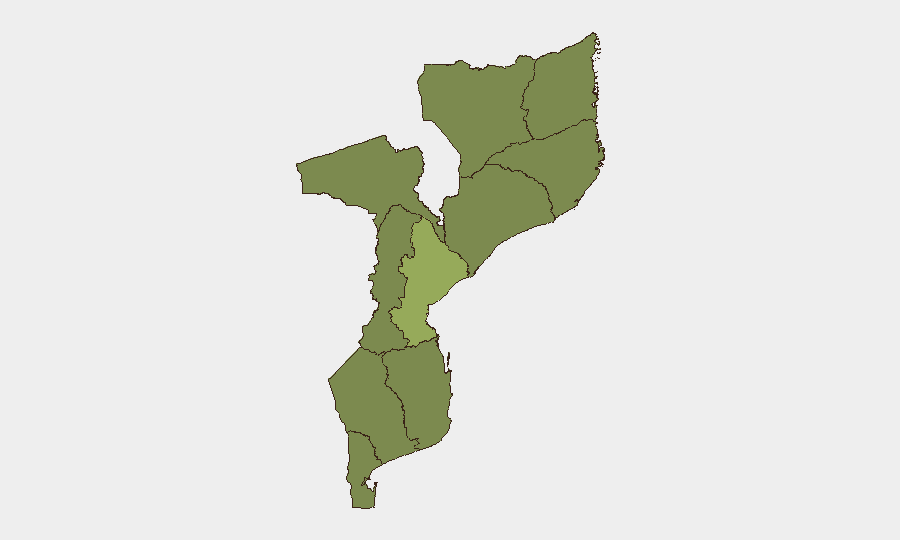
Mozambique remains a lower-mid-tier global security concern (rank #38, composite threat score 45) with a highly concentrated risk profile: Sofala Province accounts for the majority of measured threat activity, while ten other provinces show materially lower but uniform risk levels. No discrete security incidents (attacks, riots, major crimes, infrastructure failures) have been reliably corroborated in open-source reporting within the last 24–48 hours. The security environment is shaped more by structural factors—youth unemployment, governance legitimacy concerns, and uneven rule-of-law implementation—than by acute conflict or organized violence in most regions.
Key Developments
- Maputo City – 23 Jun 2026 – Civil-society validation meeting on National Action Plan for Implementation of Voluntary Principles on Security and Human Rights held by Centro para Democracia e Desenvolvimento (CDD), signaling government and private-sector engagement on human-rights alignment in security operations nationwide.
- Mozambique (national) – 23 Jun 2026 – Afrobarometer survey findings released highlighting widespread youth unemployment and difficulty securing work, reflecting socio-economic stress drivers that can amplify instability and protest risk over medium term.
- Mozambique (national) – 22 Jun 2026 – Government announced national 5G rollout plan with target completion by 2027, focusing on provincial capitals and special economic zones; relevant to infrastructure resilience and emerging cyber-risk surface.
- South Africa (cross-border concern) – 22 Jun 2026 – Mozambican authorities reported five Mozambican citizens killed in xenophobic violence in South Africa; incidents occurred outside Mozambique but underscore safety risk for nationals in transit/diaspora and potential for reciprocal tensions.
- No corroborated incident-level events (attacks, riots, major crime, accidents) reported in Mozambique itself within 24–48 hours – Open-source and social-media monitoring has not surfaced reliably time-stamped discrete security incidents meeting briefing criteria.
Highest-Risk Areas
Sofala Province is the clear outlier, with a composite risk score of 51.8—nearly 2.4× higher than any other province—and accounts for the majority of the 188 tracked events nationally. The remaining ten provinces (Tete, Manica, Gaza, Inhambane, Niassa, Cabo Delgado, Maputo Province, Cidade de Maputo, Nampula, and Zambezia) all register identical risk scores of 21.8, suggesting either a significant concentration of drivers in Sofala or measurement gaps elsewhere. Personnel and asset-protection priority should focus on Sofala; however, the uniform baseline across other regions warrants routine monitoring for emergence of secondary hotspots, particularly in border provinces (Tete, Manica, Niassa) and Cabo Delgado, which has experienced organized violence in prior years.
How GeoBit Would Assist
Organizations with operations in Mozambique should employ AOI (Area-of-Interest) Monitoring & Early Warning to track Sofala Province and secondary-risk provinces with persistent alerting; Intel Sweep and multi-language OSINT fusion to corroborate incident reports and distinguish signal from noise in local reporting; and Network & Actor Analysis to map security-force and non-state actor relationships relevant to duty-of-care and compliance risk. Routing & Network Analysis and satellite/imagery monitoring can support secure supply-chain and personnel-movement planning in higher-risk areas.
7-Day Outlook
No acute escalation is signaled in near-term open-source data. Sofala's elevated risk likely reflects either localized organized-crime activity or reporting bias; clarification requires deeper geographic and actor-level investigation. Governance legitimacy concerns and youth unemployment suggest moderate-to-long-term instability risk rather than imminent disruption; security teams should maintain baseline monitoring posture while prioritizing Sofala-specific intelligence gathering.
Highest-Risk Areas — Ranked
| # | State / Region | Risk |
|---|---|---|
| 1 | Sofala Province | 51.8 |
| 2 | Tete Province | 21.8 |
| 3 | Manica Province | 21.8 |
| 4 | Gaza Province | 21.8 |
| 5 | Inhambane Province | 21.8 |
| 6 | Niassa Province | 21.8 |
| 7 | Cabo Delgado Province | 21.8 |
| 8 | Maputo Province | 21.8 |
| 9 | Cidade de Maputo | 21.8 |
| 10 | Nampula Province | 21.8 |
| 11 | Zambezia Province | 21.8 |
Sources
Previous Daily Briefs
A new Mozambique brief is written every day — each with its own risk map and downloadable CSV. Here's the last week; use the calendar to go further back.
📅 Browse every day by calendar →
Highlighted days have a brief. Tap a day for that day's map & analysis, or “csv” for that day's dataset ($5).