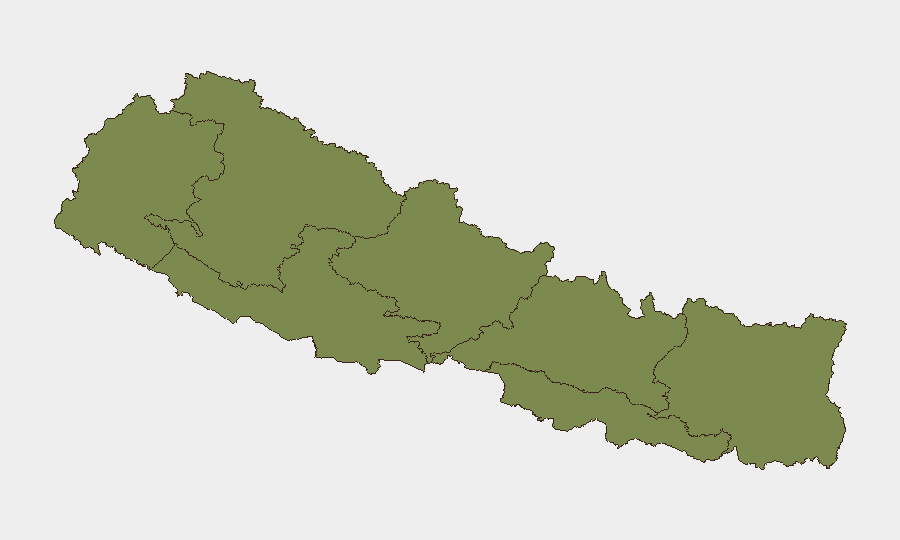
Situation Summary
Nepal remains in a period of political instability following a government collapse earlier this week, with heightened police presence and ongoing pro-reform demonstrations in Kathmandu. Sub-national risk is concentrated in Gandaki and Bagamati provinces, with the capital experiencing sustained but largely peaceful protest activity. A brief border tension incident in West Nawalparasi and unconfirmed rumors of forced evictions have added localized pressure, though neither has escalated into organized violence as of 13 June. Overall threat trajectory remains moderate, with political turbulence and public mobilization driving near-term risk more than armed conflict.
Key Developments
- Kathmandu (central, Singha Durbar & Maitighar) – 12–13 June 2026: Continued pro-reform demonstrations near government buildings and along the Maitighar–Baneshwor corridor demand political transparency in coalition talks. Police have deployed cordons and traffic controls; no mass arrests or serious violence reported in the last 24 hours.
- Kathmandu (city-wide) – 13 June 2026: Heavy police deployment around new protests following government collapse. Crowd-control units positioned in central areas; local sources describe protests as "largely peaceful" with focus on preventing road blockades and vandalism.
- Kathmandu (downtown) – 13 June 2026: Large LGBTQ+ Pride march proceeded peacefully with hundreds of participants and visible police presence along the route. No clashes or arrests reported; temporary traffic disruption in central streets.
- West Nawalparasi (Susta border area) – 13 June 2026: Brief tension after armed Indian security personnel allegedly crossed onto Nepali territory during routine patrol. Incident was short-lived with no shots fired or casualties; government spokesperson later stated no new cabinet decision on border settlements to defuse local anxiety.
- Kathmandu (city-wide) – 13 June 2026: Government Spokesperson Sasmit Pokharel clarified that the Council of Ministers has not adopted any new decision on squatter (sukumbasi) settlements, following rumors of forced evictions. No confirmed clearance operations reported as of 13 June.
- Nationwide (online) – 12–13 June 2026: Surge in VPN usage and online protest coordination by youth activists following recent social-media access restrictions. Elevates information-security and cyber-monitoring risk as authorities attempt to track digital organizing.
Highest-Risk Areas
Gandaki Province (31.4) and Bagamati Province (28.4) account for the overwhelming majority of tracked risk, with Bagamati—home to Kathmandu—driving sustained concern due to ongoing political demonstrations and police presence. Gandaki's elevated score reflects underlying instability in the western hill region. Koshi Province (6.2) registers moderately, while remaining provinces score below 2.0, indicating that risk is heavily concentrated in the Kathmandu Valley and adjacent highlands rather than distributed nationally.
How GeoBit Would Assist
Security teams should deploy AOI Monitoring & Early Warning on Kathmandu's key protest corridors (Singha Durbar, Maitighar, Baneshwor) and border-sensitive areas (Susta, West Nawalparasi) to detect escalation in real time. Intel Sweep, X/Twitter & Telegram OSINT, and multi-language sentiment analysis enable continuous tracking of online organizing, VPN-based activism, and government messaging across Nepali-language channels. Network & Actor Analysis of protest leadership and political factions provides early signals of coalition-building or radicalization among opposition movements.
7-Day Outlook
Demonstrations are expected to remain active through the immediate political transition, with police presence and traffic controls likely continuing in Kathmandu's central districts. Border tensions may recur if patrol incidents are repeated or if government policy on disputed areas shifts; monitoring of Indian and Nepali official statements is warranted. Major escalation risk remains low absent a significant triggering event (mass arrests, violent police response, or new policy announcements), though the political vacuum creates unpredictability.
Highest-Risk Areas — Ranked
| # | State / Region | Risk |
|---|---|---|
| 1 | Gandaki Province | 31.4 |
| 2 | Bagamati Province | 28.4 |
| 3 | Koshi Province | 6.2 |
| 4 | Sudurpashchim Province | 1.4 |
| 5 | Karnali Province | 1.4 |
| 6 | Lumbini Province | 1.4 |
| 7 | Madhesh Province | 1.4 |
Sources
Previous Daily Briefs
A new Nepal brief is written every day — each with its own risk map and downloadable CSV. Here's the last week; use the calendar to go further back.
📅 Browse every day by calendar →
Highlighted days have a brief. Tap a day for that day's map & analysis, or “csv” for that day's dataset ($5).