Situation Summary
North Korea remains in a posture of sustained military escalation and strategic hardening, with Kim Jong Un overseeing expanded nuclear infrastructure, new long-range strike systems, and constitutional changes that formally entrench confrontation with South Korea. The regime has signaled permanent commitment to nuclear status, removed reunification as a political objective, and deepened military coordination with Russia, closing diplomatic off-ramps and raising escalation risk on the peninsula. Current trajectory reflects a deliberate shift toward long-term strategic autonomy and deterrence posture rather than negotiation, with weapons development activity at sustained high tempo.
Key Developments
- Pyongyang (nationwide) – Kim Jong Un pledged to "permanently cement" North Korea's nuclear power status and designated South Korea as the regime's "most hostile" state in a Supreme People's Assembly policy speech, signaling zero near-term de-escalation intent.
- Pyongyang (constitutional) – Revised constitution removed legal reunification as a goal and reclassified South Korea as merely a "neighboring country," institutionalizing long-term separation and reducing diplomatic flexibility.
- Yongbyon, North Pyongan Province – IAEA reports "very serious" advances at the nuclear complex, including probable new uranium enrichment facility and surging site activity, expanding weapons-grade material production capacity.
- Border areas facing Seoul – Kim Jong Un inspected new 155-mm self-propelled artillery system capable of striking targets 60+ km away, with planned deployment along DMZ, placing Seoul metropolitan area within precision range.
- Naval/nationwide – Kim Jong Un oversaw ballistic and cruise missile launches from the *Choe Hyon* destroyer and additional warship programs, with state media reaffirming nuclear deterrence as top priority.
- Moscow–Pyongyang – Russian officials pledged to sign military cooperation plan with North Korea for 2027–2031, signaling potential increases in military assistance and technology transfer.
- UN Security Council – United States announced push to "update and strengthen" sanctions on North Korea; regime publicly rejected denuclearization calls and criticized Quad as tool of US dominance.
- Internal leadership – South Korean intelligence briefed that Kim Jong Un's teenage daughter is being positioned as successor, with state media depicting her in military roles, indicating regime intent to stabilize long-term succession.
Highest-Risk Areas
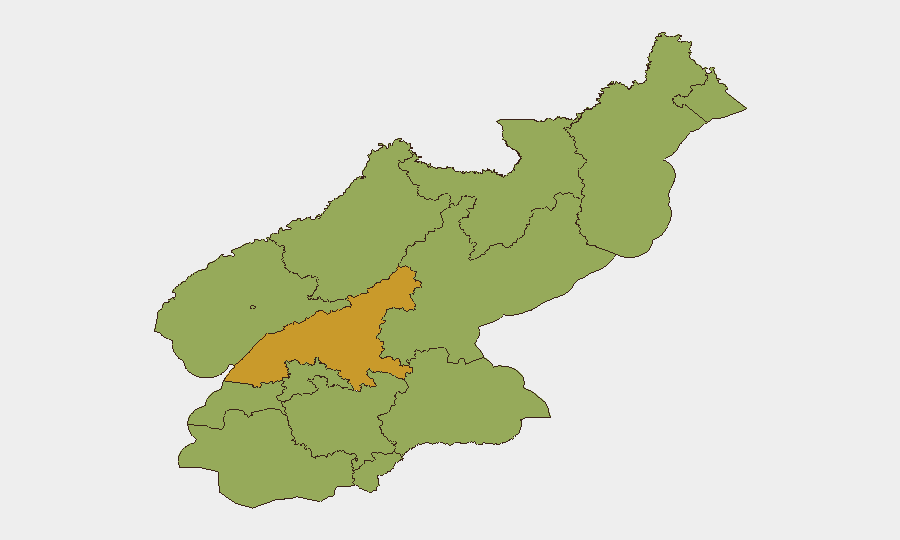
South Pyongan Province (risk 71.5) significantly outpaces all other regions, driven by the Yongbyon nuclear complex's accelerating enrichment activity and its strategic importance to weapons development. Pyongyang (43.6) reflects regime-level decision-making on nuclear policy, constitutional revision, and military procurement—the command center for escalation signaling. The remaining ten provinces cluster at 41.5, indicating distributed baseline threat from conventional military readiness, border deployments, and nationwide military mobilization posture. Risk concentration in nuclear and capital regions reflects both technical weapons advancement and political hardening as the primary drivers.
How GeoBit Would Assist
Teams with personnel or assets in-country would employ AOI Monitoring & Early Warning to track sustained activity at Yongbyon and border deployment zones with persistent alerting. Satellite & Imagery analysis combined with Conflict & Military force-structure tracking would provide real-time visibility on new artillery placement, warship movements, and nuclear complex expansion. Intel Sweep and multi-language OSINT fusion across regime media, military announcements, and international signals intelligence would enable early detection of policy shifts, succession instability, or command-level changes that could trigger rapid escalation.
7-Day Outlook
No immediate kinetic triggers are signaled, but the regime's sustained weapons testing tempo, new artillery deployment timelines, and hardened political positioning suggest elevated baseline risk through the remainder of 2026. Russian military cooperation formalization and regime succession signaling are multi-year processes unlikely to spike acutely in the next week. Monitor for any North Korean response to US sanctions escalation at the UN or unexpected military exercises along the DMZ.
Highest-Risk Areas — Ranked
| # | State / Region | Risk |
|---|---|---|
| 1 | South Pyongan | 71.5 |
| 2 | P'yŏngyang | 43.6 |
| 3 | Ryanggang | 41.5 |
| 4 | North Hamgyong | 41.5 |
| 5 | North Pyongan | 41.5 |
| 6 | Chagang | 41.5 |
| 7 | Nampo | 41.5 |
| 8 | South Hwanghae | 41.5 |
| 9 | North Hwanghae | 41.5 |
| 10 | South Hamgyong | 41.5 |
| 11 | Kaesong | 41.5 |
| 12 | Kangwon | 41.5 |
Previous Daily Briefs
A new North Korea brief is written every day — each with its own risk map and downloadable CSV. Here's the last week; use the calendar to go further back.
📅 Browse every day by calendar →
Highlighted days have a brief. Tap a day for that day's map & analysis, or “csv” for that day's dataset ($5).