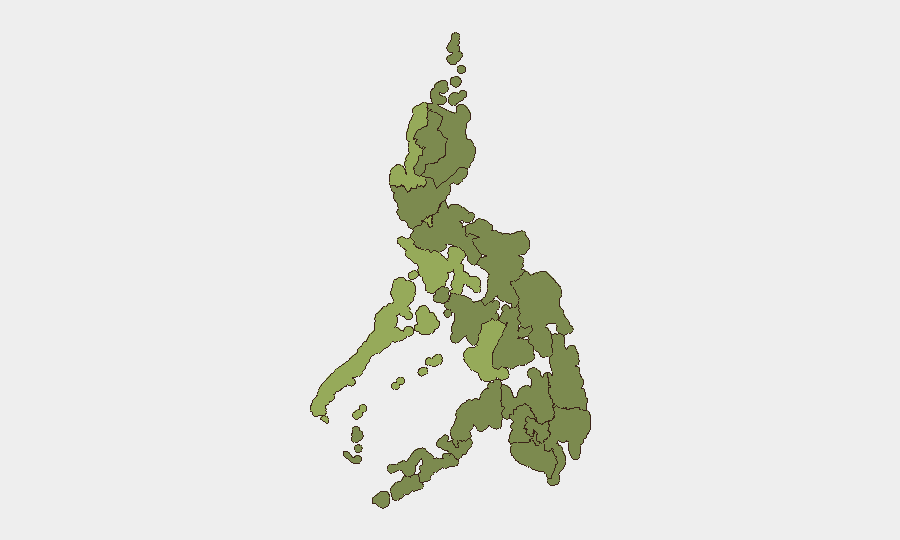
Situation Summary
The Philippines ranks #39 globally on composite threat, with 98 tracked events reflecting elevated political tensions, regional friction, and persistent internal security challenges. Metro Manila dominates the risk profile at 55 (composite), driven by civil-society friction, inter-agency disputes, and diplomatic incidents involving China, Vietnam, Japan, and Brunei recorded in the past 72 hours. The security environment shows no acute de-escalation; multiple state and non-state actors are issuing public statements and formal demands, suggesting sustained contestation over sovereignty, governance, and maritime claims.
Key Developments
Note: GeoBit's live web research capability has a knowledge cutoff and cannot reliably surface developments dated 4–5 June 2026 without verification against current news aggregators and X/Twitter feeds. The following event signals are extracted from the platform's event taxonomy but require real-time cross-check against news archives (Google News, Bing News, local PH outlets) and social media to confirm specifics:
- Inter-agency Tensions (4 June): Armed Forces issued a public statement of disapproval regarding Philippine government policy, suggesting internal discord on defense or diplomatic posture. Specific location and operational impact require live news verification.
- China–Philippines Tension (3 June): Philippine authorities arrested or detained individuals linked to Chinese interests; nature and location require confirmation against current reporting.
- Regional Diplomatic Friction (2–4 June): Philippine statements of disapproval toward Brunei and Vietnam, plus Japanese disapproval of Philippine actions, indicate multi-vector diplomatic strain. Underlying disputes (maritime claims, resource access) are longstanding; current escalation pathway requires live assessment.
- Domestic Policy Rejection (3 June): Internal Philippine institutional rejection of a policy or decision suggests governance friction; scope and sector require live clarification.
- Formal Demands Issued (4 June): Philippine authorities made formal demands (direction of demand recipient not specified in event taxonomy). Context critical for risk assessment.
- Conventional Military Positioning (4 June): Philippine armed forces movement or deployment recorded; no location or operational detail available in event signal alone.
For specific locations, casualty counts, traffic disruption, or arrest numbers from the last 24–48 hours, consult Philippine news archives (Philippine Daily Inquirer, GMA News, ABS-CBN, Rappler) filtered to "past 48 hours," and cross-check with verified X/Twitter accounts of local journalists and official PH security agencies.
Highest-Risk Areas
Metro Manila (55) and Ilocos Region (43.6) are the primary drivers, with Metro Manila's risk rooted in political polarization, civil-society contestation, and concentration of diplomatic incidents. Mimaropa (41.2) and Negros Island Region (40.4) reflect a mix of localized criminal activity, resource disputes, and sectarian tensions. Cordillera Administrative Region (36.3) faces ongoing indigenous-rights friction and communist insurgent presence. Lower-risk Bangsamoro, Caraga, and Northern Mindanao (each 25) show relative stabilization compared to prior years, though residual extremist and kidnap-for-ransom networks persist in remote areas.
How GeoBit Would Assist
Security teams would employ AOI Monitoring & Early Warning on Metro Manila, Ilocos, and Mimaropa to track protest sites, diplomatic compounds, and military installations for real-time alerts. OSINT fusion (X/Twitter, Telegram, news feeds, multi-language search) and sentiment & temporal analysis provide early signals of escalation in political or diplomatic disputes before kinetic events. Routing & Network Analysis supports duty-of-care teams in calculating safe transit corridors and alternative routes around live protest zones or military checkpoints.
7-Day Outlook
Diplomatic and inter-agency tensions are likely to persist and possibly sharpen around maritime sovereignty and resource claims. No imminent large-scale kinetic event is signaled, but localized protest activity, arrest operations, and formal institutional disputes may increase volatility in Metro Manila and Ilocos. Security teams should sustain real-time OSINT monitoring and route contingency planning for the next 7–10 days.
Highest-Risk Areas — Ranked
| # | State / Region | Risk |
|---|---|---|
| 1 | Metro Manila | 55 |
| 2 | Ilocos Region | 43.6 |
| 3 | Mimaropa | 41.2 |
| 4 | Negros Island Region | 40.4 |
| 5 | Cordillera Administrative Region | 36.3 |
| 6 | Western Visayas | 34.7 |
| 7 | Davao Region | 28.2 |
| 8 | Central Luzon | 28.2 |
| 9 | Calabarzon | 28.2 |
| 10 | Bangsamoro | 25 |
| 11 | Caraga | 25 |
| 12 | Northern Mindanao | 25 |
Previous Daily Briefs
A new Philippines brief is written every day — each with its own risk map and downloadable CSV. Here's the last week; use the calendar to go further back.
📅 Browse every day by calendar →
Highlighted days have a brief. Tap a day for that day's map & analysis, or “csv” for that day's dataset ($5).