Situation Summary
Poland remains in a heightened but stable security posture driven by proximity to the Ukraine conflict and NATO's eastern-flank responsibilities rather than by domestic instability or terrorism. The composite threat score of 8 (rank #117 globally) reflects manageable risk for most of the country, with concentrated concerns in Łódź and Masovian Voivodeships tied to law-enforcement investigations and isolated protest activity. No large-scale civil unrest, terror attacks, or major violent crime incidents have affected major urban centers or foreign personnel in the past 48 hours.
Key Developments
- Gdańsk, Pomeranian Voivodeship – 25 June 2026 – Ukraine Recovery Conference opened under heavy Polish security deployment, including reinforced police presence, access controls, and protection of foreign delegations. Enhanced measures reflect war-related threat perceptions and geopolitical tensions rather than new domestic incidents.
- Poland–Ukraine border regions (Podkarpackie, Lublin Voivodeships) – 24–25 June 2026 – Polish air defense and border forces maintained heightened vigilance following Russian drone and missile strikes on western Ukraine. Authorities note that Russian drones continue to occasionally stray into Polish airspace; current operational tempo has kept border-area alertness elevated but without new incursions reported in the last 48 hours.
- Warsaw – 24–25 June 2026 – Polish deputy prime minister and senior officials reiterated warnings that Russia may attempt "false flag" or hybrid operations (sabotage, information operations, or provocations) against NATO members including Poland. This feeds into enhanced counter-intelligence posture in the capital and other major cities.
- National level – 24–25 June 2026 – Polish security analysis emphasizes risk of Russian retaliation or infrastructure spillover as Ukraine strikes Russian energy and logistics targets. Intensified planning and discrete protective measures have been applied to critical infrastructure sites, especially in the east, to guard against attacks on energy, telecoms, and transport systems.
- Eastern Poland (general) – 24–25 June 2026 – Commentary tied to the new Poland–UK Defence Treaty underscores sustained high readiness of Polish forces, including forward-deployed units and air-defense assets. This maintains a deterrent posture along the NATO eastern flank without signaling a new acute crisis.
- Łódź and Masovian Voivodeships – 26 June 2026 – Police investigations into alleged misconduct, bank disputes, and isolated protest incidents (including violent clashes on 25 June) remain active. No indication of escalation or nationwide organizing; events appear localized.
Highest-Risk Areas
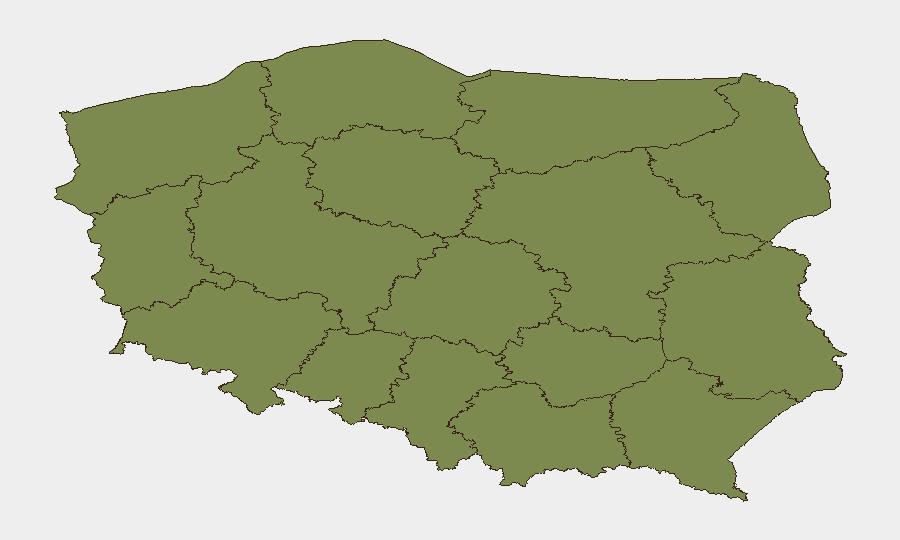
Łódź (risk 31.9) and Masovian (risk 30.1) Voivodeships account for the bulk of Poland's tracked security events and drive the national ranking. Both show active police investigations, protest activity, and alleged institutional friction rather than organized crime or large-scale unrest. Greater Poland Voivodeship (11.5) registers notably lower but still elevated risk. The remaining nine regions (Lublin, Lower Silesia, and the north and east) are classified as low-risk, reflecting stable conditions in much of the country outside the central industrial and administrative heartland.
How GeoBit Would Assist
Security teams protecting personnel or assets in Poland should deploy AOI Monitoring & Early Warning on Łódź and Masovian Voivodeships to catch emerging protest activity, labor disputes, or police operations before they affect movement or facility security. Intel Sweep and multi-language OSINT fusion on Polish law enforcement, local media, and X/Telegram traffic would provide 24–48-hour situational clarity on protest timing and location. Routing & Network Analysis offers contingency pathways around known high-risk zones in those voivodeships, particularly ahead of large gatherings or Ukraine-related diplomatic events in Warsaw or Gdańsk.
7-Day Outlook
Poland's security environment is expected to remain stable but alert over the next week, with sustained NATO readiness along the eastern border and continued diplomatic activity tied to the Ukraine conflict. Localized protest activity and police investigations in central voivodeships may continue but do not suggest escalation to nationwide unrest. Risk of Russian hybrid operations remains a strategic concern rather than an imminent tactical threat in the near term.
Highest-Risk Areas — Ranked
| # | State / Region | Risk |
|---|---|---|
| 1 | Łódź Voivodeship | 31.9 |
| 2 | Masovian Voivodeship | 30.1 |
| 3 | Greater Poland Voivodeship | 11.5 |
| 4 | Lublin Voivodeship | 4.3 |
| 5 | Lower Silesian Voivodeship | 3.1 |
| 6 | Warmian-Masurian Voivodeship | 1.9 |
| 7 | Subcarpathian Voivodeship | 1.9 |
| 8 | Podlaskie Voivodeship | 1.9 |
| 9 | West Pomeranian Voivodeship | 1.9 |
| 10 | Lubusz Voivodeship | 1.9 |
| 11 | Pomeranian Voivodeship | 1.9 |
| 12 | Kuyavian-Pomeranian Voivodeship | 1.9 |
Sources
Previous Daily Briefs
A new Poland brief is written every day — each with its own risk map and downloadable CSV. Here's the last week; use the calendar to go further back.
📅 Browse every day by calendar →
Highlighted days have a brief. Tap a day for that day's map & analysis, or “csv” for that day's dataset ($5).