Situation Summary
Qatar remains a low-threat environment with a composite threat score of 5 and global rank of #148. No verified security incidents, civil unrest, or infrastructure disruption occurred within Qatar's territory in the last 24–48 hours. The country continues to function as a regional diplomatic hub; however, elevated bilateral tensions between Iran and Qatar, alongside broader regional military activity in the Strait of Hormuz, warrant monitoring for potential downstream effects on Qatar's maritime and energy assets.
Key Developments
- Iran–Qatar Relations Tension (2026-07-03). Iran has reduced diplomatic relations with Qatar and rejected bilateral engagement, signaling a diplomatic rupture. This does not currently pose direct physical security risk within Qatar but may constrain Qatar's ability to mediate regional disputes and affect bilateral commerce and energy cooperation.
- Qatar Military Policy Statement (2026-07-02). The Qatari President issued a public statement regarding military posture; the military subsequently rejected an Islamic actor or entity. Details remain limited in open reporting, but this suggests internal alignment discussions on security doctrine or operational priorities.
- U.S.–Qatar Administrative Sanctions (2026-07-03). The U.S. administration has imposed administrative sanctions; the context and targets remain unclear from available open sources. Corporate and financial entities with U.S. exposure should monitor for clarification on scope and compliance requirements.
- Boeing Disapproval (2026-07-02). Qatar's government expressed disapproval of Boeing, likely linked to aircraft delivery, maintenance, or procurement disputes. No supply disruption has been confirmed, but aviation and logistics operators should confirm status of active contracts.
- Journalist Administrative Sanction (2026-07-02). An administrative sanction was imposed on a journalist; the grounds and jurisdiction are not yet clear from open reporting. Media freedom and press monitoring organizations may clarify intent over the coming 24–48 hours.
- Regional Strait of Hormuz Activity. Indirect reporting indicates continued military and maritime activity in the Strait of Hormuz region linked to Iran–U.S. tensions. Qatar's maritime commerce and energy export routes transit these waters; no direct incidents affecting Qatar's ports or vessels have been confirmed in the last 48 hours.
Highest-Risk Areas
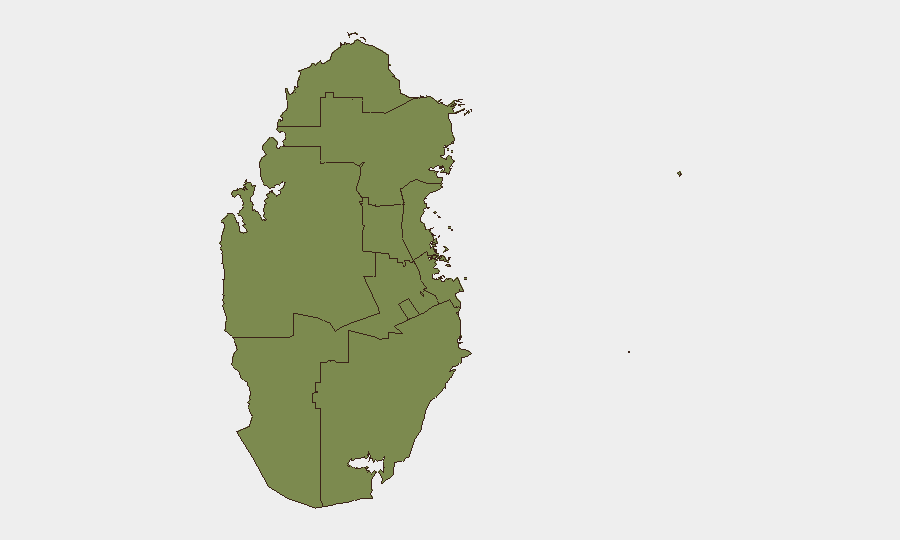
Doha dominates Qatar's sub-national threat profile with a composite risk score of 31.8—substantially higher than all other regions. Al Shahaniya follows at 18, while the remaining governorates cluster at 1.8. The concentration in Doha reflects its role as the nation's capital, commercial center, and diplomatic hub, where large concentrations of foreign nationals, government facilities, and international business operations are located. Al Shahaniya's elevated score may reflect industrial or infrastructure density. Risk in Doha remains manageable, but it is the primary focus for any disruption affecting nationals or multinational staff.
How GeoBit Would Assist
Intel Sweep and OSINT Fusion would aggregate diplomatic signals, sanctions language, and regional military activity across official statements, social platforms, and regional news feeds to provide early warning of escalation affecting Qatar. AOI Monitoring & Early Warning with persistent geographic focus on Doha's central business district, port facilities, and diplomatic quarters would alert security teams to protests, access disruptions, or abnormal activity before they spread. Maritime & Aviation Tracking linked to Strait of Hormuz corridor monitoring would flag any incident affecting Qatar-flagged or Qatar-bound vessels and aircraft, enabling route or shipment diversion.
7-Day Outlook
Near-term risk in Qatar proper remains low, but the Iran–Qatar diplomatic rupture and continued U.S.–Iran regional friction warrant close watch on multilateral mediation efforts, which could strain Qatar's diplomatic capital and create secondary effects on business confidence. Sanctions developments and Boeing-related procurement disputes are likely to clarify within 48–72 hours. No acute security degradation within Qatar's territory is expected in the next seven days absent a major regional escalation in the Strait of Hormuz.
Highest-Risk Areas — Ranked
| # | State / Region | Risk |
|---|---|---|
| 1 | Doha | 31.8 |
| 2 | Al Shahaniya | 18 |
| 3 | Ash Shamal | 1.8 |
| 4 | Al Rayyan | 1.8 |
| 5 | Al Khor and Al Thakhira | 1.8 |
| 6 | Al-Daayen | 1.8 |
| 7 | Umm Salal | 1.8 |
| 8 | Al Wakrah | 1.8 |
Sources
Previous Daily Briefs
A new Qatar brief is written every day — each with its own risk map and downloadable CSV. Here's the last week; use the calendar to go further back.
📅 Browse every day by calendar →
Highlighted days have a brief. Tap a day for that day's map & analysis, or “csv” for that day's dataset ($5).