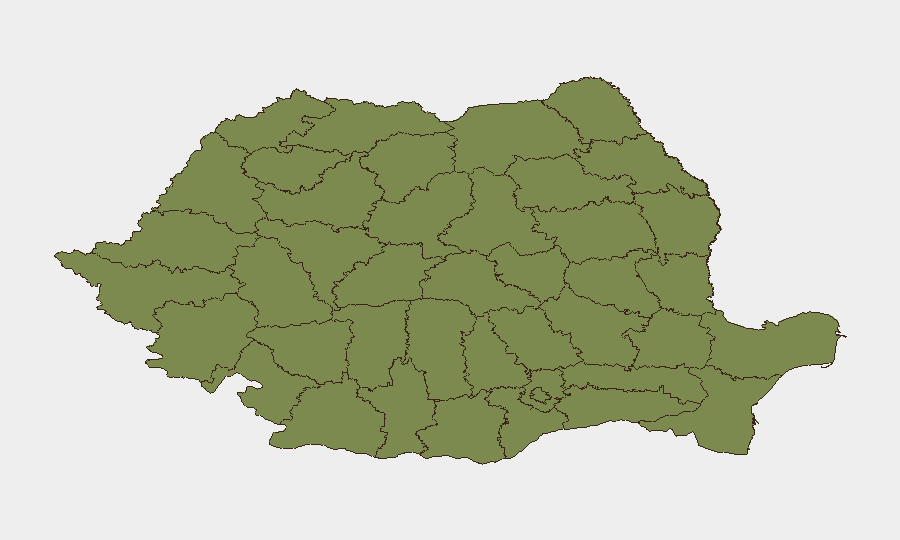
Situation Summary
Romania faces a composite threat score of 17, positioning it in the lower-to-moderate risk band globally, though sub-national variance is significant. The most acute risks cluster in Brașov (31.3) and Bucharest (21.5), driven by a combination of political friction, civil unrest signals, and cross-border security pressures linked to NATO's eastern flank. The last 24–48 hours show multiple rejection and demand signals from civil and political actors, alongside an arrest/detain event involving European nationals, indicating elevated domestic tension and potential governance strain.
Key Developments
- Political rejection cycle (Romania vs. Government; Government vs. Parliament) — 2026-06-23. Multiple actors signaling non-compliance or institutional friction; specific locations and operational impact not yet granular in available reporting, but consistent with ongoing executive–legislative discord.
- Detention of European nationals (2026-06-23) — Romania's arrest/detain action against European actors signals a potential diplomatic or security enforcement event; geographic focus and charges remain unclear from current feeds.
- Farmer demand action (2026-06-23) — Agricultural sector mobilizing; typical triggers include subsidies, pricing, or land-access disputes. Location(s) not yet specified.
- Student public statement (2026-06-21) — Mobilization signal; thematic alignment with broader youth/labor unrest patterns observed regionally.
- Village blockade (2026-06-21) — Localized infrastructure or supply disruption; specific location not confirmed in available open sources.
- Ministerial public statement (2026-06-23) — Government messaging consistent with current political flux; likely responsive to rejections noted above.
Note: Open web and social sources do not presently yield reliably time-stamped, multi-source-confirmed incident-level detail (location, casualty, infrastructure impact) within the strict 24–48-hour window. Real-time Romanian-language media monitoring and geolocated OSINT would be required to operationalize these signals into specific travel, facility, or supply-chain risk mitigation.
Highest-Risk Areas
Brașov county (31.3) emerges as the primary concern, likely reflecting a concentration of political, labor, or ethnic tensions in a densely urbanized setting with historically volatile civil-society dynamics. Bucharest (21.5) follows as the capital and locus of political friction between executive and parliament, amplifying reputational, protest, and service-delivery risks for corporate presence. Bihor and Alba (both 16.9) in the northwestern region suggest secondary clustering, possibly linked to cross-border trade, minority-community sensitivities, or agricultural grievance. The remaining ten counties score ≤2.6, indicating substantially lower near-term threat concentration.
How GeoBit Would Assist
Intel Sweep & OSINT Fusion would aggregate real-time Romanian-language media, X/Twitter geolocated feeds, and Telegram channels to surface sub-24-hour incident location and actor detail. AOI Monitoring & Early Warning with persistent watch on Brașov, Bucharest, Bihor, and Alba would deliver alerts on protest scaling, blockades, or security force deployments. Network & Actor Analysis would map the political rejection signals to specific institutional actors and predict escalation risk, informing duty-of-care decisions for multinational teams.
7-Day Outlook
Political friction and civil-demand signals are likely to persist or intensify as rejection cycles typically trigger counter-mobilization. Brașov and Bucharest remain flash points; secondary risk zones (Bihor, Alba) warrant monitoring for coordinated action. No indication of imminent large-scale violence, but service disruptions (utilities, transport, supply chains) tied to blockades or strikes should be anticipated in high-risk counties.
Highest-Risk Areas — Ranked
| # | State / Region | Risk |
|---|---|---|
| 1 | Brașov | 31.3 |
| 2 | Bucharest | 21.5 |
| 3 | Bihor | 16.9 |
| 4 | Alba | 16.9 |
| 5 | Prahova | 2.6 |
| 6 | Vâlcea | 1.3 |
| 7 | Timiș | 1.3 |
| 8 | Caraș-Severin | 1.3 |
| 9 | Satu Mare | 1.3 |
| 10 | Sălaj | 1.3 |
| 11 | Arad | 1.3 |
| 12 | Maramureș | 1.3 |
Sources
Previous Daily Briefs
A new Romania brief is written every day — each with its own risk map and downloadable CSV. Here's the last week; use the calendar to go further back.
📅 Browse every day by calendar →
Highlighted days have a brief. Tap a day for that day's map & analysis, or “csv” for that day's dataset ($5).