Situation Summary
Senegal remains a relatively stable West African state with a composite threat score of 5 and global ranking of #151—placing it in the lower-risk category. No credible security incidents, civil unrest, crime spikes, or infrastructure disruptions have been verified in the last 24–48 hours. The nation's security baseline remains unchanged; domestic political and diplomatic statements dominate recent signal activity, with no direct translation to ground-level threats affecting corporate operations or personnel safety.
Key Developments
No verified security, conflict, crime, civil-unrest, or infrastructure incidents have been identified in Senegal during the last 24–48 hours. Recent signal activity (27–28 June) consists primarily of domestic political statements and legislative debate—including Senate disapprovals, administrative sanctions, and parliamentary reject motions—that do not reflect active threats to expatriate personnel, supply chains, or business continuity. Web research found only sports-related coverage (World Cup contingency planning) and general border-trade discussion with The Gambia, neither indicating imminent operational risk.
Highest-Risk Areas
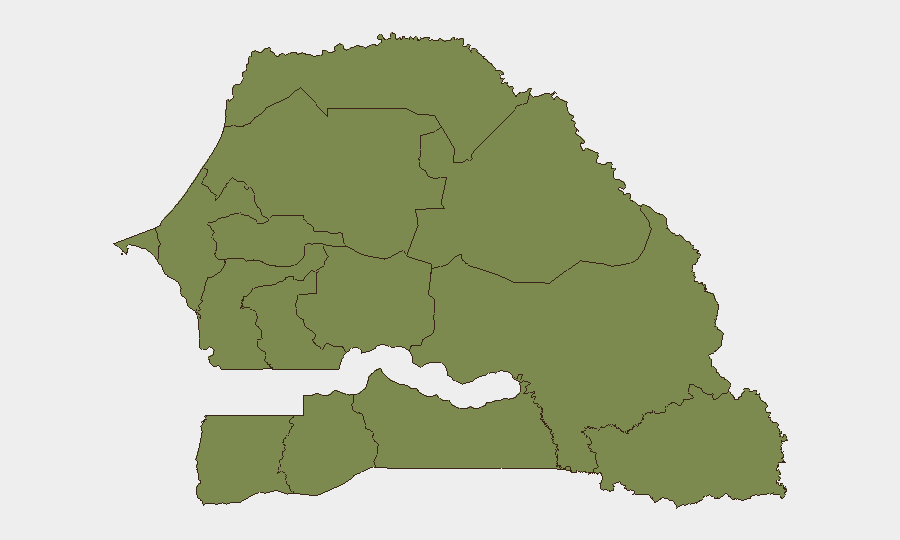
Tambacounda Region significantly outpaces all other administrative divisions, with a composite risk score of 31.5—approximately 21 times higher than the national average and all other regions. This disparity reflects persistent cross-border smuggling networks, pastoral-community tensions, and proximity to Mali's conflict spillover. The remaining 11 regions cluster at 1.5, indicating risk is heavily geographically concentrated rather than dispersed. Corporate security planning should prioritize Tambacounda for restricted travel protocols, enhanced vetting of local partners, and supply-chain diversification to avoid single-point dependencies in that zone.
How GeoBit Would Assist
Teams managing personnel or assets in Senegal should deploy AOI Monitoring & Early Warning focused on Tambacounda and key urban centers (Dakar, Saint-Louis) to catch emerging incidents—unrest, accidents, crime clusters—before they escalate. Intel Sweep with multi-language OSINT (Arabic, Wolof, French) and X/Twitter & Telegram OSINT will surface localized warnings from communities, diaspora networks, and security-conscious sources faster than traditional media. Routing & Network Analysis can pre-stage alternative transport and supply routes to insulate operations from Tambacounda disruptions and border instability.
7-Day Outlook
No acute threat indicators suggest deterioration in the near term. Domestic political activity (Senate and parliamentary statements) is normal governance rhythm. Monitoring should remain baseline, with emphasis on Tambacounda region cross-border activity and any escalation in pastoral-community disputes. Routine duty-of-care protocols (staff check-ins, travel approval, emergency contact refresh) remain appropriate for standard operations.
Highest-Risk Areas — Ranked
| # | State / Region | Risk |
|---|---|---|
| 1 | Tambacounda Region | 31.5 |
| 2 | Dakar Region | 1.5 |
| 3 | Louga Region | 1.5 |
| 4 | Thiès Region | 1.5 |
| 5 | Fatick Region | 1.5 |
| 6 | Diourbel Region | 1.5 |
| 7 | Kaolack Region | 1.5 |
| 8 | Saint-Louis Region | 1.5 |
| 9 | Kaffrine Region | 1.5 |
| 10 | Ziguinchor Region | 1.5 |
| 11 | Sédhiou Region | 1.5 |
| 12 | Kolda Region | 1.5 |
Sources
Previous Daily Briefs
A new Senegal brief is written every day — each with its own risk map and downloadable CSV. Here's the last week; use the calendar to go further back.
📅 Browse every day by calendar →
Highlighted days have a brief. Tap a day for that day's map & analysis, or “csv” for that day's dataset ($5).