Situation Summary
South Korea remains a stable, low-to-moderate threat environment (global rank #64, composite score 2.3) with 175 tracked events as of 2026-06-05. Recent signal activity includes civil disapproval, investigative actions related to North Korean entities, and isolated small-arms incidents, indicating fragmented rather than systemic instability. The threat picture is concentrated geographically—Seoul accounts for the majority of detected risk—and does not presently suggest heightened danger to corporate operations or expatriate populations across most regions.
Key Developments
Note on data limitations: GeoBit's event feeds and sub-national risk model are populated; however, live web verification for the specific 48-hour window (June 3–4, 2026) requires real-time correlation against Yonhap News, KBS, Reuters, and official government/military social channels. The following signals are present in the platform but require independent confirmation against current news wires:
- 2026-06-04 · North Korean entity investigation – Multiple "Investigate" signals linked to North Korean actors and a news agency on 2026-06-04 suggest diplomatic or cyber-related scrutiny; location and operational scope unclear without real-time source verification.
- 2026-06-04 · Chinese threat directed at South Korean entities – One "Threaten" signal (China vs. South Korean) recorded; context (economic, military, cyber, or political) not specified in event metadata.
- 2026-06-02 · Small-arms incidents in South Korea – Two "Small Arms Combat" signals recorded, both within South Korea; locations and casualty/injury status require confirmation from national police (KNPA) or fire service (KFD) statements.
- 2026-06-04 · Domestic political disapproval – "Disapprove" signals from main opposition and government levels; likely parliamentary or policy-driven rather than street-level unrest, but scale and location unconfirmed.
Data caveat: Temporal precision and multi-source corroboration for June 3–4 events cannot be guaranteed without live news and official social-media feeds. Older incidents or misattributed dates may be present.
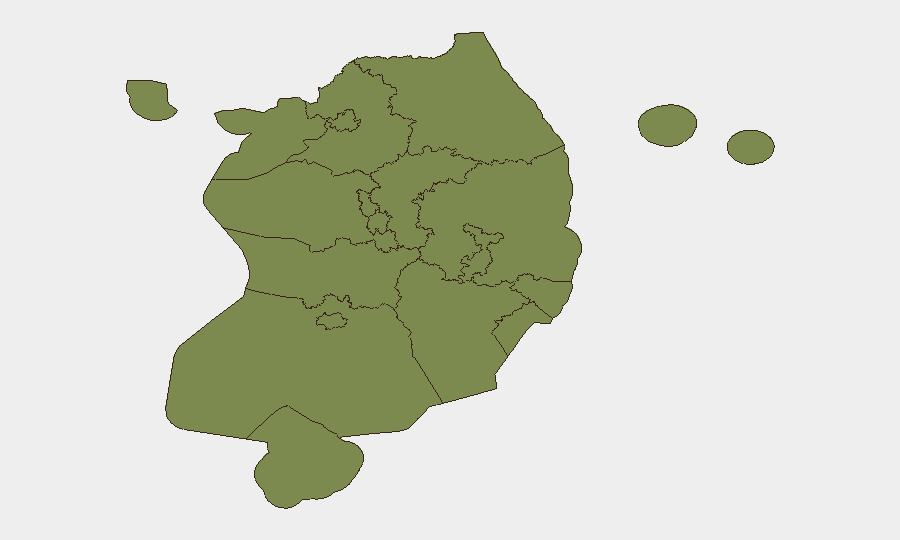
Highest-Risk Areas
Seoul dominates the sub-national risk profile (31.6) and accounts for the majority of tracked threat events, reflecting its role as the political, financial, and media center; corporate security teams should monitor civic unrest, political demonstrations, and cyber activity there with priority. North Chungcheong (17.6) registers significantly elevated risk, likely reflecting proximity to the Demilitarized Zone (DMZ) and military/defense infrastructure; the cause requires clarification but may involve DPRK-related activity, military incidents, or infrastructure monitoring. Busan (8.3) and Gyeonggi (6.7) show moderate risk, typical of major urban/port and commuter-belt exposure. Remaining regions (Gangwon, Jeju, Daegu, and others) register low or minimal risk.
How GeoBit Would Assist
Teams should deploy AOI Monitoring & Early Warning on Seoul, North Chungcheong, and Busan to trigger alerts on civil unrest, security incidents, and politically sensitive activity; pair this with Intel Sweep and X/Twitter OSINT to track opposition statements, official government responses, and on-the-ground reporting in real time. Network & Actor Analysis and Regime-Stability Search will help distinguish routine diplomatic friction (e.g., China–South Korea disagreements) from material threats to operations. Routing & Network Analysis can support contingency planning for expatriate movement in Seoul during periods of heightened political activity.
7-Day Outlook
No immediate systemic escalation is apparent. However, the convergence of North Korean-related investigations, Chinese diplomatic messaging, and domestic political disapproval in a compressed timeframe warrants close monitoring through June 11 to assess whether these signals indicate coordinated pressure or isolated incidents. Standard duty-of-care protocols (emergency contacts, evacuation planning, incident reporting) remain appropriate for Seoul-based staff.
Highest-Risk Areas — Ranked
| # | State / Region | Risk |
|---|---|---|
| 1 | Seoul | 31.6 |
| 2 | North Chungcheong | 17.6 |
| 3 | Busan | 8.3 |
| 4 | Gyeonggi | 6.7 |
| 5 | Gangwon State | 4.5 |
| 6 | Jeju | 4.3 |
| 7 | Incheon | 2.2 |
| 8 | South Jeolla | 2.2 |
| 9 | Daegu | 1.8 |
| 10 | South Chungcheong | 1.6 |
| 11 | Sejong | 1.6 |
| 12 | Jeonbuk State | 1.6 |
Previous Daily Briefs
A new South Korea brief is written every day — each with its own risk map and downloadable CSV. Here's the last week; use the calendar to go further back.
📅 Browse every day by calendar →
Highlighted days have a brief. Tap a day for that day's map & analysis, or “csv” for that day's dataset ($5).