Situation Summary
Spain faces an acute, multi-region wildfire and extreme-heat emergency as of 26–27 July 2026, with over 300,000 people evacuated or confined across Madrid, Ávila, Valencia, Catalonia, and other autonomous communities following a national emergency declaration. Concurrent with environmental crisis, isolated incidents of violent crime and property crime (homicide in Madrid, attempted burglary of high-profile target in Barcelona) and a secondary public-health signal (hantavirus quarantine in Madrid) add complexity to the operational environment. The overall threat ranking remains moderate globally (rank #116, composite score 8), but sub-national concentration of risk in Madrid (32.6) and secondary hotspots in Andalusia, Valencia, and Catalonia demand immediate situational awareness for organizations with personnel or assets in those regions.
Key Developments
- Madrid region & Ávila province, 26–27 July 2026: Massive wildfire-driven evacuations; over 60,000 evacuated around Madrid, 29,000+ evacuated and 20,000+ confined in the broader Madrid area, and 25,000 evacuated plus 8,000 confined in Ávila province. Interior Ministry declared national emergency for wildfires. *Risk type: mass displacement, travel disruption, emergency-services strain.*
- Valencian Community (Manises), 26–27 July 2026: At least one confirmed fatality in Manises from wildfires; ongoing fire threat in Valencia region contributing to national emergency scope. *Risk type: life-safety, infrastructure damage, regional transport impact.*
- Catalonia (Gavarres near Girona), 26–27 July 2026: Large wildfire in protected natural area has burned over 2,000 hectares; stabilized but "complicated" conditions due to wind and heat. *Risk type: environmental hazard, rural road closures, tourism/travel impact.*
- Spain-wide, 26–27 July 2026: Extreme heat alerts ("alertas por calor extremo") across multiple autonomous communities; red-level warnings and "tropical nights" increasing wildfire, infrastructure, and health risks; Aragón activated enhanced fire alert. *Risk type: cascading infrastructure stress, health emergencies, fire proliferation.*
- Madrid (Las Tablas residential area), 26–27 July 2026: 37-year-old engineer found stabbed to death in apartment; active homicide investigation. *Risk type: violent crime, localized personal-security concern.*
- Barcelona metropolitan area (Esplugues de Llobregat), night of 25–26 July 2026: Attempted burglary at private residence of Spain national footballer; active police investigation. *Risk type: property crime against high-profile targets, potential copycat risk in affluent areas.*
- Madrid (international arrivals), 26–27 July 2026: Second confirmed hantavirus case in Spain; individual in quarantine after cruise arrival; enhanced health-screening protocols activated. *Risk type: public health, inbound-travel restrictions, potential secondary exposures.*
Highest-Risk Areas
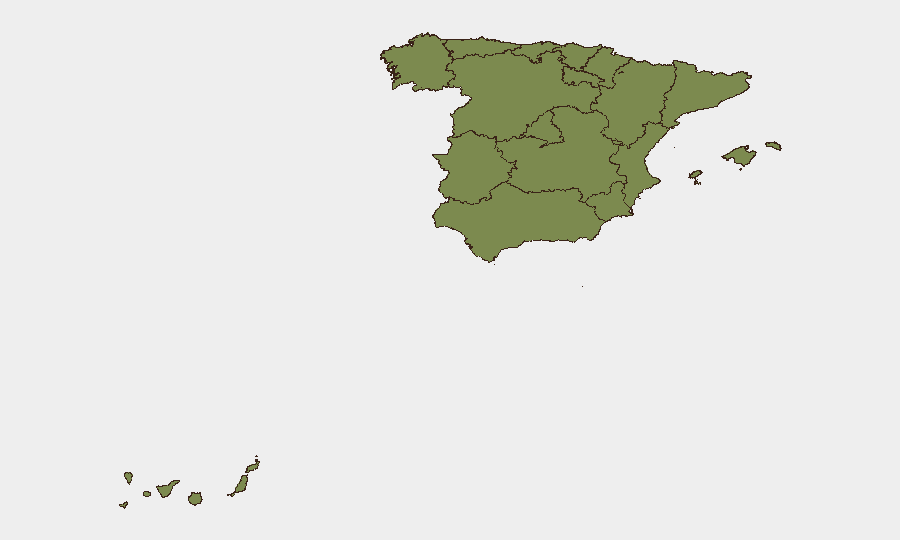
Madrid dominates the sub-national risk ranking (32.6) primarily due to the scale of wildfire evacuation, emergency declarations, and concentration of population in evacuation zones; concurrent violent crime and disease-surveillance activity compound institutional stress. Andalusia (9.3), the Valencian Community (7.8), and Catalonia (7.0) rank second through fourth, each experiencing active wildfire impact, confirmed casualties, or large evacuations. The disparity between Madrid's risk score and all other regions reflects both the absolute scale of the current crisis in the capital region and the overlay of multiple threat types within 24–48 hours.
How GeoBit Would Assist
Organizations should deploy AOI Monitoring & Early Warning on Madrid, Ávila, Valencia, and Catalonia to track evacuation-zone boundaries, road closures, and fire perimeter in real-time via satellite and emergency-service feeds. Routing & Network Analysis can model alternative transport corridors and supply-chain detours as primary routes are disrupted. Environmental & Health monitoring combined with Intel Sweep (multi-language OSINT and social-media sentiment analysis) will surface secondary impacts—hospital capacity, power outages, water-system disruptions—and public-health alerts before formal government announcements.
7-Day Outlook
Extreme heat is forecast to persist through early August across central and eastern Spain, sustaining wildfire risk despite stabilization of current perimeters; evacuation zones will likely remain in place or expand if wind conditions shift. Operational teams should assume continuing travel delays in Madrid, Valencia, and Catalonia regions, potential supply-chain disruptions, and heightened demand on emergency medical capacity. Secondary crime risk (property theft, civil unrest) may emerge in evacuation zones; health-screening protocols at ports of entry will remain elevated.
Highest-Risk Areas — Ranked
| # | State / Region | Risk |
|---|---|---|
| 1 | Community of Madrid | 32.6 |
| 2 | Andalusia | 9.3 |
| 3 | Valencian Community | 7.8 |
| 4 | Catalonia | 7 |
| 5 | Castile and León | 5.1 |
| 6 | Balearic Islands | 4.9 |
| 7 | Castile-La Mancha | 3.7 |
| 8 | Canary Islands | 3.5 |
| 9 | Galicia | 3.5 |
| 10 | Region of Murcia | 2.8 |
| 11 | Aragon | 2.7 |
| 12 | Extremadura | 2.6 |
Sources
Previous Daily Briefs
A new Spain brief is written every day — each with its own risk map and downloadable CSV. Here's the last week; use the calendar to go further back.
📅 Browse every day by calendar →
Highlighted days have a brief. Tap a day for that day's map & analysis, or “csv” for that day's dataset ($5).
Atlas — our AI intelligence desk — emails them this snapshot personally. Nothing else, no list.