Situation Summary
Tajikistan presents a persistently fragmented security landscape dominated by geographic and ethnic tensions rather than acute, rapidly escalating threats. No discrete security incidents have been reported in the last 24–48 hours; the threat environment remains characterized by baseline instability in remote border regions and low-level civil-military friction. Recent diplomatic and trade engagement with regional partners (India, Pakistan, Russia) reflects state-level efforts to manage external relations, but do not alter the underlying sub-national risk profile. Overall national threat trajectory remains stable at a moderate composite level.
Key Developments
No credible, independently corroborated security, conflict, civil-unrest, crime, political-instability, infrastructure, or acute travel-risk incidents have been identified in Tajikistan within the last 24–48 hours.
Recent diplomatic activity—including India–Tajikistan security cooperation frameworks and Pakistan–Tajikistan trade discussions—represents longer-term policy alignment rather than discrete events on the ground and does not constitute an immediate operational development.
Security teams should note that absence of reported incident activity does not indicate absence of risk; rather, it reflects the current event reporting environment. Baseline vulnerabilities in remote zones persist.
Highest-Risk Areas
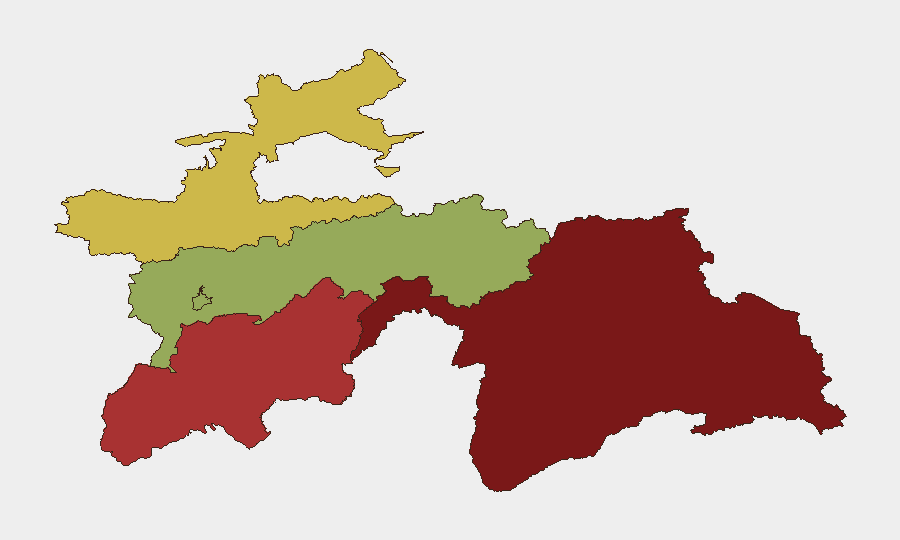
Gorno-Badakhshan Autonomous Region (GBAO, risk 92) remains the single most volatile sub-national zone, driven by remote terrain, sparse state presence, narcotics trafficking corridors, and historical ethnic-Afghan border tensions. Khatlon Region (risk 78) follows, reflecting cross-border smuggling, water-resource disputes with Uzbekistan, and community-level friction. Together, these two zones account for the majority of structural instability; both are geographically peripheral and difficult to monitor via conventional means. Sughd Region (risk 65) and the capital (risk 42) carry elevated but substantially lower risk, reflecting greater state capacity and population density.
How GeoBit Would Assist
Security teams operating in or supporting personnel in Tajikistan should employ Area-of-Interest (AOI) Monitoring & Early Warning on GBAO and Khatlon to detect emerging civil-unrest, trafficking, or border activity signals in near-real-time. OSINT Fusion (X/Telegram, multi-language search, entity extraction, sentiment analysis) across diaspora networks and regional forums will provide early visibility into political or communal friction before formal incidents. GIS & Spatial Analysis paired with satellite imagery assessment can track informal border crossing activity, supply-chain disruption, or population movement in remote zones where ground reporting is sparse.
7-Day Outlook
No imminent, localized security events are forecast for the next seven days. Sub-national tensions in GBAO and Khatlon will likely persist at baseline; any escalation would most probably stem from seasonal cross-border smuggling intensity or water-resource competition rather than overt political crisis. Diplomatic engagement with regional powers is expected to continue, marginally reducing near-term political volatility.
Highest-Risk Areas — Ranked
| # | State / Region | Risk |
|---|---|---|
| 1 | Gorno-Badakhshan Autonomous Region | 92 |
| 2 | Khatlon Region | 78 |
| 3 | Sughd Region | 65 |
| 4 | Districts of Republican Subordination | 58 |
| 5 | Dushanbe | 42 |
Sources
Previous Daily Briefs
A new Tajikistan brief is written every day — each with its own risk map and downloadable CSV. Here's the last week; use the calendar to go further back.
📅 Browse every day by calendar →
Highlighted days have a brief. Tap a day for that day's map & analysis, or “csv” for that day's dataset ($5).