Situation Summary
Tonga's security environment remains stable with no documented acute threats, conflict, or civil unrest in the past 24–48 hours. Seismic activity (four earthquakes ranging M 4.2–5.4) continues in offshore zones but poses no immediate ground-level disruption to populated areas. Visible administrative activity is routine: aviation security capacity-building and public-service engagement initiatives indicate normal governance operations.
Key Developments
- Nuku'alofa, Tongatapu – Aviation Security Training – 11–12 June 2026
New Zealand High Commission conducting a 16-participant aviation security course focused on international standards, risk management, and screening protocols. Capacity-building initiative with no reported incident trigger or operational disruption.
- Nationwide – Public Service Month Engagement – 11–12 June 2026
Ministry of Finance–led outreach under theme "Proud to Serve – One Purpose, One Public Service, One Tonga." Standard governance communication with no indicators of unrest, protests, or administrative crisis.
- Offshore Seismic Activity – Recent
Four earthquakes detected: M 5.4 (176 km ESE of Neiafu, Vavaʻu); M 4.8 (266 km WNW of Houma, Haʻapai); M 4.8 (175 km SSW of Houma, Haʻapai); M 4.2 (266 km WNW of Houma, Haʻapai). All epicenters remote from major settlements; no tsunami warnings or coastal impacts reported in open sources.
- No Documented Criminal, Protest, or Infrastructure Events – Last 48 Hours
Cross-check of English-language news, social media, and regional feeds identified no credible reports of violent crime, civil unrest, terrorism activity, or major service disruptions.
Highest-Risk Areas
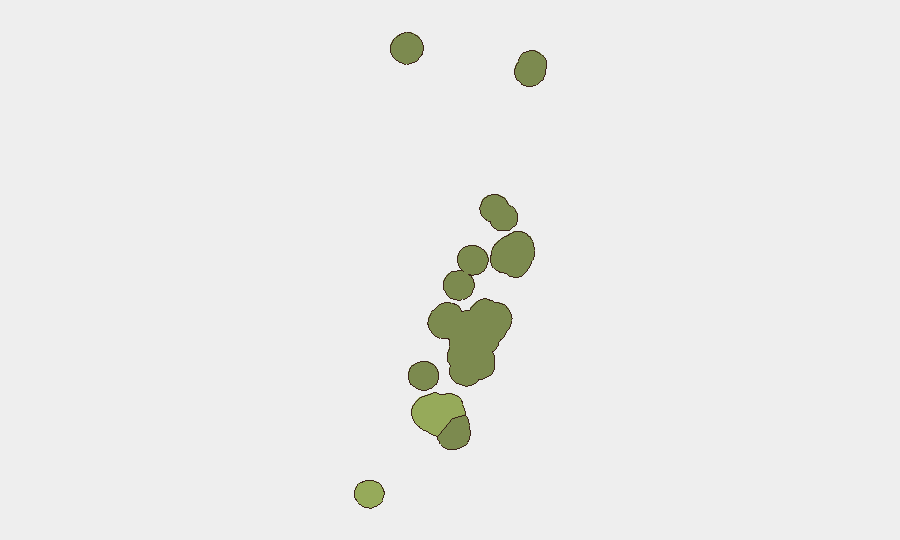
Tongatapu (composite risk score 45) significantly outweighs other island groups and dominates national risk profile, driven by concentration of population, government infrastructure, and economic activity in the capital Nuku'alofa. Vavaʻu (28) and Haʻapai (22) carry secondary risk, likely reflecting smaller populations, maritime exposure, and limited emergency-response capacity. ʻEua (18) and Ongo Niua (12) present minimal tracked risk. Risk elevation is primarily structural (disaster exposure, capacity constraints) rather than acute political or criminal instability at this time.
How GeoBit Would Assist
Corporate security teams with personnel or assets in Tongatapu should employ AOI Monitoring & Early Warning to track Nuku'alofa and key transport hubs for fast-moving incidents (protests, strikes, accidents) that may not appear immediately in international media. Intel Sweep and multi-language OSINT can detect civil-society signals, government announcements, and local social-media posts before escalation. Maritime & Aviation tracking combined with Environmental & Health intelligence will flag seismic or weather-driven disruptions to supply chains, port operations, or flight schedules.
7-Day Outlook
No acute security deterioration is anticipated in the near term. Seismic activity is expected to continue at offshore depths; monitoring for volcanic or tsunami risk remains advisable. Administrative and capacity-building activities suggest a functioning state apparatus. Duty-of-care teams should maintain routine monitoring for localized incidents (accidents, labor actions, weather events) that could affect business continuity, particularly in Tongatapu.
Highest-Risk Areas — Ranked
| # | State / Region | Risk |
|---|---|---|
| 1 | Tongatapu | 45 |
| 2 | Vavaʻu | 28 |
| 3 | Haʻapai | 22 |
| 4 | ʻEua | 18 |
| 5 | Ongo Niua | 12 |
Sources
Previous Daily Briefs
A new Tonga brief is written every day — each with its own risk map and downloadable CSV. Here's the last week; use the calendar to go further back.
📅 Browse every day by calendar →
Highlighted days have a brief. Tap a day for that day's map & analysis, or “csv” for that day's dataset ($5).