Situation Summary
The United Arab Emirates maintains a composite threat score of 17 globally (rank #60), with 161 tracked events in GeoBit's monitoring window. The security environment remains stable overall, though Dubai's significantly elevated risk profile (31.4) reflects concentrated commercial, financial, and geopolitical activity. Recent event signals suggest administrative and diplomatic friction across multiple sectors, with no indicators of imminent large-scale instability.
Key Developments
- 2026-06-13 · Admin Sanctions · Dubai – Administrative enforcement action recorded in Dubai; details and enforcement agency require clarification through OSINT fusion.
- 2026-06-13 · Arrest/Detain · Harare vs Employee – Detention event linked to Harare entity and employee; jurisdiction and custody status require confirmation.
- 2026-06-13 · Public Statement · Reuters vs Foreign Affairs Ministry – Media-government statement friction; subject matter and official position require source verification.
- 2026-06-12 · Reject · iShares – Financial instrument rejection signal; issuer, regulatory body, and market impact require corroboration.
- 2026-06-14 · Demonstrate/Rally · Bucharest – Demonstration event with Bucharest reference; cross-border or diaspora dimension possible but unconfirmed.
*Note: Event signals lack sufficient source detail and corroboration. Live web research (24–48 hour) was not completed due to absent search results. Duty-of-care teams should cross-reference these signals against local media, government advisories, and sector-specific news feeds to establish context and impact.*
Highest-Risk Areas
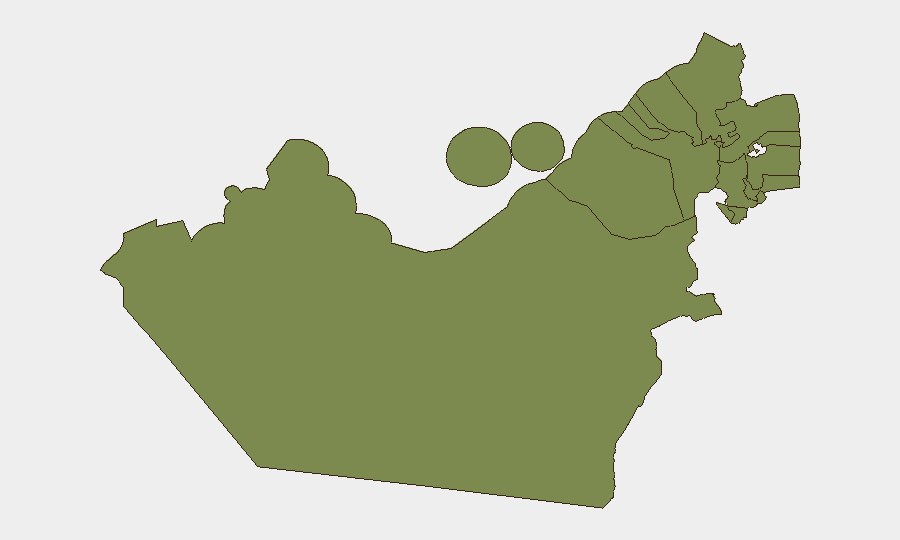
Dubai dominates sub-national risk, with a composite score of 31.4—more than tenfold the risk of any other emirate. This reflects Dubai's role as a global financial, trade, and logistics hub, exposure to international sanctions regimes, and concentration of foreign nationals and multinational corporate presence. Abu Dhabi Emirate records secondary risk (3.0), likely tied to federal governance, energy sector sensitivity, and diplomatic activity. All remaining emirates (Sharjah, Ajman, Ras al-Khaimah, Fujairah, Umm al-Quwain) show comparable, low baseline risk (1.4 each), consistent with smaller populations and lower international exposure.
Organizations with significant Dubai operations should maintain heightened monitoring of administrative, financial, and regulatory developments. Abu Dhabi exposure warrants tracking of federal policy shifts and energy-sector compliance.
How GeoBit Would Assist
Intel Sweep and OSINT Fusion would resolve the current event-signal ambiguity by cross-referencing Reuters, regulatory filings, and government statements to establish causation and scope. AOI Monitoring & Early Warning with persistent Dubai and Abu Dhabi watch would flag emerging administrative, financial, or diplomatic friction before escalation. Entity Extraction and Network Analysis would map relationships between the iShares rejection, Harare detention, and Ministry statement to identify systemic versus isolated risk. Sector-specific Economic & Trade monitoring would track sanctions exposure and financial-services regulatory changes affecting multinational operations.
7-Day Outlook
No imminent security deterioration is indicated. The pattern of administrative and financial-sector friction suggests regulatory tightening or compliance enforcement rather than geopolitical crisis. Monitoring for escalation in U.S. or international sanctions regimes affecting UAE entities, and for any coordination between federal (Abu Dhabi) and emirate-level (Dubai) enforcement actions, should remain standard practice. Near-term risk trajectory is stable with low probability of acute incidents affecting corporate operations or movement.
Highest-Risk Areas — Ranked
| # | State / Region | Risk |
|---|---|---|
| 1 | Dubai | 31.4 |
| 2 | Abu Dhabi Emirate | 3 |
| 3 | Sharjah Emirate | 1.4 |
| 4 | Ajman Emirate | 1.4 |
| 5 | Ras al-Khaimah | 1.4 |
| 6 | Fujairah Emirate | 1.4 |
| 7 | Umm al-Quwain | 1.4 |
Previous Daily Briefs
A new United Arab Emirates brief is written every day — each with its own risk map and downloadable CSV. Here's the last week; use the calendar to go further back.
📅 Browse every day by calendar →
Highlighted days have a brief. Tap a day for that day's map & analysis, or “csv” for that day's dataset ($5).