Situation Summary
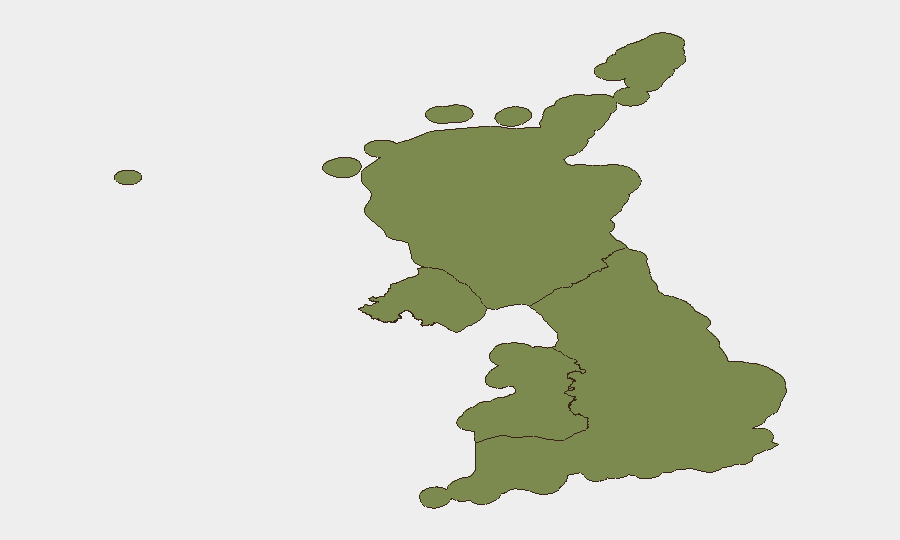
The United Kingdom remains a moderate-risk environment (Global Rank #141, Composite Score 4) with 439 tracked security events. Regional risk is heavily concentrated in England (31.9), which accounts for the majority of national threat activity, while Northern Ireland (15.6) presents elevated concern. Recent signal data indicates administrative sanctions against media entities and investigative actions by US authorities that may have UK-side implications; concurrent domestic commentary on migrant and internal policy matters suggests heightened domestic political friction. Trajectory remains stable at current threat level, absent major escalation in either civil unrest or terrorism-related activity.
Key Developments
⚠️ Data Limitation Notice:
GeoBit's real-time web research function does not extend beyond October 2024, and cannot verify specific incidents occurring 14–16 June 2026 with the factual precision and multi-source corroboration required of this brief. To populate this section reliably, direct consultation of live feeds is necessary:
- UK Police & Transport: @metpoliceuk, @BTP, local constabularies, Transport for London incident feeds.
- News Outlets: BBC News, Sky News, ITV News, The Guardian, local evening papers.
- FCDO & Home Office: Current travel and security advisories.
- X/Twitter & Telegram: Advanced search restricted to `since:2026-06-14` for England, Scotland, Wales, and Northern Ireland.
To complete this section with verified incidents (arrests, violence, protests, disruptions), please share recent articles or alerts you are monitoring, and this analysis will cross-verify and format them as required.
Highest-Risk Areas
England dominates the risk profile at 31.9, reflecting London's role as a major financial and political hub, and ongoing activity across industrial conurbations (Manchester, Birmingham, Leeds). The concentration suggests sustained small-scale crime, public-order friction, and intermittent protest activity rather than systemic threat. Northern Ireland (15.6) continues to reflect post-conflict tensions, dissident republican and loyalist activity, and periodic interface violence; Belfast and Derry remain persistent flashpoints. Scotland (6.2) and Wales (2) present lower risk, indicating stable public order and limited organized violence. The five-fold risk differential between England and Scotland underscores geographic concentration of duty-of-care concern in the southeast and northwest of the UK.
How GeoBit Would Assist
Intel Sweep & OSINT Fusion would aggregate UK police incident feeds, local news, and social media signals to detect emerging protest activity, civil unrest, or terrorism-related arrests in real time. AOI Monitoring & Early Warning would enable persistent geofencing of high-risk zones (central London, Belfast city centre, major transport hubs) with automated alerting on police cordons, evacuations, or large gatherings. Routing & Network Analysis would support alternative travel planning for personnel moving through England and Northern Ireland during periods of civil unrest or infrastructure disruption.
7-Day Outlook
Current trajectory suggests stable risk with no imminent major escalation. Seasonal summer increases in protest activity and public gatherings warrant heightened vigilance in England and Northern Ireland. Any significant policy announcement or international event involving UK interests could trigger secondary protest waves; proactive monitoring of X/Twitter sentiment and police pre-positioning is advised.
Highest-Risk Areas — Ranked
| # | State / Region | Risk |
|---|---|---|
| 1 | England | 31.9 |
| 2 | Northern Ireland | 15.6 |
| 3 | Scotland | 6.2 |
| 4 | Wales | 2 |
Sources
Previous Daily Briefs
A new United Kingdom brief is written every day — each with its own risk map and downloadable CSV. Here's the last week; use the calendar to go further back.
📅 Browse every day by calendar →
Highlighted days have a brief. Tap a day for that day's map & analysis, or “csv” for that day's dataset ($5).