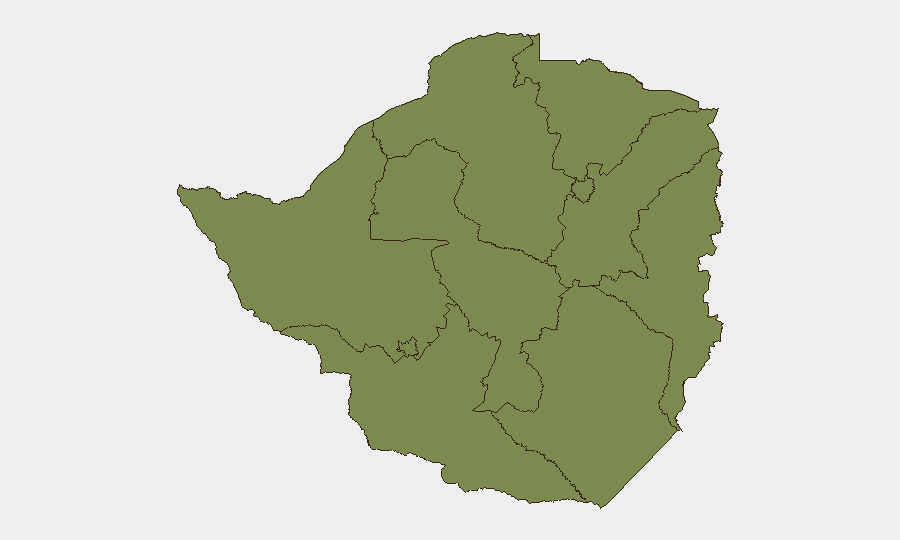
Situation Summary
Zimbabwe presents a composite threat profile of 9/300 (rank #112 globally), with security risk heavily concentrated in the capital, Harare. The immediate operating environment is shaped by two concurrent dynamics: ongoing foreign-conflict recruitment networks operating within the capital, and major constitutional amendments extending presidential tenure to 2030—approved in late June—which signals elevated regime-stability and political-unrest risk. The country remains broadly stable outside Harare, though the capital's outsized risk profile warrants sustained attention from organizations with presence there.
Key Developments
- Harare, June 27–29, 2026: Foreign military recruitment network dismantled. Counter-terrorism police arrested Edward Kachingwe, 36, at Roadport Bus Terminus (central Harare) on June 27 while allegedly escorting a recruit to South Africa for onward travel to Russia. He was charged June 29 with trafficking in persons and operating an unregistered employment agency; detectives recovered electronic tickets, Russian e-visas, and hotel bookings. At least five Zimbabweans are alleged to have been recruited into the Russian military via a network involving a Russian national known as "Roman." Kachingwe was remanded in custody.
- Harare, late June 2026: Constitutional amendments extending presidential tenure approved by Senate. The Zimbabwean Senate voted to approve constitutional amendments allowing President Emmerson Mnangagwa to remain in power until 2030 and shifting presidential selection from direct popular vote to parliamentary appointment. This followed passage by the National Assembly earlier in June and represents a significant institutional consolidation of executive power, elevating political-stability risk.
Highest-Risk Areas
Harare dominates the risk profile with a composite score of 31.8—more than tenfold higher than any other province. This reflects both the capital's concentration of state institutions, informal-economy vulnerability to transnational crime networks (as evidenced by the foreign-recruitment case), and political activity centered on presidential authority. Matabeleland South Province ranks second at 3.1, though a substantial gap suggests limited active incident density outside the capital. All other provinces score 1.8, indicating baseline risk with minimal recent event signals. Organizations should assume Harare as the primary operational security focus; provincial operations face standard duty-of-care requirements but reduced acute threat.
How GeoBit Would Assist
Security teams should deploy AOI Monitoring & Early Warning on Harare's transport nodes (bus termini, taxi ranks, border-crossing intermediaries) to detect recruitment networks and trafficking indicators before escalation. Network & Actor Analysis would map foreign-conflict recruitment ecosystems and identify secondary operatives beyond Kachingwe. Regime-stability search and election monitoring capabilities would track constitutional-amendment fallout, parliamentary faction dynamics, and protest signaling to anticipate civil unrest. Routing & Network Analysis supports evacuation and alternative-movement planning should political tension intensify.
7-Day Outlook
The foreign-recruitment case is likely to remain localized to law enforcement and media coverage; no immediate secondary arrests or network-wide disruption is signaled. Constitutional amendments create elevated political-unrest risk over the medium term (weeks to months), though no street-level protests or organized opposition mobilization have yet appeared in verifiable reporting. Security teams should assume Harare remains the primary concern and maintain heightened vigilance on transport infrastructure and political signaling through early July.
Highest-Risk Areas — Ranked
| # | State / Region | Risk |
|---|---|---|
| 1 | Harare | 31.8 |
| 2 | Matabeleland South Province | 3.1 |
| 3 | Mashonaland West Province | 1.8 |
| 4 | Masvingo Province | 1.8 |
| 5 | Matabeleland North Province | 1.8 |
| 6 | Midlands Province | 1.8 |
| 7 | Bulawayo Province | 1.8 |
| 8 | Mashonaland Central Province | 1.8 |
| 9 | Mashonaland East Province | 1.8 |
| 10 | Manicaland Province | 1.8 |
Sources
Previous Daily Briefs
A new Zimbabwe brief is written every day — each with its own risk map and downloadable CSV. Here's the last week; use the calendar to go further back.
📅 Browse every day by calendar →
Highlighted days have a brief. Tap a day for that day's map & analysis, or “csv” for that day's dataset ($5).