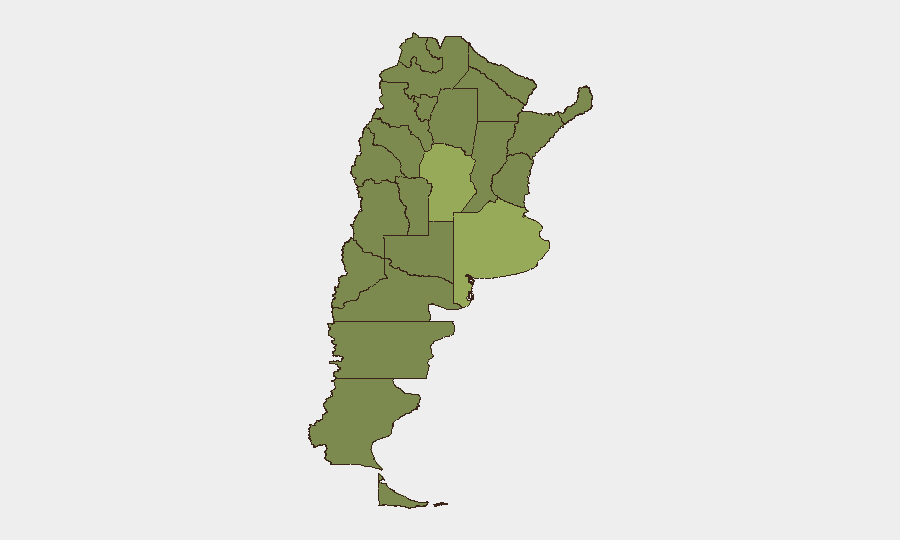
Situation Summary
Argentina remains a mid-tier security concern globally (rank #37, composite score 35.2), characterized by fragmented but active labor unrest, localized property crime surges, and underlying economic strain. The past 48 hours have seen concurrent protest activity in major urban centers, armed street crime in secondary cities, and infrastructure slowdowns driven by union action—none individually critical, but collectively reflective of political and economic friction. The national security posture is stable; however, sub-provincial variation is pronounced, with Córdoba Province significantly outpacing other regions in composite risk.
Key Developments
- Buenos Aires (city) – 10 June: Large-scale demonstrations against President Javier Milei's Labor Modernization Law and economic reforms drew crowds to Congress and Plaza de Mayo; police and gendarmerie deployed with roadblocks and trash fires reported; no major injuries but significant central business district traffic disruption confirmed.[5][8]
- Córdoba (city, Córdoba Province) – 10 June: Union and social-movement marches with partial road blockades on key avenues protested rising living costs and layoffs; minor scuffles and pepper-spray use reported but protests remained largely peaceful.[8]
- Rosario (Santa Fe Province) – Night of 9–10 June: Multiple armed robberies and vehicle thefts, including at least one armed carjacking, linked to local gangs; two suspects detained; no fatalities but victims treated for minor injuries.[8]
- Gran Buenos Aires suburbs (Lomas de Zamora / Lanús) – Late 9 June: Home-invasion robberies and one attempted ransom kidnapping reported and confirmed by local police; authorities increased night patrols and advised residents to reinforce security; no arrests announced as of 10 June.[8]
- Argentina national football team – 10 June: Security breach exposed unredacted passport details of all squad members, including Lionel Messi, during friendly against Iceland when team sheets were distributed to media and circulated online; Argentine Football Association acknowledged "security flaw."[1][3][4]
- Ezeiza & Aeroparque airports (Buenos Aires area) – 10 June: Ground and aviation union industrial actions over wage demands caused check-in delays and isolated flight disruptions; operations continued but passengers experienced longer processing times.[8]
- Neuquén (city and Vaca Muerta oilfield routes, Neuquén Province) – 9–10 June: Oil-sector workers and leftist organizations briefly blocked access roads protesting contract conditions; provincial authorities negotiated clearance with no reports of clashes or infrastructure damage.[8]
- Mendoza (city) – Evening 10 June: Police increased downtown and tourist-zone patrols following spike in street robberies and phone snatchings; authorities characterized as short-term surge and announced targeted operations.[8]
Highest-Risk Areas
Córdoba Province dominates Argentina's sub-national risk profile (54.6), nearly 30% above the national average and substantially ahead of Buenos Aires Province (42.2). The Córdoba concentration reflects sustained labor activism, localized gang-linked crime, and demonstrable protest frequency. Buenos Aires Province (42.2) and Santa Fe Province (29.2) follow, driven by armed street crime in secondary cities (Rosario), home invasions in suburbs, and ongoing union actions—risks amplified by population density and economic precarity. Remaining tracked provinces cluster in the 24–26 range, suggesting distributed but lower-intensity activity.
How GeoBit Would Assist
Duty-of-care teams with personnel or assets in Córdoba, greater Buenos Aires, or Rosario would benefit from persistent AOI (area-of-interest) monitoring and early warning on protest sites and crime hotspots, coupled with OSINT fusion and multi-language sentiment analysis of union statements and social-media signals to anticipate labor action escalation. Intel Sweep and event-feed aggregation across global sources would provide real-time situational updates on transport disruptions and security incidents, while routing and network analysis would enable alternative journey planning around blockaded areas and high-crime zones.
7-Day Outlook
Protest activity is likely to persist at current or elevated levels through mid-June as labor opposition to economic reforms gains momentum, though clashes remain minor and non-lethal. Property crime in suburban Buenos Aires and Rosario may continue short-term spikes, while airport and energy-sector slowdowns could recur if wage negotiations stall. No indicators suggest imminent escalation to violence or systemic instability.
Highest-Risk Areas — Ranked
| # | State / Region | Risk |
|---|---|---|
| 1 | Córdoba | 54.6 |
| 2 | Buenos Aires Province | 42.2 |
| 3 | Santa Fe Province | 29.2 |
| 4 | San Luis Province | 28.6 |
| 5 | Tucumán Province | 26.3 |
| 6 | Santiago del Estero Province | 26.3 |
| 7 | Río Negro Province | 26.1 |
| 8 | Salta Province | 25.5 |
| 9 | Neuquén Province | 25.5 |
| 10 | Jujuy Province | 25.2 |
| 11 | Santa Cruz Province | 24.9 |
| 12 | Corrientes Province | 24.9 |
Sources
Previous Daily Briefs
A new Argentina brief is written every day — each with its own risk map and downloadable CSV. Here's the last week; use the calendar to go further back.
📅 Browse every day by calendar →
Highlighted days have a brief. Tap a day for that day's map & analysis, or “csv” for that day's dataset ($5).