Situation Summary
Armenia remains in a heightened political and informational security environment following the 7–8 June 2026 parliamentary elections, with confirmed reports of politically motivated arrests, detentions, and intimidation campaigns affecting opposition activists nationwide. The immediate physical-security threat level is low—no verified mass protests, armed clashes, or major infrastructure incidents have been documented in the last 24–48 hours—but the political environment is polarized, foreign interference and economic coercion are documented, and civil-liberties risks are elevated. Yerevan carries significantly elevated risk relative to other provinces, driven by concentration of political activity and state security operations. The trajectory is toward sustained political tension rather than imminent unrest, though geopolitical pressure from Russia and election-related grievances create conditions for escalation.
Key Developments
- Yerevan – 8 June 2026 – OSCE/ODIHR observers reported an "environment of fear" around the parliamentary elections, citing direct foreign pressure, trade restrictions, security threats, and a large number of arrests and detentions of opposition activists that affected their ability to campaign.
- Nationwide – 7–8 June 2026 – Credible reports of pressure on public-sector employees and voters, particularly by ruling-party officials, to attend campaign events and support the government; OSCE noted this created unequal conditions for opposition campaigning.
- Armenia (national) – 9 June 2026 – Kremlin information operations and economic coercion documented, including Russian narratives delegitimizing election results and warnings of trade restrictions (e.g., fisheries sanctions) tied to political outcomes, signaling Russian hostility following Pashinyan's victory.
- Yerevan and most provinces – 8–9 June 2026 – Intensified disinformation and AI-generated manipulative content deployed across online platforms by multiple actors to discredit political opponents; cyber-attack and information-warfare campaigns linked to foreign interference amplified polarization.
- Armenia (opposition political sphere) – 11 June 2026 – Signal events including arrests/detentions of opposition figures and media, parliamentary demands, and prosecutor-general statements against criminal actors, indicating ongoing state pressure on opposition and civil-society actors.
Highest-Risk Areas
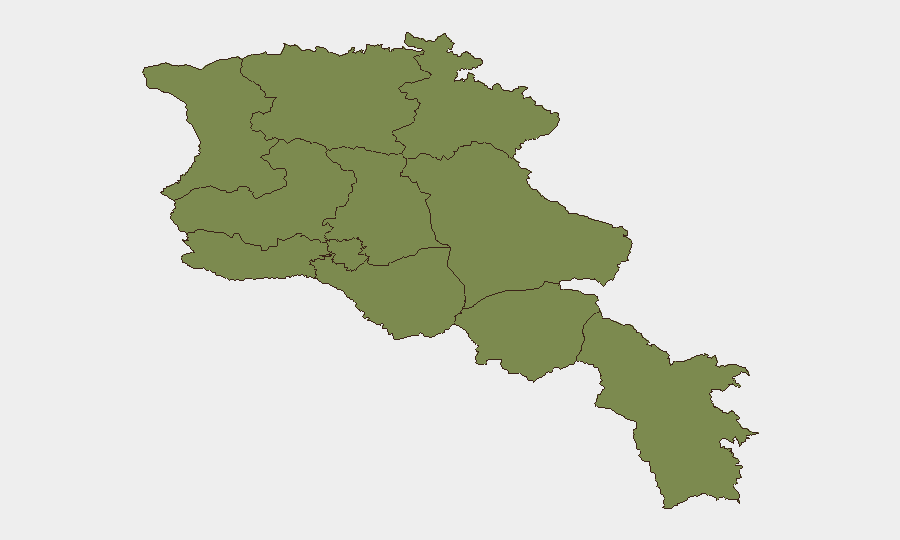
Yerevan dominates the risk profile (31.3 composite score), reflecting the capital's role as the center of political decision-making, security operations, and opposition activity. Ararat Province (25.6) follows significantly, though the open-source basis for that elevation is limited in the last 24–48 hours; it warrants monitoring for potential provincial-level opposition grievances or spillover from the capital. All other provinces register substantially lower risk (1.3–1.8), suggesting that political tension and state pressure remain concentrated in the capital and select urban centers rather than distributed nationwide. Foreign interference and economic coercion are national-level threats but are likely to manifest most visibly in Yerevan through diplomatic incidents, media operations, and political pressure.
How GeoBit Would Assist
Security teams should employ Election Monitoring & OSINT Fusion to track ongoing arrests, detentions, and politically motivated actions, cross-corroborating arrests and intimidation reports across social media, Telegram, and local news. AOI Monitoring & Early Warning with persistent watch on Yerevan and Ararat Province can flag rapid shifts in protest activity, security-force deployments, or civil unrest before they escalate. Multi-language Search, Sentiment & Temporal Analysis on Armenian, Russian, and regional sources will identify emerging disinformation narratives, foreign economic pressure, and opposition mobilization signals that precede street-level incidents.
7-Day Outlook
The political environment will likely remain tense but non-violent over the next week, with focus on post-election legitimacy disputes, Russian economic and informational pressure, and continued politically motivated detentions. Risk of organized street protests or significant unrest is low in the immediate term but could escalate if opposition grievances coalesce or if Russian coercive measures (trade, security) intensify. International mediation and OSCE engagement may provide stabilizing pressure, but geopolitical headwinds and internal political polarization suggest elevated risk trajectory over weeks rather than days.
Highest-Risk Areas — Ranked
| # | State / Region | Risk |
|---|---|---|
| 1 | Yerevan | 31.3 |
| 2 | Ararat Province | 25.6 |
| 3 | Aragatsotn Province | 1.8 |
| 4 | Lori Province | 1.3 |
| 5 | Tavush Province | 1.3 |
| 6 | Kotayk Province | 1.3 |
| 7 | Gegharkunik Province | 1.3 |
| 8 | Vayots Dzor Province | 1.3 |
| 9 | Syunik Province | 1.3 |
| 10 | Shirak Province | 1.3 |
| 11 | Armavir Province | 1.3 |
Sources
Previous Daily Briefs
A new Armenia brief is written every day — each with its own risk map and downloadable CSV. Here's the last week; use the calendar to go further back.
📅 Browse every day by calendar →
Highlighted days have a brief. Tap a day for that day's map & analysis, or “csv” for that day's dataset ($5).