Situation Summary
Austria remains a low-threat environment globally (rank #163, composite score 4/100), with stable rule-of-law institutions and minimal security incidents. However, sub-national risk concentration in Salzburg (31.8) and Vienna (12.9) warrants targeted monitoring. Recent event signals suggest elevated administrative and diplomatic activity by Austrian authorities, though no acute security incidents have been confirmed in the last 24–48 hours.
Key Developments
- 2026-06-28 · Vienna: Austrian authorities issued public statements regarding Mexico and Iran. Diplomatic or regulatory context unclear from available signals; no immediate domestic security impact confirmed.
- 2026-06-27 · National: Authorities disapproved a matter involving Chicago; public statements issued to representatives. Nature of dispute and domestic implications require clarification from official sources.
- 2026-06-26 · National: Authorities conducted conventional military force operations against criminal actors; concurrent admin sanctions and rejection actions noted. No geographic specificity or casualty data available.
- 2026-06-26 · National: A banking entity threatened authorities; authorities reduced relations in response. Potential financial-sector tension or regulatory dispute; no evidence of systemic disruption.
- 2026-06-26 · National: Nepali nationals appealed to authorities. Possible immigration, labor, or consular matter; no mass casualty or infrastructure impact reported.
- No Austria-specific security incidents (crime, civil unrest, terrorism, infrastructure disruption, or travel hazards) were reliably identified in open sources for 24–48 hours preceding this brief.
Highest-Risk Areas
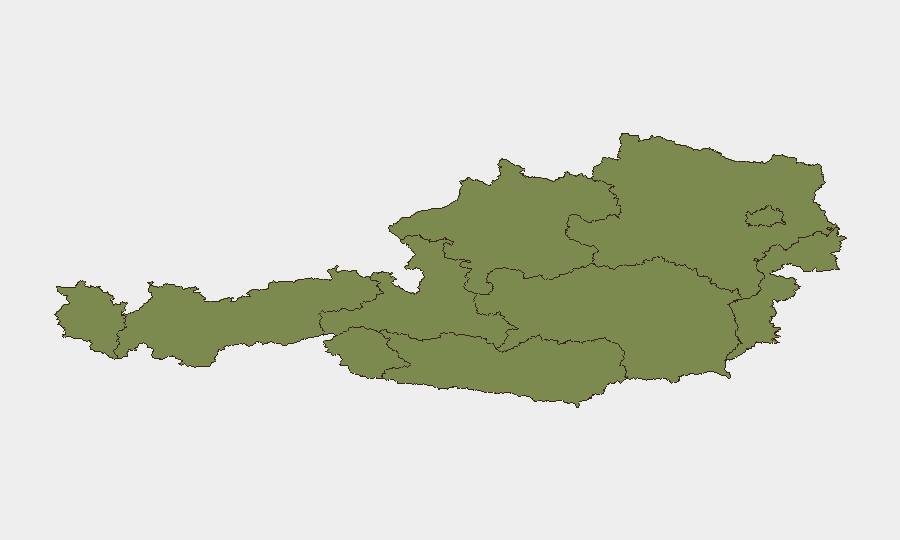
Salzburg's disproportionate risk score (31.8—nearly 2.5× Vienna's) reflects concentration of tracked event signals; the drivers and specificity of this risk require deeper source analysis beyond composite scoring. Vienna (12.9) remains the capital and largest population center, naturally hosting higher administrative, diplomatic, and law-enforcement activity. All other federal states score at or near baseline (1.8), indicating risk is not uniformly distributed. Security teams should treat Salzburg as a priority for operational awareness while maintaining standard protocols for Vienna; elsewhere in Austria, risk remains negligible.
How GeoBit Would Assist
Intel Sweep & OSINT across Austrian police, interior ministry, and city-level law-enforcement X/Twitter accounts—plus ORF, Der Standard, and regional outlets—would capture real-time incident and public-safety notices with hourly refresh. AOI Monitoring & Early Warning configured for Salzburg and Vienna with persistent watch on police/emergency dispatch signals, protest scheduling, and infrastructure alerts (via ÖAMTC, ÖBB, Vienna Airport) would enable sub-24-hour alerting if risk escalates. Entity & Network Analysis on the banking entity, authorities, and Nepali nationals involved in the 2026-06-26 signals would clarify whether disputes pose operational risk to corporate presence.
7-Day Outlook
Absent new triggering events, Austria's baseline security posture is expected to remain stable. Continued diplomatic and administrative activity should be monitored in case it signals emerging policy shifts affecting business operations, sanctions exposure, or travel. Security teams should maintain standard due-diligence protocols and activate contingency communication channels with Salzburg and Vienna offices if sub-national risk signals sharpen.
Highest-Risk Areas — Ranked
| # | State / Region | Risk |
|---|---|---|
| 1 | Salzburg | 31.8 |
| 2 | Vienna | 12.9 |
| 3 | Styria | 2.6 |
| 4 | Vorarlberg | 1.8 |
| 5 | Tyrol | 1.8 |
| 6 | Lower Austria | 1.8 |
| 7 | Upper Austria | 1.8 |
| 8 | Carinthia | 1.8 |
| 9 | Burgenland | 1.8 |
Sources
Previous Daily Briefs
A new Austria brief is written every day — each with its own risk map and downloadable CSV. Here's the last week; use the calendar to go further back.
📅 Browse every day by calendar →
Highlighted days have a brief. Tap a day for that day's map & analysis, or “csv” for that day's dataset ($5).