Situation Summary
Azerbaijan remains a low–mid-tier global security risk (#163; composite score 3) with 49 tracked events, but sub-national risk is heavily concentrated in Ujar District (31.4) and Baku City (21.8), likely driven by border tensions and political activity. The last 24–48 hours have yielded no confirmed new kinetic incidents, attacks, or major civil unrest; instead, diplomatic engagement (US–Azerbaijan security talks on June 17) and narrative management (Azerbaijani rebuttal of CNN's Iran–Israel reporting) dominate the current signal landscape. The IsDB Group Annual Meetings in Baku are proceeding without reported disruption. Overall trajectory remains stable but geopolitically sensitive, especially regarding third-party military use of Azerbaijani territory and post-conflict South Caucasus stability.
Key Developments
- Baku – US–Azerbaijan security dialogue (17 June 2026)
Foreign Minister Jeyhun Bayramov met US Congressman Abraham Hamadeh to discuss bilateral security cooperation, energy, transport corridors, and removal of restrictions (Section 907); emphasis placed on post-conflict South Caucasus stability and regional architecture. *Signal:* Strategic-level engagement on security frameworks; no tactical threat indicator.
- Azerbaijan (nationwide) – Government rebuttal of CNN Iran–Israel reporting (mid-June 2026)
Azerbaijani officials rejected CNN allegations that Israeli military operations against Iran were staged from southern Azerbaijani territory, citing "major inconsistencies" and lack of evidence. *Signal:* Geopolitical sensitivity to third-party military use; narrative-security issue, not kinetic threat.
- Baku – IsDB Group Annual Meetings (ongoing through ~17 June 2026)
Large international development-sector event proceeding under standard high-profile security protocols with no reported incidents or protest activity. *Signal:* Baku's ability to host major international gatherings without acute disruption; no impact on baseline risk.
- No new armed clashes, bombings, or major civil unrest reported (last 24–48 hours)
OSINT sweep and open web sources confirm absence of confirmed new kinetic incidents, terrorism, infrastructure attacks, or significant public disorder in Azerbaijan during June 16–17, 2026. *Signal:* Tactical security baseline unchanged; border and Ujar District remain under routine monitoring.
Highest-Risk Areas
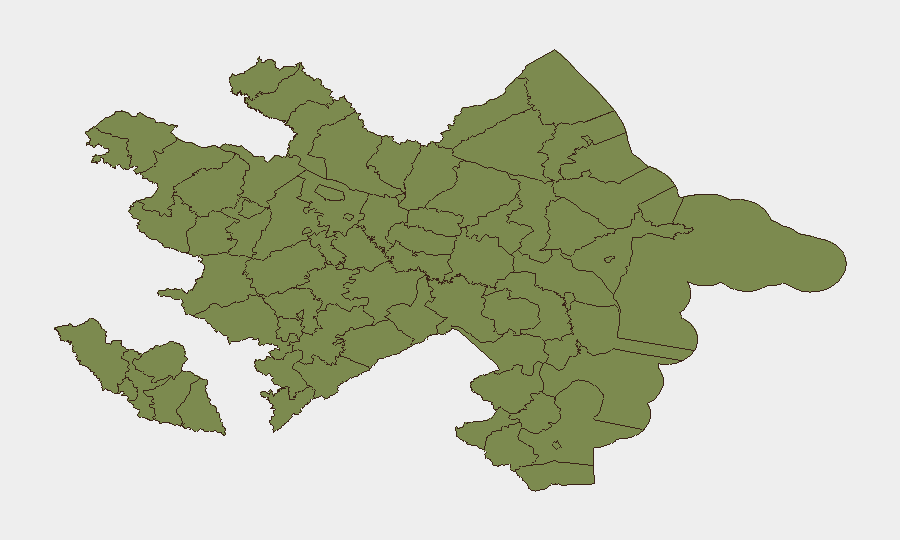
Ujar District dominates sub-national risk (31.4), likely reflecting sensitivity along the Armenia–Azerbaijan border and post-2020 conflict dynamics; Baku City (21.8) concentrates political, diplomatic, and population-density risk, including IsDB meetings and high-level state activity. Siazan District (5.7) and Tovuz District (4.6) trail significantly, suggesting localized border or minority concerns. The remaining districts and Nakhchivan Autonomous Republic pose negligible current risk (<2.0 each). For duty-of-care planning, Ujar and Baku warrant elevated attention; all other areas are routine-risk.
How GeoBit Would Assist
Intel Sweep and global event feeds combined with multi-language OSINT (X/Telegram, YouTube, radio SIGINT) enable 24/7 monitoring of Azerbaijan for emerging incidents, rhetoric shifts, and third-party military activity. Area-of-Interest (AOI) Monitoring & Early Warning focused on Ujar District and the Armenia–Azerbaijan border can flag kinetic escalation or protest build-up before widespread reporting. Network & Actor Analysis tracks state officials, military commanders, and opposition figures to anticipate policy shifts or internal tensions affecting security posture.
7-Day Outlook
No imminent escalation is signaled in the 24–48h dataset; however, heightened geopolitical attention to Iran–Israel dynamics and Azerbaijani territory, combined with ongoing post-conflict reconstruction and transport-corridor diplomacy, means tactical risk could resurface quickly if regional actors perceive opportunity. Monitor Ujar District and border areas for any spike in military activity or inflammatory rhetoric; Baku remains a focal point for diplomatic signaling that may precede policy shifts.
Highest-Risk Areas — Ranked
| # | State / Region | Risk |
|---|---|---|
| 1 | Ujar District | 31.4 |
| 2 | Baku City | 21.8 |
| 3 | Siazan District | 5.7 |
| 4 | Tovuz District | 4.6 |
| 5 | Shusha District | 2.5 |
| 6 | Sadarak District | 1.4 |
| 7 | Qazakh District | 1.4 |
| 8 | Sharur District | 1.4 |
| 9 | Yevlakh District | 1.4 |
| 10 | Kangarli District | 1.4 |
| 11 | Nakhchivan Autonomous Republic | 1.4 |
| 12 | Aghstafa District | 1.4 |
Sources
Previous Daily Briefs
A new Azerbaijan brief is written every day — each with its own risk map and downloadable CSV. Here's the last week; use the calendar to go further back.
📅 Browse every day by calendar →
Highlighted days have a brief. Tap a day for that day's map & analysis, or “csv” for that day's dataset ($5).