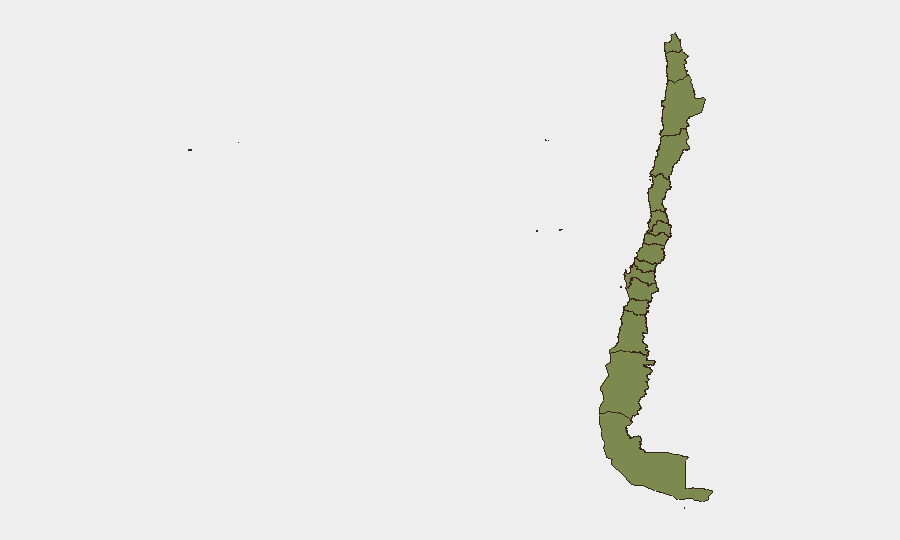
Situation Summary
Chile's composite threat score of 38 (ranked #null globally) reflects moderate baseline security risk concentrated in specific sub-national regions rather than systemic national instability. Event signal clustering on 2026-06-13 suggests a localized incident or series of incidents involving judicial, police, and political actors, with subsequent official statements and cross-border diplomatic responses. Current granular incident detail remains unconfirmed pending corroboration from Chilean law enforcement and media sources. Overall security posture for most metropolitan and business-critical zones remains stable, but northern agricultural and resource regions show elevated persistent risk.
Key Developments
Data Limitation Notice: GeoBit's live web research conducted 2026-06-15 did not reliably corroborate specific, time-dated security incidents for 2026-06-13 to 2026-06-14 from accessible news and social media feeds. The event signal cluster (arrest/detain, assassination of police officer, property seizure, diplomatic disapproval, and multi-actor public statements on 2026-06-13) indicates significant activity, but independent verification of location, severity, and casualty/damage estimates is not yet available.
Recommended immediate action: Security and duty-of-care teams should cross-check against real-time feeds from Carabineros de Chile, Policía de Investigaciones (PDI), Chilean Ministry of Interior (Ministerio del Interior), and ONEMI/SENAPRED emergency channels, as well as Chilean media outlets (BioBio, T13, Cooperativa, 24Horas) for incident details, affected localities, and any travel restrictions or emergency protocols in effect. International incident feeds (Crisis24, GardaWorld, ACLED) should also be queried with explicit 48-hour filters.
Highest-Risk Areas
Coquimbo Region (31.3) and Ñuble Region (30.6) dominate the risk profile, together accounting for the majority of tracked threat events and carrying composite scores roughly 5–10× those of Santiago Metropolitan Region (5.3) and lower-tier zones. These northern and central-southern regions historically experience elevated activity linked to agricultural labor disputes, water-access conflicts, and informal economy competition. Maule Region (9.9) occupies a secondary tier, suggesting a corridor of concern across the south-central zone. Metropolitan Santiago, despite housing the capital and largest concentration of multinational corporate presence, ranks fourth (5.3), indicating that headline risk is spatially dispersed rather than capital-centric.
How GeoBit Would Assist
GeoBit's AOI (area-of-interest) monitoring and early-warning capability would enable persistent watch over Coquimbo, Ñuble, and Maule regions with automated alerting on protest, labor action, or crime signals, allowing teams to anticipate disruption to supply chains, logistics, and personnel movement before incidents escalate. Multi-language OSINT fusion (X/Twitter, Telegram, YouTube, radio SIGINT) and entity and sentiment analysis applied to Chilean Spanish-language sources would disambiguate rumors from confirmed events and track official vs. informal actor narratives in near-real time. Routing and network analysis tools would allow corporate operations to identify alternative transport and supply-chain paths around emerging hotspots, reducing exposure to road closures, barricades, or informal checkpoints.
7-Day Outlook
Absent confirmation of new major incidents, risk is expected to remain regionally contained and stable in lower-risk zones over the next 7 days. However, the clustering of 2026-06-13 events warrants close monitoring for secondary escalation, official response, or copycat activity in the coming 48–72 hours. Teams with personnel or assets in Coquimbo, Ñuble, or Maule should maintain heightened situational awareness and validated communication protocols through 2026-06-20.
Highest-Risk Areas — Ranked
| # | State / Region | Risk |
|---|---|---|
| 1 | Coquimbo Region | 31.3 |
| 2 | Nuble Region | 30.6 |
| 3 | Maule Region | 9.9 |
| 4 | Santiago Metropolitan Region | 5.3 |
| 5 | Valparaiso Region | 3.5 |
| 6 | Atacama Region | 3.5 |
| 7 | Aysen del General Carlos Ibanez del Campo Region | 2.8 |
| 8 | Los Lagos Region | 2 |
| 9 | Biobio Region | 2 |
| 10 | Tarapacа Region | 2 |
| 11 | Antofagasta Region | 1.3 |
| 12 | Magallanes and Chilean Antarctica Region | 1.3 |
Sources
Previous Daily Briefs
A new Chile brief is written every day — each with its own risk map and downloadable CSV. Here's the last week; use the calendar to go further back.
📅 Browse every day by calendar →
Highlighted days have a brief. Tap a day for that day's map & analysis, or “csv” for that day's dataset ($5).