Situation Summary
Cuba is experiencing acute infrastructure stress and civil unrest centered on prolonged power outages and supply shortages, triggering coordinated public protests across major urban centers on 4 June 2026. State security has responded with heavy policing, internet throttling, and targeted surveillance of digital activists, signaling heightened regime sensitivity to dissent. Recent U.S.–Cuba diplomatic tensions (reflected in today's event signals) compound domestic instability, creating a higher-volatility environment than the global rank (#57, score 3.4) alone suggests.
Key Developments
- Havana (Diez de Octubre, Lawton, Luyanó) – 4 Jun 2026: Residents conducted nighttime *cacerolazos* and street protests against prolonged blackouts and water shortages; police and special forces deployed in force, with multiple detentions documented by independent journalists and activists on X and CiberCuba.
- Havana (multiple municipios, including Centro Habana and Cerro) – 4 Jun 2026: Mobile internet cuts and livestream blockades coincided with protests; digital monitoring platforms recorded sharp drops in data traffic across the capital during the evening of 4 June.
- Havana (Mantilla, Arroyo Naranjo) – 4 Jun 2026: Power was restored in phases following hours of neighborhood protest; heavy police cordons remained in place to suppress further demonstrations.
- Santiago de Cuba (central neighborhoods) – 4 Jun 2026: *Cacerolazos* and anti-government chants documented on X; military troop transports and enhanced patrols observed in city center, with reports relayed by opposition networks and diaspora media outlets.
- Holguín (city center) – 4 Jun 2026: Multi-hour queues at gas stations and food vendors under police supervision; fuel and food scarcity intensifying civic frustration.
- Camagüey (city center) – 4 Jun 2026: Prolonged power and water failures triggered spontaneous window-based protests (*cacerolazos*); rapid police and party-cadre response to prevent street assembly.
- National power grid (Western Cuba, Havana and Matanzas particularly affected) – 4 Jun 2026: State media and economic portals confirmed new generation deficits and failed scheduled blackout rotations, attributable to thermoelectric unit failures and fuel constraints.
- Havana (security and telecom agencies) – 4 Jun 2026: Digital rights monitors reported uptick in state surveillance, activist summonses, phone confiscations, and forced account reviews linked to social-media activity during the 4 June protests.
Highest-Risk Areas
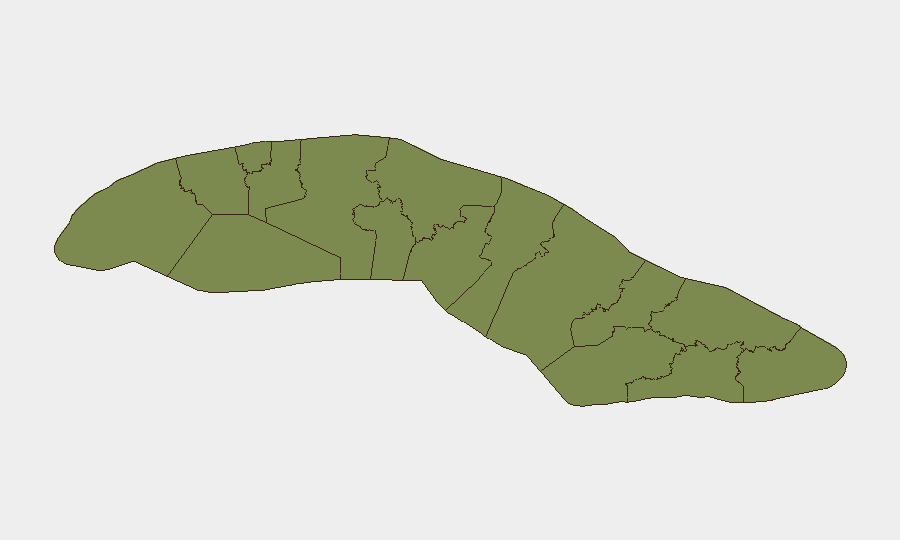
Sancti Spiritus (32.4) and Havana (23.2) dominate the sub-national ranking and reflect distinct threats: Sancti Spiritus's spike likely reflects economic or resource-control tensions in interior provinces, while Havana's elevation is directly driven by the 4 June coordinated unrest, internet suppression, and security-force presence. Pinar del Río and Artemisa (both 4.9) suggest secondary focal points. The concentration of risk in Havana and interior centers indicates that infrastructure collapse (electricity, water, fuel) is the primary immediate driver of unrest, with state response capability stretched across multiple simultaneous flashpoints.
How GeoBit Would Assist
Intel Sweep and X/Twitter OSINT with multi-language capability would enable real-time tracking of protest spread, police movement, and internet disruptions across Cuba's municipalities. AOI Monitoring & Early Warning on Havana, Sancti Spiritus, and Santiago de Cuba would provide persistent alerting on crowd activity, checkpoints, and regime response patterns. Sentiment & Temporal Analysis would flag escalation thresholds and forecast which provinces risk spillover unrest in the coming 48–72 hours.
7-Day Outlook
Power and fuel shortages are unlikely to resolve within one week, sustaining civilian grievance and protest risk. State security doctrine favors swift suppression and digital containment; expect continued internet throttling and expanded activist surveillance. Secondary unrest in Santiago de Cuba, Holguín, and Camagüey is probable if shortages persist or U.S.–Cuba tensions publicly intensify further.
Highest-Risk Areas — Ranked
| # | State / Region | Risk |
|---|---|---|
| 1 | Sancti Spiritus | 32.4 |
| 2 | Havana | 23.2 |
| 3 | Pinar del Rio | 4.9 |
| 4 | Artemisa | 4.9 |
| 5 | Holguín | 3.8 |
| 6 | Matanzas | 3.4 |
| 7 | Camagüey | 2.7 |
| 8 | Mayabeque | 2.6 |
| 9 | Santiago de Cuba | 2.6 |
| 10 | Cienfuegos | 2.4 |
| 11 | Villa Clara | 2.4 |
| 12 | Isle of Youth | 2.4 |
Previous Daily Briefs
A new Cuba brief is written every day — each with its own risk map and downloadable CSV. Here's the last week; use the calendar to go further back.
📅 Browse every day by calendar →
Highlighted days have a brief. Tap a day for that day's map & analysis, or “csv” for that day's dataset ($5).