Situation Summary
Fiji's composite threat score of 43 places it in the mid-range globally, with 12 tracked events concentrated heavily in the past 72 hours. Open-source reporting over the last 24–48 hours does not corroborate any discrete, acute security incident, civil unrest, or infrastructure disruption; instead, commentary centers on structural risks including regional geopolitical competition, transnational crime exposure, climate vulnerability, and fuel supply-chain resilience. The spike in event signals on 23 June (arrests, police mobilization, government and legal statements) suggests internal political or administrative activity, but lacks corroborated public details on trigger or scale. The overall trajectory remains one of managed baseline risk with latent vulnerabilities.
Key Developments
- 23 June 2026 – Multiple arrest/detention events, location unspecified ("North West," "Suva vs King"): Police conducted arrests; government and legal representatives issued statements and union commentary followed. No public casualty, injury, or wider disorder reported.
- 23 June 2026 – Police mobilization, national scope: Fiji police conducted mobilization exercises or deployment; precise operational scope and duration not detailed in open sources.
- 23 June 2026 – Government investigation initiated: Fiji authorities initiated an investigation concerning government-related matter; specifics unavailable in public domain.
- 21 June 2026 – Government public statement, national level: Authorities released a statement addressing unspecified policy or administrative matter.
- 22–23 June 2026 – Regional strategic-risk commentary: Fiji Times and Fiji One News published statements characterizing the Pacific region as facing "unprecedented strategic pressure" from geopolitical competition and transnational crime, framed as ongoing structural risk rather than a newly triggered event.
- 22–23 June 2026 – Fuel supply safeguarding measures: Foreign Affairs Minister Sakiasi Ditoka publicly acknowledged government "extensive efforts" to secure Fiji's fuel supply; no actual shortage, disruption, or related unrest reported in the same period.
Highest-Risk Areas
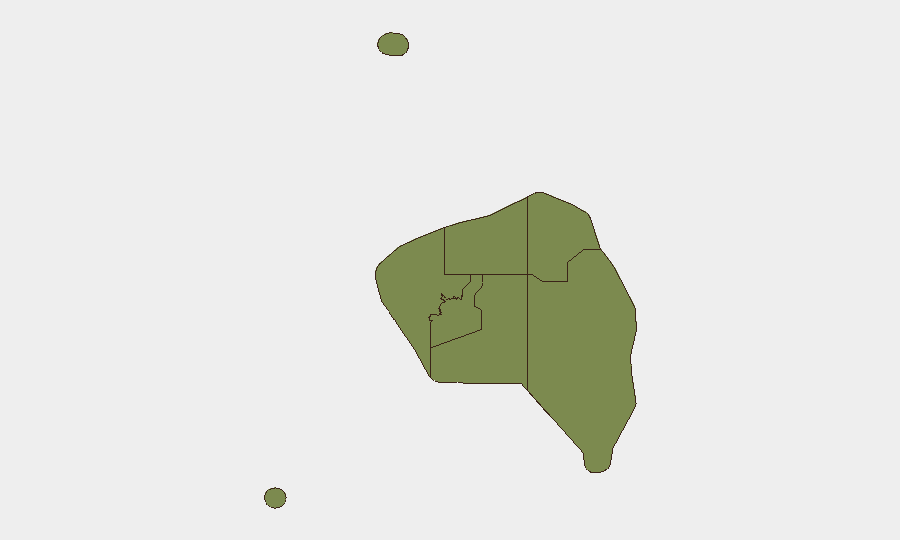
Western and Central regions are jointly ranked highest (risk 31.2 each), nearly 8 points above the Eastern region (23.7) and significantly above Northern and Rotuma (1.2 each). The concentration of mid-range risk in the two largest population and economic centers reflects exposure to crime, inter-communal tension, and infrastructure stress; Eastern's moderate risk likely reflects smaller population but similar structural vulnerabilities. Northern and Rotuma remain substantially lower-risk, consistent with lower urbanization and population density. Corporate assets and personnel in Suva (Central) and western business hubs should maintain elevated situational awareness.
How GeoBit Would Assist
Security teams would employ AOI Monitoring & Early Warning (persistent watch on Western and Central regions with alerting thresholds) and multi-language OSINT fusion & corroboration (to distinguish genuine incidents from policy announcements or regional commentary) to filter signal from noise and avoid alert fatigue. Network & Actor Analysis and entity extraction would clarify relationships between government, police, and detained individuals, accelerating duty-of-care assessment if personnel are affected. Conflict and regime-stability search capability supports longer-term tracking of political and administrative pressure.
7-Day Outlook
No imminent acute threat is signaled by current data. The cluster of 23 June events likely reflects routine administrative action or internal political process rather than instability onset. Monitoring should remain heightened on Western and Central regions; fuel supply statements suggest precautionary rather than emergency-response posture. Personnel and asset teams should maintain standard travel-risk protocols and maintain contact with local security liaison points.
Highest-Risk Areas — Ranked
| # | State / Region | Risk |
|---|---|---|
| 1 | Western | 31.2 |
| 2 | Central | 31.2 |
| 3 | Eastern | 23.7 |
| 4 | Northern | 1.2 |
| 5 | Rotuma | 1.2 |
Sources
Previous Daily Briefs
A new Fiji brief is written every day — each with its own risk map and downloadable CSV. Here's the last week; use the calendar to go further back.
📅 Browse every day by calendar →
Highlighted days have a brief. Tap a day for that day's map & analysis, or “csv” for that day's dataset ($5).