Situation Summary
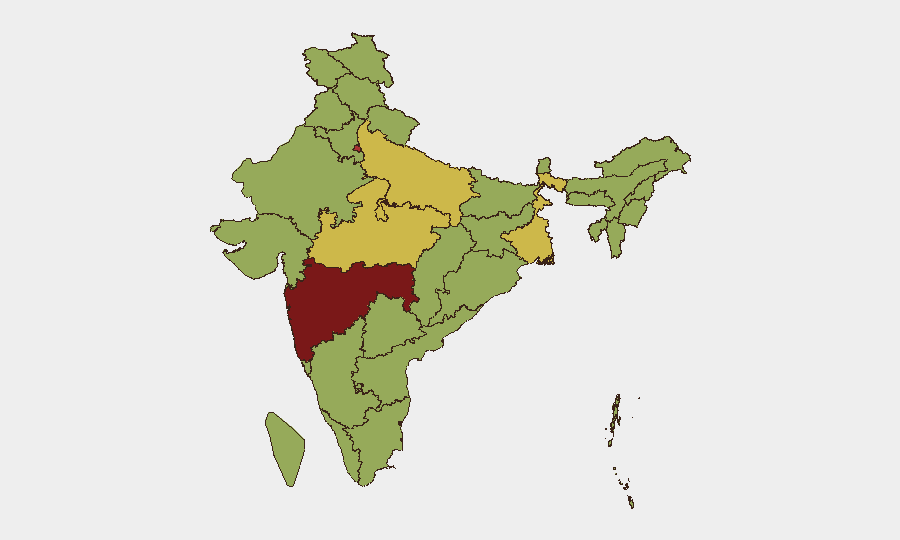
India's composite threat score of 78.3 places it at rank #17 globally, with 2,588 tracked security events reflecting a multi-layered threat environment spanning terrorism, insurgency, communal violence, cyber crime, and civil unrest. Maharashtra, Delhi, and Uttar Pradesh—the three highest-risk states—account for a disproportionate share of recent incidents, driven by ISIS-linked terror modules, cross-border militant activity, and infrastructure-targeting attacks. The past 48 hours have seen arrest operations against terror networks, foiled infiltration attempts, and localized communal clashes, indicating persistent operational activity rather than a sudden spike. Health-sector alerts (Nipah virus, avian influenza H9N2) add a secondary layer of disruption risk, particularly in densely populated urban centers.
Key Developments
- Maharashtra (Pune) – ISIS-inspired terror module dismantled: Anti-Terrorism Squad arrested four suspected ISIS-linked operatives; explosives and bomb-making materials recovered, indicating active attack planning within the state's highest-risk jurisdiction.
- Jammu & Kashmir (Kupwara) – Cross-border infiltration foiled: Indian Army killed two suspected militants during attempted LoC infiltration; weapons and ammunition seized, reflecting sustained cross-border militant pressure in the disputed territory.
- Manipur – Ethnic violence escalation: Fresh arson and firing between Meitei and Kuki groups in Imphal Valley; security forces imposed curfews and increased deployments, signaling deterioration in communal control measures.
- Punjab (Amritsar) – Explosive attack on police infrastructure: Low-intensity grenade device detonated near police post; suspected pro-Khalistan involvement; checkpoint density increased around the city.
- Chhattisgarh (Dantewada) – IED attack on security forces: Naxal-planted improvised explosive device injured CRPF personnel during routine patrol; underscores persistent Maoist threat in mineral-rich, insurgency-prone areas.
- Uttar Pradesh (Lucknow) – Critical infrastructure bomb threat: Railway station evacuated following emailed threat; no device found but services disrupted and security posture elevated.
- Delhi – Cyber-fraud and data-theft ring dismantled: Call-centre-based operation targeting domestic and overseas victims through phishing and remote access; personal data seizures indicate scale of financial targeting.
- West Bengal (Kolkata) – Communal restrictions imposed: Section 144 restrictions and flag marches deployed following religious procession clash; vehicle and shop vandalism reported.
Highest-Risk Areas
Maharashtra's rank of 84.8 reflects concentration of both transnational terror networks and organized crime; Delhi (77.6) combines diplomatic/political vulnerability with dense urban crime and cyber-fraud infrastructure; Uttar Pradesh (70.9) faces terror, Maoist, and communal-violence drivers across its massive geography. The northeastern states (Manipur, Assam, Meghalaya) and J&K cluster around scores of 56–68, driven by ethnic insurgency, cross-border threats, and limited state capacity in border districts. Mid-tier states (Madhya Pradesh, Jharkhand, Punjab) remain above the national average due to sustained Naxal/Maoist operations and separatist activity.
How GeoBit Would Assist
Security teams should leverage AOI Monitoring & Early Warning to establish persistent watches on Maharashtra (Pune/Mumbai), Delhi NCR, and J&K hotspots, with alert thresholds tied to terror-related keywords and actor mentions; pair this with Intel Sweep and multi-language OSINT (X/Twitter, Telegram) to detect emerging module activity, recruitment signals, and operational planning before execution. Network & Actor Analysis combined with Cyber threat tracking would provide visibility into terror-finance and recruitment networks, while Routing & Network Analysis enables alternative travel and logistics planning for personnel and asset movement in high-risk zones.
7-Day Outlook
Near-term threat posture will likely remain elevated as security operations against identified terror modules continue, generating secondary arrest and counter-operation activity. Communal tensions in the Northeast and Kashmir valley are unlikely to de-escalate quickly; monsoon season (June onset) may reduce militant mobility but will increase flood/landslide disruption risk in hill states. Cyber-fraud targeting corporate entities and financial infrastructure is expected to persist.
Highest-Risk Areas — Ranked
| # | State / Region | Risk |
|---|---|---|
| 1 | Maharashtra | 84.8 |
| 2 | Delhi | 77.6 |
| 3 | Uttar Pradesh | 70.9 |
| 4 | West Bengal | 67.8 |
| 5 | Madhya Pradesh | 61 |
| 6 | Jammu and Kashmir | 57.9 |
| 7 | Karnataka | 57.9 |
| 8 | Haryana | 57.5 |
| 9 | Jharkhand | 57.1 |
| 10 | Punjab | 57 |
| 11 | Tamil Nadu | 56.8 |
| 12 | Meghalaya | 56.8 |
Sources
Previous Daily Briefs
A new India brief is written every day — each with its own risk map and downloadable CSV. Here's the last week; use the calendar to go further back.
📅 Browse every day by calendar →
Highlighted days have a brief. Tap a day for that day's map & analysis, or “csv” for that day's dataset ($5).