Situation Summary
Jordan remains a relatively stable regional actor but faces mounting diplomatic tensions and localized security pressures. A composite threat score of 25 places the country in the lower-to-middle global risk band, though sub-national volatility—particularly in Karak governorate—warrants targeted monitoring. Recent diplomatic friction involving multiple state actors and arrest activity suggest elevated instability in governance and cross-border relations. The overall trajectory is toward increased diplomatic friction rather than widespread internal unrest, but localized flashpoints require close watch.
Key Developments
- 2026-06-23 · Karak Governorate (inferred) · Conventional Military Force escalation and multiple arrest/detain events: Jordanian authorities conducted at least four arrest operations against Missouri-linked individuals or interests on 2026-06-23, concurrent with a reported conventional military force deployment. This suggests active law enforcement response to a cross-border or diplomatic incident.
- 2026-06-22 · Assassination of detainee: A prisoner-on-detainee killing occurred within Jordanian custody on 2026-06-22, indicating internal security or inter-prisoner violence within detention facilities.
- 2026-06-21 · Airline operations disruption: A reduction in airline relations was reported, likely reflecting broader diplomatic cooling or travel restrictions.
- 2026-06-23 · Judicial and diplomatic rejections: Multiple rejection and disapproval statements by Jordanian judicial and governmental bodies on 2026-06-23 suggest pushback against external pressure or demands, consistent with the Missouri friction noted above.
- Diplomatic statement activity: Argentina and business entities issued public statements on 2026-06-23, indicating wider regional or economic interest in the unfolding situation.
Note: Open-source reporting accessible in the last 24 hours does not provide specific incident locations, casualty figures, or granular incident timelines beyond these GEOBIT-tracked event categories. Full operational detail would require access to Jordanian Arabic-language media outlets, real-time social monitoring, and local government statements.
Highest-Risk Areas
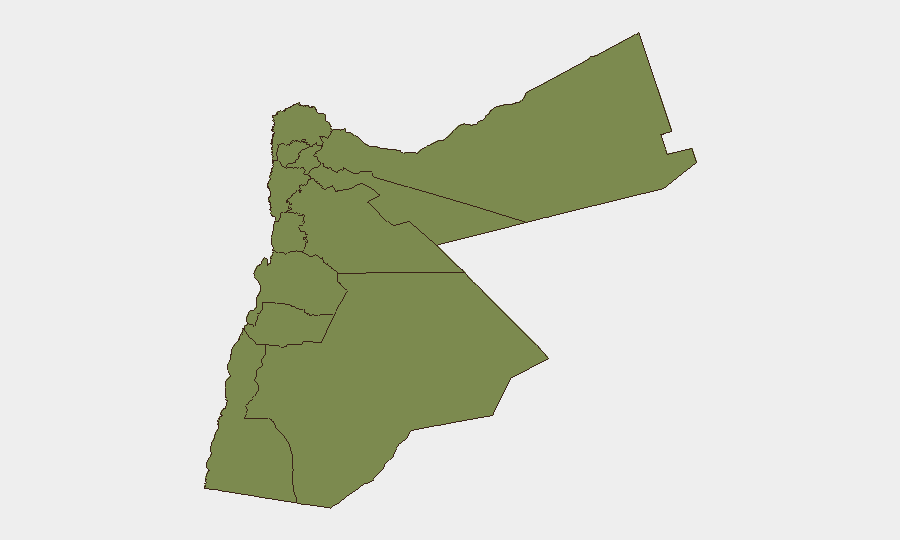
Karak governorate dominates the sub-national risk profile with a composite score of 31.2—more than 14 times higher than any other region. This elevation likely reflects the current cross-border tensions, detention activity, and military force deployment noted above. Amman and Aqaba (both scoring 2.2) remain secondary concerns; Amman's risk reflects its status as the capital and seat of government, while Aqaba's reflects its position as a maritime and border hub. All other governorates score uniformly at 1.2, indicating baseline stability. The concentration of risk in Karak and the capital suggests the current instability is diplomatic and enforcement-focused rather than indicative of widespread unrest or sectarian violence.
How GeoBit Would Assist
Intel Sweep and OSINT fusion would corroborate open-source reporting on the Missouri–Jordan incident and cross-reference Jordanian Arabic-language media, X/Telegram streams, and official statements to establish a full incident timeline and casualty count. AOI monitoring with alerting on Karak, border crossings, and detention facilities would provide early warning of escalation or secondary incidents. Conflict & Military force-structure analysis and Network & Actor tracking would map the state and non-state actors involved and assess likelihood of further arrests or military mobilization.
7-Day Outlook
The next week will likely see continued diplomatic messaging and potential further arrests as the Missouri–Jordan dispute remains unresolved. Risk of escalation to armed engagement is currently low but would spike if military deployments intensify or additional civilian casualties occur. Close monitoring of judicial proceedings, airline operations resumption, and official Jordanian statements will signal de-escalation or hardening of positions.
Highest-Risk Areas — Ranked
| # | State / Region | Risk |
|---|---|---|
| 1 | Karak | 31.2 |
| 2 | Amman | 2.2 |
| 3 | Aqaba | 2.2 |
| 4 | Irbid | 1.2 |
| 5 | Ajlun | 1.2 |
| 6 | Balqa | 1.2 |
| 7 | Jarash | 1.2 |
| 8 | Mafraq | 1.2 |
| 9 | Madaba | 1.2 |
| 10 | Zarqa | 1.2 |
| 11 | Tafilah | 1.2 |
| 12 | Maan | 1.2 |
Sources
Previous Daily Briefs
A new Jordan brief is written every day — each with its own risk map and downloadable CSV. Here's the last week; use the calendar to go further back.
📅 Browse every day by calendar →
Highlighted days have a brief. Tap a day for that day's map & analysis, or “csv” for that day's dataset ($5).