Situation Summary
Kazakhstan remains a stable operating environment with low current security and travel risk. No terrorism, civil unrest, major crime spikes, or infrastructure disruptions have been reported in the last 24–48 hours; routine daily life, business operations, and transport continue unaffected. Political activity is elevated ahead of early parliamentary elections scheduled for 23 August 2026, but monitoring shows no signs of imminent unrest or politically motivated violence. The country's overall threat ranking places it at #151 globally (composite score 5), reflecting its regional stability relative to higher-risk neighbors.
Key Developments
- Almaty – 7 July 2026 – Kazakhstan's Constitutional Court ruled that President Kassym‑Jomart Tokayev is eligible to seek another presidential term under the newly effective constitution, which resets term-limit calculations. No associated protests or civil unrest have been reported following the decision.
- Astana & Almaty – 6–7 July 2026 – Security forces conducted routine counterterrorism and law-enforcement training exercises with temporary, localized restrictions on vehicle and pedestrian movement around training areas. Exercises concluded without reported accidents, violence, or wider disruption to daily life or travel.
- Zhambyl Region (48 km NNE of Sarykemer) – ~6–7 July 2026 – A magnitude 4.4 earthquake occurred in southern Kazakhstan. Monitoring reports indicate no damage, casualties, infrastructure disruption, or secondary security effects.
- Nationwide – 6–7 July 2026 – No terrorism activity, organized protests, or notable violent crime spikes detected across Kazakhstan; infrastructure (energy, transport, communications) reports no major failures or disruptions.
- Nationwide – through 7 July 2026 – Visa, customs, and airport operations remain within normal parameters with no new risk advisories issued by Kazakhstani authorities or major trading partners.
- Nationwide – 3–7 July 2026 – Pre-election political activity continues within routine parameters; no mobilization indicators or violence warnings associated with the 23 August parliamentary election campaign.
Highest-Risk Areas
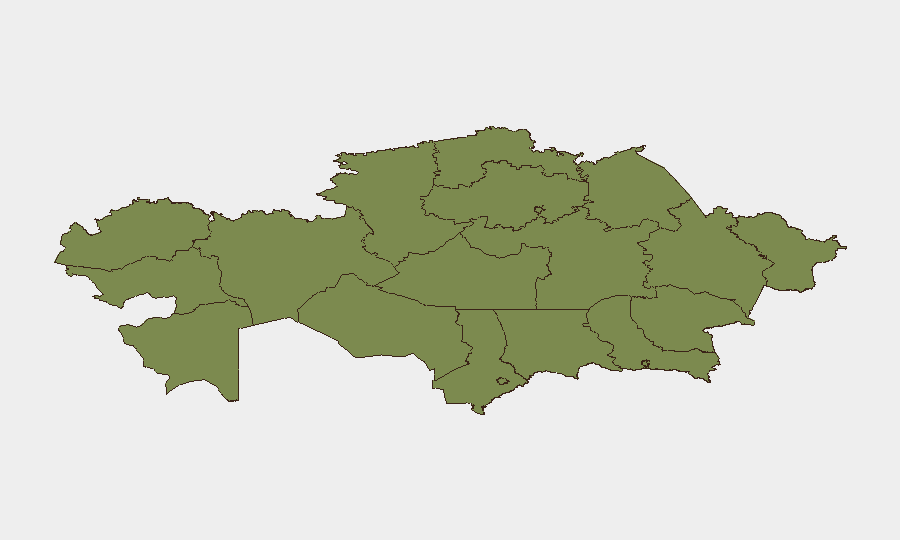
Astana (composite risk 31.9) dominates the sub-national ranking and accounts for the majority of tracked security events, driven by its status as the capital, seat of government, and focus of political, administrative, and diplomatic activity. Mangystau Region (19.4) and Atyrau Region (16.9) show elevated risk profiles, likely reflecting operational activity in the energy and extractive-industries sectors and routine border-monitoring events; both regions merit standard duty-of-care protocols for corporate personnel. All other regions score uniformly at 1.9 and present minimal differentiated risk. The concentration of risk in Astana and the western energy-production zones reflects normal administrative and economic geography rather than active conflict or instability.
How GeoBit Would Assist
Organizations with people or assets in Kazakhstan should employ Intel Sweep and global event-feed monitoring to maintain real-time visibility of emerging political, security, or infrastructure developments; election monitoring capabilities are particularly relevant given the August parliamentary vote. AOI (area-of-interest) monitoring and early-warning alerting on Astana, Mangystau, and Atyrau regions will provide persistent watch for any escalation in political activity, protest mobilization, or energy-sector incidents. Routing and network analysis can support duty-of-care planning for personnel movements, especially around exercise zones or election-related activity.
7-Day Outlook
Near-term conditions are expected to remain stable and operationally predictable. Political rhetoric and campaign activity will likely intensify ahead of the 23 August election, but current open-source monitoring shows no indicators of destabilization or organized unrest. Standard security posture and routine monitoring protocols remain sufficient for most corporate operations.
Highest-Risk Areas — Ranked
| # | State / Region | Risk |
|---|---|---|
| 1 | Astana | 31.9 |
| 2 | Mangystau Region | 19.4 |
| 3 | Atyrau Region | 16.9 |
| 4 | Turkistan Region | 1.9 |
| 5 | Almaty Region | 1.9 |
| 6 | East Kazakhstan Region | 1.9 |
| 7 | Abay Region | 1.9 |
| 8 | Jetisu Region | 1.9 |
| 9 | West Kazakhstan Region | 1.9 |
| 10 | Aqtöbe region | 1.9 |
| 11 | Pavlodar Region | 1.9 |
| 12 | Kostanay Region | 1.9 |
Sources
Previous Daily Briefs
A new Kazakhstan brief is written every day — each with its own risk map and downloadable CSV. Here's the last week; use the calendar to go further back.
📅 Browse every day by calendar →
Highlighted days have a brief. Tap a day for that day's map & analysis, or “csv” for that day's dataset ($5).
Atlas — our AI intelligence desk — emails them this snapshot personally. Nothing else, no list.