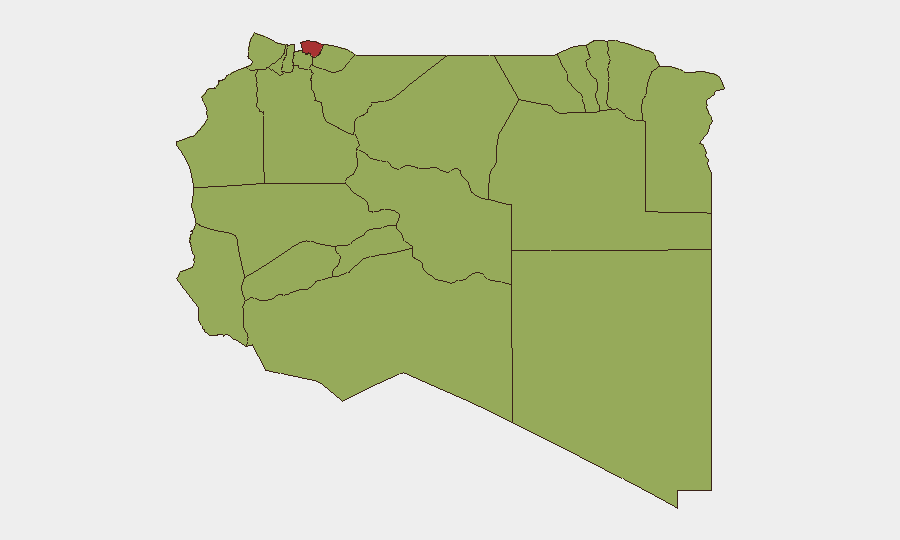
Situation Summary
Libya remains a fragmented, high-volatility security environment with escalating armed clashes in the capital and unresolved political dysfunction fueling militia activity across multiple regions. Tripoli dominates the threat picture, with recent heavy-weapons combat in densely populated districts, civilian casualties, and hospital strain following the killing of a senior state security official. UN and international observers characterize the situation as deteriorating, driven by electoral stalling, rival faction posturing, and accumulated stockpiles of arms in civilian areas. The broader state-level composite ranking of 69.1 reflects persistent instability rather than acute crisis, but trajectory remains upward.
Key Developments
- Tripoli (06-01 to 06-03) — Armed clashes involving heavy weapons across multiple districts; UN characterizes situation as "deeply alarming." Civilian displacement and hospital overload reported. Incident triggered by killing of Abdel Ghani al-Kikli (Stability Support Authority head) at facility linked to 444 Brigade.
- Tripoli (06-02) — Pro-Bashagha forces blocked and forced to retreat at Zleiten checkpoint east of capital; indicates militia movement toward Tripoli and defensive positioning by rival factions.
- UN–Libya Relations (06-01 to 06-03) — Escalating diplomatic friction: UN reduced relations, issued public statements, and lodged admin sanctions against Libya. UNSMIL urging unconditional ceasefire and citing political stalemate as root cause.
- Tripoli (ongoing) — Heavy-arms buildup and ammunition stockpiles in residential zones confirmed by Security Council reporting; civilians face secondary threat from storage failures or secondary detonations.
- Tarhouna (southern Tripoli vicinity) — Additional mass graves uncovered; signals continued insecurity and unresolved accountability for past abuses, complicating reconciliation and militia deterrence.
- Southern Libya — Fuel shortage reported, particularly acute in remote regions; contributes to economic strain, black-market activity, and reduced state authority.
- Derna (eastern coast) — Infrastructure and displacement effects from 2023 floods persist; limited recovery capacity hampers stabilization and raises humanitarian risk.
Highest-Risk Areas
Tripoli (78.4) towers above all other Libyan sub-national zones and accounts for the majority of recent violence signals. Its risk stems from rival militia presence, heavy weaponry in urban terrain, political-economic control disputes, and UN/international focus on factional negotiations. The secondary tier—Murzuq, Sirte, and southern/border zones (Nalut, Ghat, Kufra)—carries moderate-to-elevated risk driven by remote geography, fuel/supply shortages, trafficking networks, and lighter international oversight. Mid-tier zones (Baladiyah Surman, Az Zawiya, Wadi districts) reflect baseline Libyan fragmentation rather than acute hotspots. Teams with Tripoli presence face acute risk; southern and border operations face logistical and criminal threat.
How GeoBit Would Assist
Security teams should deploy persistent AOI Monitoring & Early Warning on Tripoli districts and secondary flashpoints (Zleiten, Tarhouna) to detect militia repositioning and weapons movements in real time. Conflict & Military mapping and force-structure analysis will track factional strength, arms accumulation, and likely flashpoints as negotiations stall. OSINT fusion (X/Telegram, local radio, YouTube/podcast intelligence) combined with network & actor analysis will identify command flows, supply chains, and negotiation signals faster than traditional reporting.
7-Day Outlook
Near-term escalation risk remains elevated if UN ceasefire calls are rejected and rival factions interpret the current clashes as a mandate for further repositioning. Fuel shortages and economic hardship may drive secondary crime and militia recruitment in southern zones. Expect continued diplomatic tension, possible additional sanctions, and localized clashes in or near Tripoli; broader collapse into state-wide civil conflict is not imminent but cannot be ruled out if factional talks collapse.
Highest-Risk Areas — Ranked
| # | State / Region | Risk |
|---|---|---|
| 1 | Tripoli | 78.4 |
| 2 | Murzuq | 58.6 |
| 3 | Sirte | 57.8 |
| 4 | Nalut | 48.4 |
| 5 | Ghat | 48.4 |
| 6 | Baladiyah Surman | 48.4 |
| 7 | Az Zawiya District | 48.4 |
| 8 | Wadi al Shatii | 48.4 |
| 9 | Wadi al Hayaa | 48.4 |
| 10 | Kufra | 48.4 |
| 11 | Nuqat al Khams | 48.4 |
| 12 | Jafara | 48.4 |
Sources
Previous Daily Briefs
A new Libya brief is written every day — each with its own risk map and downloadable CSV. Here's the last week; use the calendar to go further back.
📅 Browse every day by calendar →
Highlighted days have a brief. Tap a day for that day's map & analysis, or “csv” for that day's dataset ($5).